

 Login
 Post an ad


Karting experience day: why not step up to a real 2-stroke race kart?
By RobinB on 17 November 2026 Karting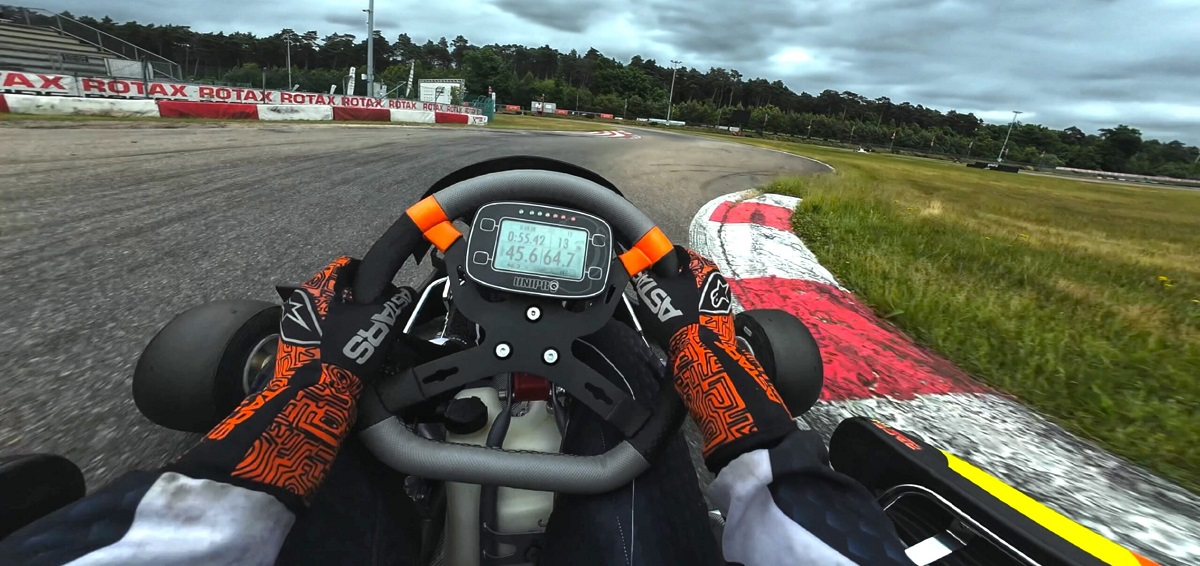
A karting day is often the first step into driving: a few sessions in a 4-stroke rental kart, a briefing, a lap time… A great way to discover the sport, and even to improve. But once you've caught the bug, the urge to go faster usually comes quickly.
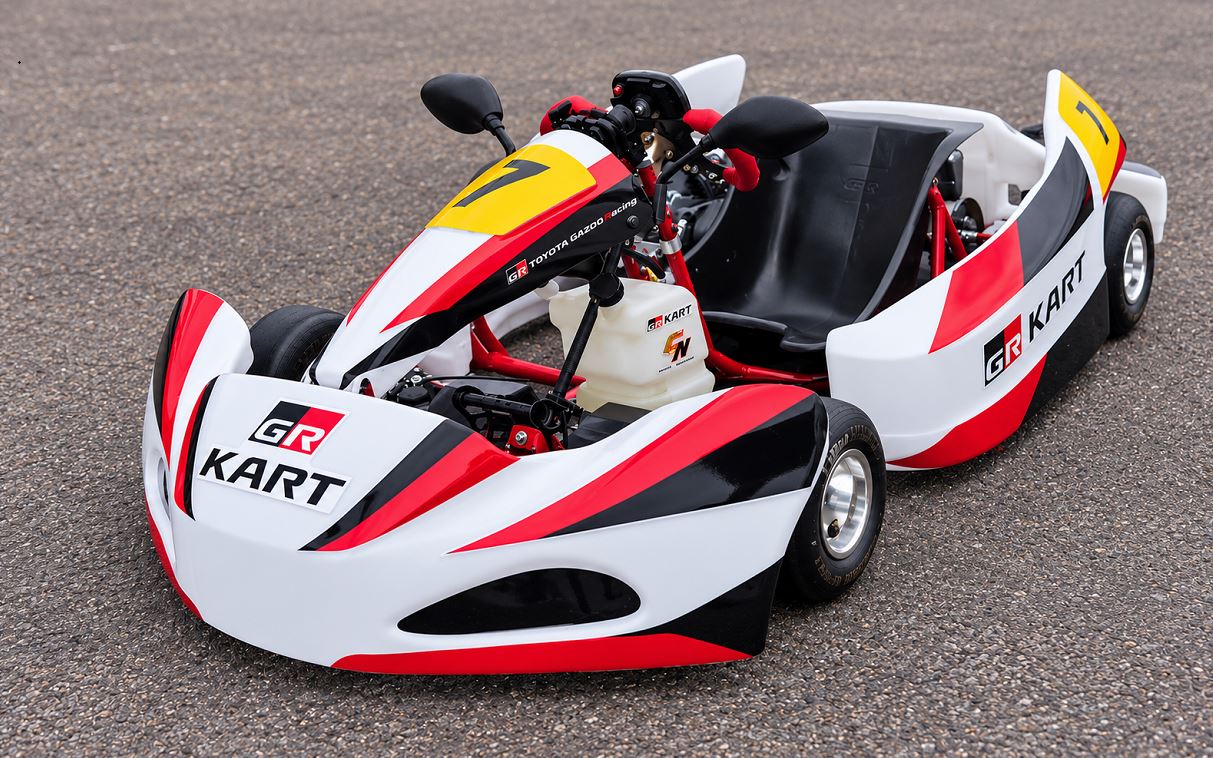
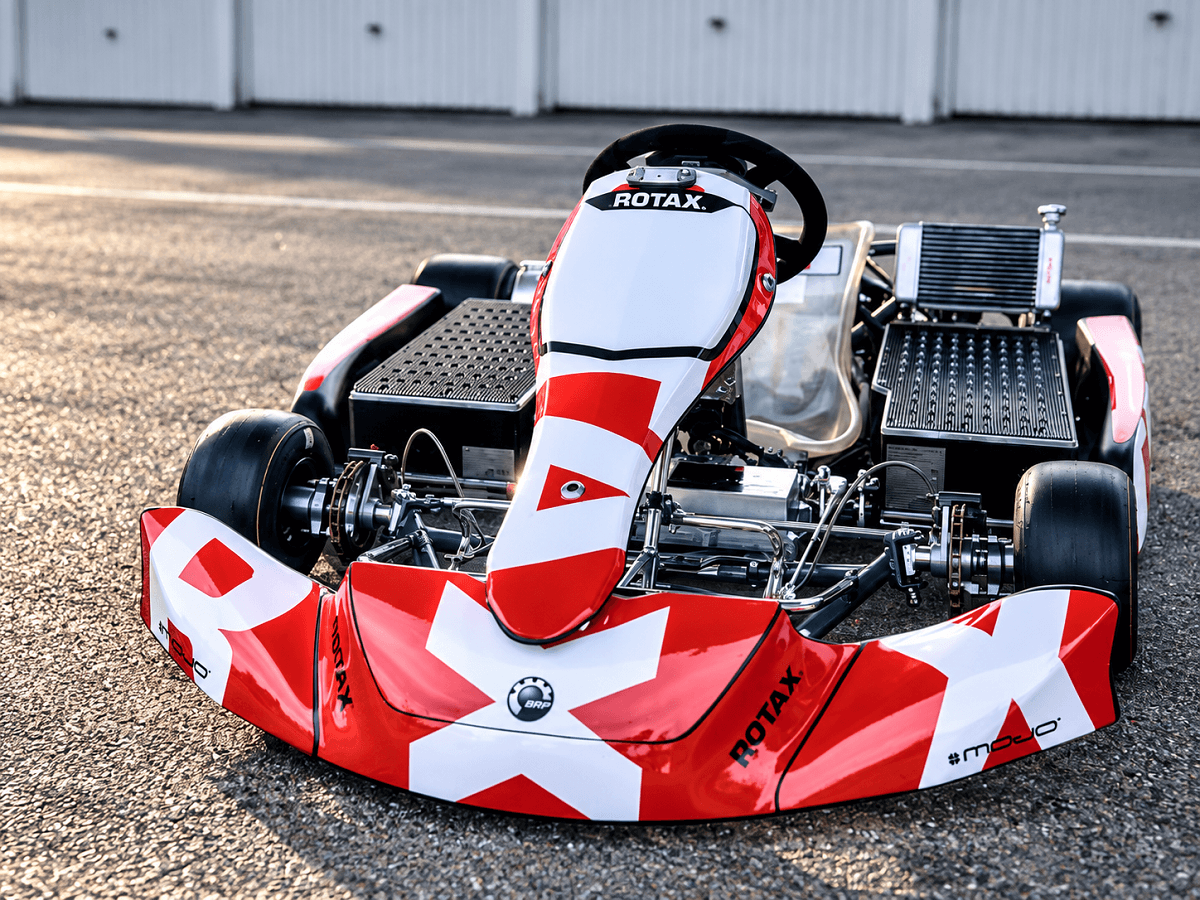
There is a middle step between rental karts and buying your own race kart: hiring a real 2-stroke race kart, by the session, by the half-day or on a coached course. Rotax, X30, racing chassis, coaching, data… And often for a more reasonable budget than you might think 😉
Whether it's a treat for yourself or an original gift for a karting or motorsport fan, here's where to drive, how much it costs and what to know before booking.
The 4-stroke karting day: the right starting point
Most karting courses, whether booked online or as gift boxes, take place in 4-stroke rental karts of 270 to 390 cc. Prices vary a lot between tracks and formats, but as a rough guide:
- a 10-minute session: around €25 to €30;
- 35 to 45 minutes of driving: around €75 to €125;
- a course of about 3 hours, including one hour of driving: around €120.
A word of caution about the word "course": often, these are mostly mini races in disguise, with free practice followed by a short race. Sometimes a bit of theory is added. It's still great fun, but it isn't always a real driving course.
And it isn't just a beginner's kart. With little power and plenty of weight, a 4-stroke kart doesn't forgive much: you can't make up for a poor corner exit with the throttle. You need to carry speed through corners, brake accurately and drive cleanly and consistently. It's very instructive, and many experienced drivers still use rental karts to work on their driving, or race in championships decided by tenths of a second.
But to discover a real race kart, something is inevitably missing: power, lightness, setup adjustments, racing tyres… On top of that, the equipment varies from one kart to another, which makes lap times hard to compare.
For age requirements and categories for younger drivers, see our article: what age can you start karting?
Rental kart or race kart: what changes behind the wheel
| 4-stroke rental kart | 2-stroke race kart (Rotax, X30) | |
|---|---|---|
| Engine | 270 to 390 cc 4-stroke | 125 cc 2-stroke |
| Power | ≈ 9 to 13 hp | ≈ 30 hp |
| Weight (without driver) | ≈ 150 to 185 kg | ≈ 80 to 90 kg |
| Top speed | ≈ 60 to 80 km/h | ≈ 120 km/h |
| Tyres | Very hard, built to last | Racing slicks |
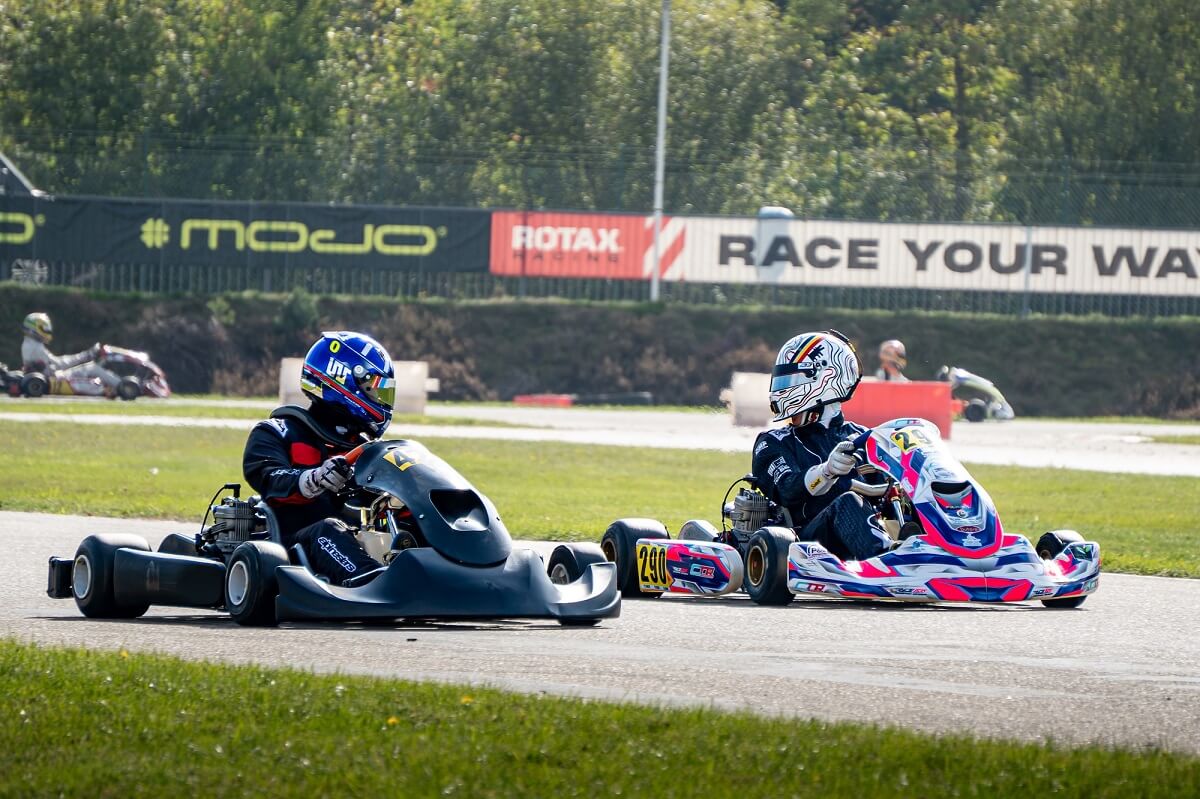
Twice the power for half the weight: the difference is huge. Acceleration, braking, cornering grip and steering precision are in another league. The kart reacts to every correction, and you need to be precise to go fast. It's physical too: after a few sessions, your arms, neck and ribs will remember it 😅
The basics learned in a 4-stroke still apply, but everything happens much faster. Racing lines, braking points, corner exits: every mistake costs time, and every improvement shows immediately. A 2-stroke really is something else.
ℹ️ Race karts remain the foundation of almost every driver's training, all the way up to F1. Even for an amateur car racer, a few days in a 2-stroke kart are one of the best ways to work on racing lines and feel.
Where to do a course or hire a 2-stroke kart?
Several tracks and organisations let you drive a 2-stroke kart without owning one. Most courses and hires use a Rotax or an X30, sometimes a KZ (125 cc with gearbox) or a DD2 (2-speed Rotax). A few examples in France and Belgium, by region and for guidance only (prices noted in November 2026, check with each provider):
| Where | Kart | Format | Price |
|---|---|---|---|
| RKO (Essonne, near Paris) | Sodikart Sodisport, Rotax 125 cc, 23 hp | 10-min sessions, from age 16 under conditions | €41 per session, €111 for 3 (member rate) |
| DG Kart (Angerville, Soucy, Arvillers, Ostricourt) | Rotax Junior or Max | Full day with prepared kart, fuel and team coaching | €750, excl. track fee and licence |
| Actarus Lohéac (Brittany) | Sodikart Sodisport, Rotax 125 cc, 23 hp | 10 min in a 4T then 10 min in a 2T, supervised | €59, then €35 per session |
| Solokart (Loire-Atlantique) | 4T then 2T 125 (30 hp) | Adult course with 6 sessions, theory and practice | €190 per half-day |
| CRT, Kart Extrem track (Charente-Maritime) | Rotax 2T | Session, half-day or full day | €50 per 10 min, €120 for 3, €375 per day |
| Kartshop 67 (Alsace and other tracks) | Rotax, X30 or KZ | Turnkey hire with transport and coaching | €590, + licence and track fee |
| CKB Besançon (Doubs) | Rotax 2T | Half-day (3 h) or full day (6 h), single sessions with a member card | €300 / €500, or €42 per session |
| Karting du Bugey (Ain) | Rotax 125 2T | 3 × 10-min runs, supervised by a qualified instructor | €150, + €45 track fee and €28 day licence |
| Castellet Kart Racing (Var) | Rotax Max (MicroMax to Max depending on age) | 3 × 10 min, 1 hour or half-day | €150 / €250 / €400 |
| Karting Circuit Paul Ricard (Var) | Rotax DD2 with 2 gears (≈ 34 hp) | Adult course: 4T, racing-line study, then 2 × 7 laps in a DD2 with debrief | €255 |
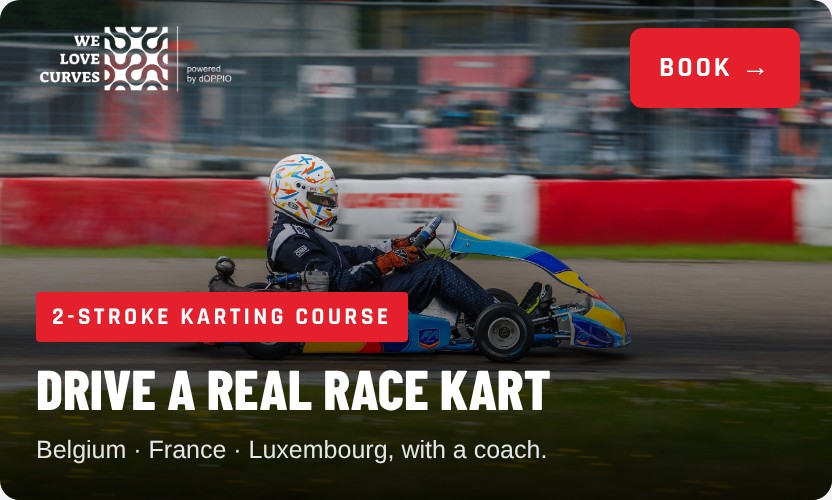
| We Love Curves (Belgium) | Kart Republic + IAME X30 | Full day of 6 × 15 min, i.e. 1 h 30 of driving, with one-to-one coaching by an IAME BeNeLux championship driver, data and video. Or half-day of 3 × 15 min | €750 solo, €850 for two, €450 half-day |
The formats vary a lot. Some tracks simply rent out a Rotax by the session, just like a leisure kart. Others offer a proper coached course with an instructor or coach.
Many tracks run their own courses, with mixed formats: you start in a 4-stroke, then finish with a few sessions in a 2-stroke. There are also courses in 2-stroke rental karts such as Rotax units of around twenty horsepower, between €100 and €250 depending on track time.
At RKC (Racing Kart de Cormeilles, Val-d'Oise, near Paris), for example, expect around €210 for one hour of driving in a Super Sport 2-stroke kart, over a day of about 4 hours including theory. At La Roche-de-Glun karting (Drôme), it's €180 for a half-day in a Rotax 125, with 40 minutes of driving.
A closer look at a turnkey format: We Love Curves
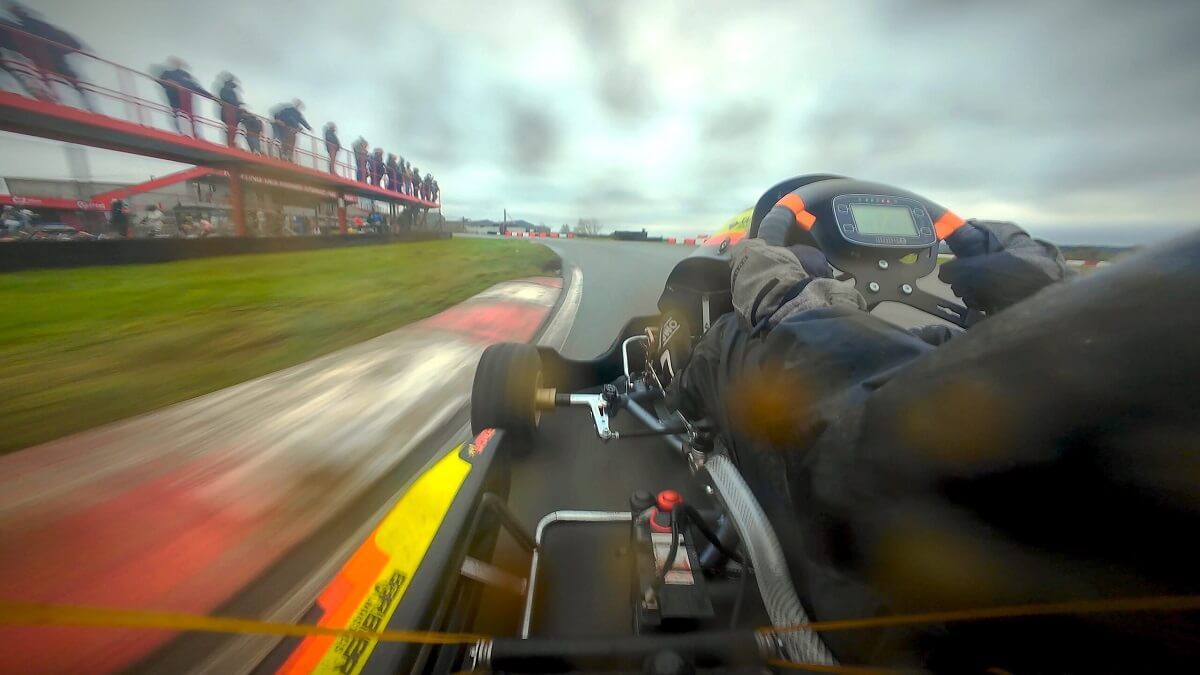
In Belgium, We Love Curves offers a fairly complete package, on circuits such as Genk and Mariembourg. The kart is a Kart Republic chassis with a water-cooled 125 cc IAME X30 of around 30 hp, with Unipro data logging and onboard cameras.
The "RACE Experience" pack includes a full day with 6 stints of 15 minutes, i.e. 1 h 30 of driving, individual coaching based on video and data, mechanical support, track access, fuel and lunch. With two drivers, the price is shared. The "DISCOVERY" pack, over a half-day, lets you try the kart over 3 stints of 15 minutes. Drivers take home their onboard videos.
What sets it apart is that it's genuinely turnkey and personalised. The kart is prepared, you just drive, and between each stint you take the time to go through the data and video with the coach, corner by corner. Where many courses simply string sessions together without real analysis, this debrief time is what makes you improve the most.
Some prior experience in karting or driving is still required. From age 12, under certain conditions. The full details are in their listing on GoToTheGrid, and their other offers, such as coaching on your own kart, are on their profile.
How much does a day in a 2-stroke kart cost?
Prices mostly depend on what's included. With simple hire, a 10-minute session in a Rotax costs around €40 to €50, less with a member card or package. Instructor-supervised runs, licence and track fees included, come to around €200 for a half-day. A full day with a coach, data and video is more like €750, but with the analysis, logistics and often lunch included.
So for €150 to €250, you can already enjoy a half-day in a real race kart. For a first try, some tracks even offer taster formats at around €60, barely more than a rental-kart experience sold as a gift box.
Above all, it's far cheaper than buying. A used 2-stroke kart costs several thousand euros, plus a trailer, tools, tyres, engine maintenance and the time spent preparing it. See our guide to buying a used go-kart and the budget for running a race kart.
💡 Hiring has another big advantage: no mechanics. The kart is ready to go and set up, so you can spend your whole day driving. To find out whether 2-stroke karting is for you before investing, it's the ideal solution.
An original gift idea for a karting fan
Looking for a gift for a karting or motorsport fan often means finding the same gift boxes: a few sessions in a rental kart, a GT driving experience or a half-day in a single-seater. The problem is that a real enthusiast has often already done rental karting… sometimes many times.
A half-day or full day in a real 2-stroke race kart is a gift that really stands out. For around €150 to €250, roughly the price of a sports car driving experience, you're offering sensations they've probably never experienced. With a coach, data and onboard videos, it's even a real "get better" gift.
A few tips before giving it:
- Ask whether a gift voucher exists: not every track offers one for its 2-stroke formats. If not, a simple card with the booking works just as well.
- Check the conditions: age, height and required experience. A 2-stroke kart isn't a gift for a 10-year-old. For younger drivers, stick to a rental kart suited to their age.
- Choose a coached format if the person has never driven a 2-stroke: it's more reassuring and they'll improve much more.
- Think about the extras: day licence, track fee, equipment. Better to know what's included before giving it.
- Make it a gift for two: some formats let you share the day and the kart, for a gentler price per person and a great day out with a friend.
What to know before booking
- Age and height: for a Rotax or X30, tracks generally require drivers to be at least 15 and around 1.60 m tall. Some providers accept younger drivers under certain conditions.
- Experience: some tracks first have you drive a rental kart to check your level, as in Besançon with a check session in a 270 cc kart.
- Licence or insurance: often a day licence, around €30, on top of the price. Some tracks even require an FFSA karting licence, such as Castellet Kart Racing.
- Equipment: helmet, race suit and gloves are mandatory. Loan gear isn't always included, so ask. A rib protector is strongly recommended in a 2-stroke kart. See our karting equipment checklist.
- Weather and availability: 2-stroke slots are often limited and shared with other users. Book ahead.
How to really improve in a race kart
A few tips to get the most out of a day in a 2-stroke:
- Go for coaching: an outside eye saves a huge amount of time, especially on racing lines and braking.
- Use data and video: compare your laps and see where you lose time, corner by corner. That's often where the biggest gains are.
- Do several stints: with 10 to 15-minute runs and a debrief between each, you improve much faster than in one long session.
- Come back regularly: two or three days a year at the same track let you really measure your progress.
- Train physically: arms, core and neck. A tired driver loses precision well before the end of a stint.
What next? Moving into competition
If you've caught the bug, there are several ways forward:
- keep hiring 2-stroke karts from time to time, for fun and training;
- race in endurance or leisure sprint events, for example in the SWS;
- buy your own kart and aim for an affordable class such as KA100 or KFS.
And to find a kart, there are plenty in the kart listings on GoToTheGrid 😉
Our take: a step well worth taking
For anyone who has done rental karting a few times and wants more, hiring a real race kart is a step well worth taking. Add coaching and you improve quickly, without having to buy a kart or commit to a full season.
👉 Have you ever driven a 2-stroke race kart? Know other tracks or organisations that hire them out? Get in touch via our contact page and we'll add them to the table 😉
FAQ: karting experience in a race kart
How much does a karting course cost?
In a 4-stroke rental kart, expect around €25 to €30 for a 10-minute session, €75 to €125 for 35 to 45 minutes of driving, and around €120 for a 3-hour course. Courses in 2-stroke rental karts such as Rotax units are more in the €100 to €250 range. In a 2-stroke race kart, a supervised half-day usually costs €150 to €250, and a full day with coaching €375 to €750.
What gift should you give a karting fan?
For a fan who has already tried rental karting, a half-day or full day in a real 2-stroke race kart (Rotax, X30) is an original gift, from around €150 to €250. Ideally choose a coached format, and check the age and experience requirements.
Can you hire a 2-stroke race kart without owning one?
Yes. Several tracks and organisations rent out Rotax or X30 karts by the session, by the half-day or on coached courses, with the kart ready to go. You generally need a day licence and sometimes some prior experience.
How much does a 2-stroke karting course cost?
Expect around €150 to €250 for a supervised half-day in a Rotax, €300 to €500 for a half-day or full day of hire, and around €750 for a full day with coach, data, video and lunch.
What's the difference between a rental kart and a race kart?
A 2-stroke race kart produces around 30 hp for 80 to 90 kg, compared with 9 to 13 hp for 150 kg or more for a rental kart. It reaches around 120 km/h, with slicks and far more effective braking.
From what age can you drive a Rotax?
For hire, most tracks require drivers to be at least 15 and around 1.60 m tall for a Rotax 125. Some providers accept drivers from 12 under certain conditions. In competition, 2-stroke classes start from age 8.
Do you need experience to drive a 2-stroke kart?
A little, yes. Many tracks ask for some karting experience or run a check session in a rental kart before letting you drive a 2-stroke.


I'm Robin, 36, amateur driver and internet entrepreneur. I founded GoToTheGrid (GTTG) to create an intuitive platform dedicated to motorsport enthusia... See more