

 Login
Login
 Post an ad


Rotax E20 and E10 Electric Karts: The Future of Karting?
By RobinB on 13 October 2026 Karting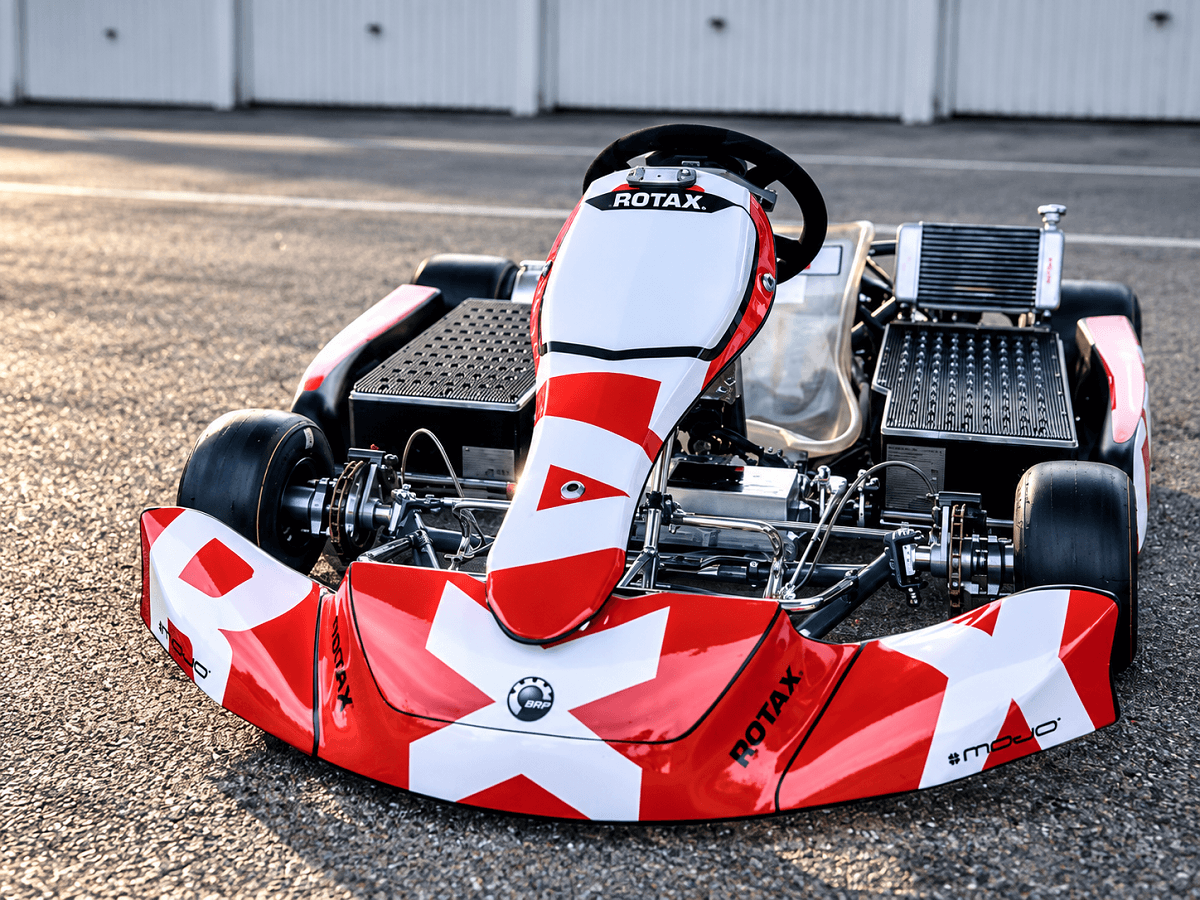
A kart that goes from 0 to 100 km/h in 3.5 seconds, with no fuel mix to prepare and no carburettor to tune: enough to spark anyone's curiosity. And yet, in the karting world, electric remains an almost taboo subject that sets debates on fire every time it comes up. Too heavy, too quiet, too expensive? Weight, range, feel behind the wheel… not to mention the disappearance of the two-stroke engine we all love so much 🤔
With the Rotax E20 and E10, we're talking about racing machines, a far cry from the electric rental karts you find at indoor tracks. The E20 already competes in international events, while the E10 lets kids discover electric karting with their own equipment.
The question is what they bring compared with a petrol Rotax Max or X30. Performance, range, batteries, purchase price and the budget needed to race: whether you're for or against, here's what we're actually talking about.
Rotax E20 vs E10: what's the difference?
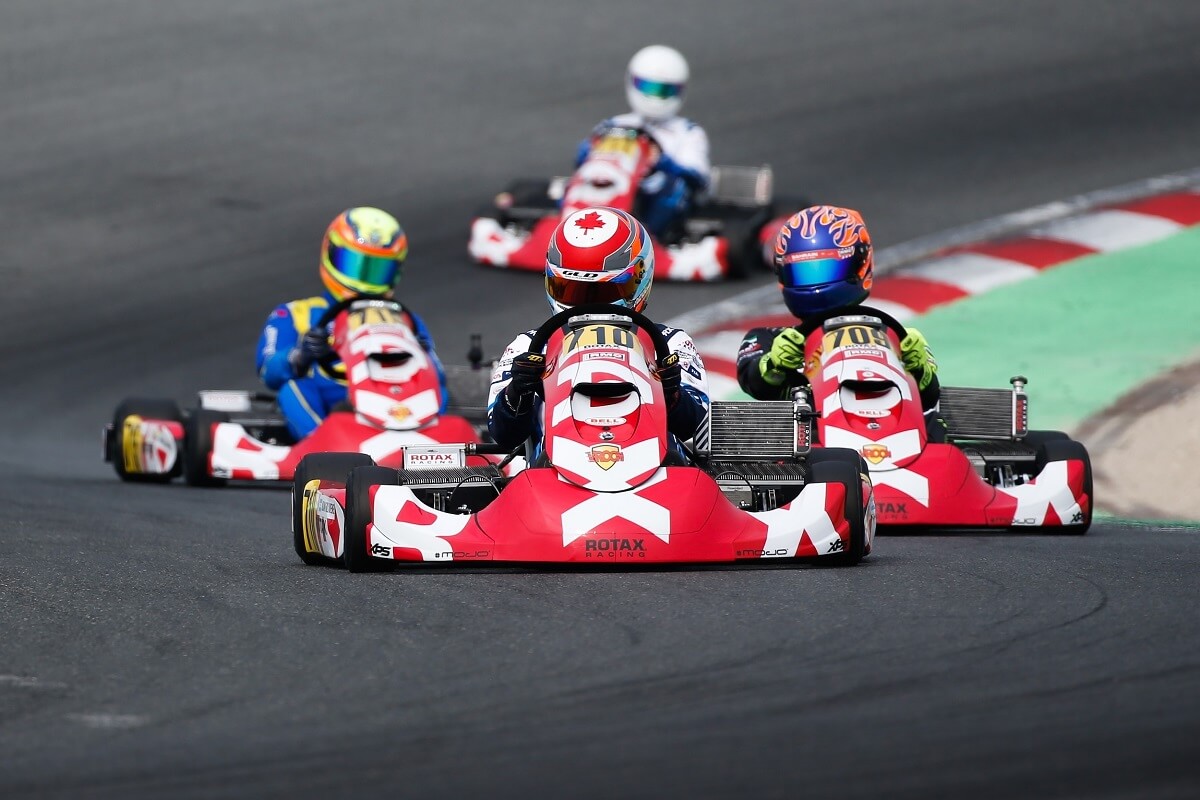
ℹ️ The E20 is rented on an Arrive & Drive basis: the driver books a kart for an event. The E10 is sold: you can buy the powertrain or a complete package through the Rotax network.
With the E20, the equipment and charging infrastructure are already on site. No need to buy or transport your kart, but you can only drive it at the events on offer. The E10 is aimed more at families, driving schools and track operators who want to own their equipment.
The target audiences differ too: the E20 comes in Junior, Senior and Masters, while the E10 targets the youngest drivers, in Bambini and Mini, with its own powertrain and batteries.
Rotax E20: how does it compare with a Rotax Max or an X30?
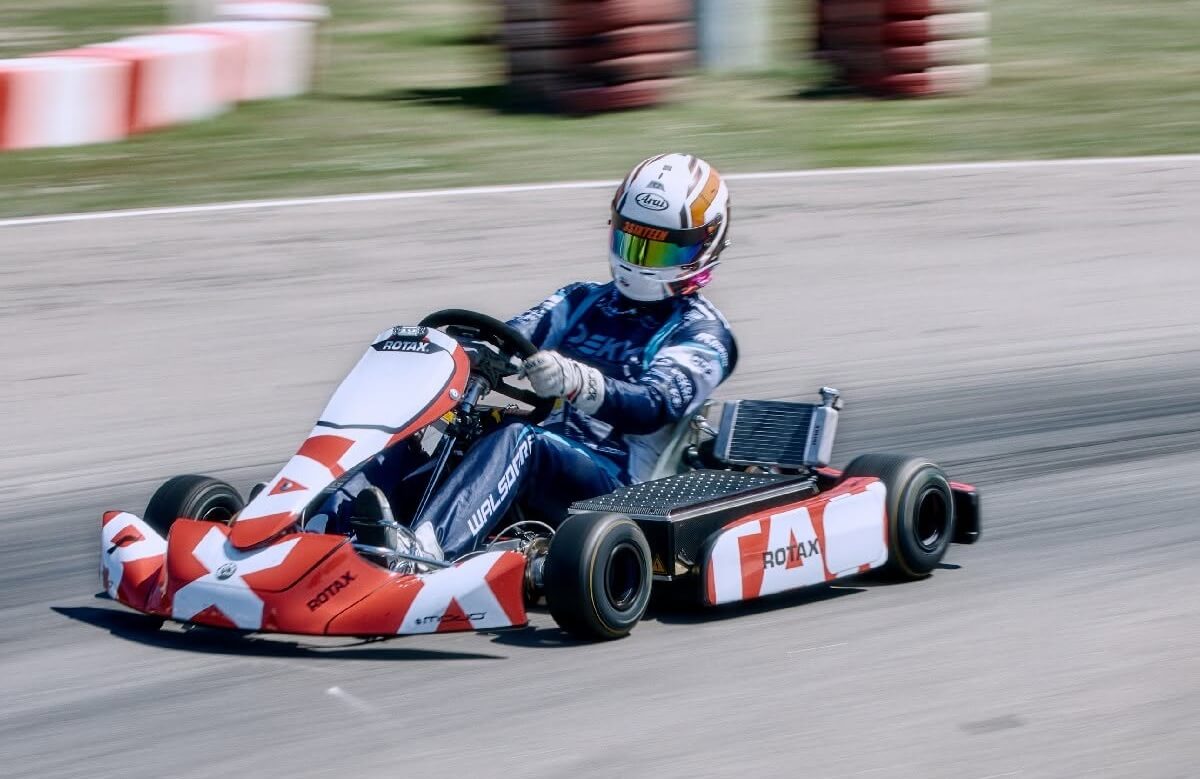
The Rotax E20 is built on a Sodi Sigma DD2 chassis, with front and rear brakes. Rotax quotes 0 to 100 km/h in 3.5 seconds and a top speed of 135 km/h. In terms of power, the E20 Senior plays in the same league as competition 125cc two-strokes:
| Powertrain | Claimed power | Feature |
|---|---|---|
| Rotax E20 Senior / Masters | 24 kW (≈ 32 hp) | Electric, with boost |
| Rotax 125 Senior MAX Evo | 22 kW (≈ 30 hp) | Two-stroke, direct drive |
| IAME X30 Senior | ≈ 30 hp | Two-stroke, direct drive |
The power gap is small; what really changes is how that power is delivered. On the E20, the push is instant from low speed. A two-stroke needs to be kept on the boil, with careful corner exits and a gear ratio that matters a lot.
Be careful with the 190 Nm highlighted by Rotax: this figure can't be compared directly with the 21 Nm of a Rotax Max. The 190 Nm is measured at the rear axle, so after the chain. The Max's 21 Nm is measured at the engine output, before the chain.
And the transmission multiplies torque. Take an example: with a 12-tooth sprocket and an 80-tooth rear sprocket, torque is multiplied by about 6.7. The Rotax Max's 21 Nm then becomes around 140 Nm at the rear axle. Electric keeps an advantage, but we're nowhere near a 1-to-10 ratio. And above all, that torque arrives instantly, without waiting for the engine to rev up.
The real weak point is weight: 142 kg without driver, batteries included, whereas a petrol Rotax Max or X30 kart weighs around 80 kg. The regulations confirm it: the minimum weight with driver is 220 kg in E20 Senior, compared with 162 kg in Rotax Senior MAX, 175 kg in DD2 and 158 kg in X30 Senior (IAME Series France). Nearly 60 kg more than a Rotax Max is something you feel under braking and in changes of direction. After racing the E20 at the 2024 Grand Finals in Sarno, Christophe Adams describes very strong acceleration, but admits the DD2 is still quicker on the stopwatch.
How does the boost work?
The driver has a button on the steering wheel that temporarily increases power. Useful to set up an overtake, defend a position or attack where your rival isn't expecting it. Timing matters: fire it too early and you give your opponent the chance to strike back with their own boost.
On the E20, the setting is fixed by Rotax. The 2026 technical regulations provide several maps, including a qualifying mode and a race mode. The driver controls when the button is used, not how much extra power it gives.
How much extra power? Rotax doesn't publish an official boost figure for the E20, either in its spec sheets or in its 2026 regulations. Its datasheet does, however, list two power levels, 17 kW and 24 kW, each with a different range. That gives an idea of the possible gap between modes, around 7 kW (nearly 10 hp), but the values actually used in racing are set by Rotax and may vary from one event to another.
On the E10, the boost lasts five seconds and is available every 45 seconds, with a light showing when it can be used again. Here too, the power gain isn't publicly detailed.
Another surprise: regenerative braking is disabled in the 2026 E20 regulations. The batteries are only recharged between sessions.
Range and charging: how long can you drive?
Sprint karting has an advantage for electric power: sessions are short. A battery that lasts a race doesn't need the range of a road car. Endurance racing, on the other hand, isn't on the agenda for now.
For the E20, Rotax quotes around 11 laps at 24 kW or 15 laps at 17 kW, depending on the circuit. During his test in Sarno, Kyle Lawrence reports charging from 10% to full in under an hour, around 45 minutes according to the team. At a race meeting where categories follow one another, that can fit between two sessions.
The E10 is rated for up to 20 minutes of driving. Charging from 10 to 80% takes around 28 minutes in Bambini and 34 minutes in Mini.
ℹ️ For a practice day, you need to plan your track time around charging… or get extra batteries when the equipment allows it.
Can you swap batteries to go straight back out?
On the E20 in Rotax competition, no. The regulations restrict any work on the powertrain and electrics to people authorised by Rotax. After training, the driver and their mechanic can only plug the kart in to charge it.
On the E10, the batteries can be removed and charged off the kart, using specific adapters. Rotating packs is therefore possible, as long as you buy the extra batteries and charging equipment. In racing, the event regulations determine which batteries are allowed.
And it comes at a cost. At a European Rotax dealer, an E10 battery is listed at around €1,800, the charger at around €800 and the adapter to charge two batteries at once at around €90. In Mini, the two batteries work together, so a second complete set costs around €3,600. In Bambini, a single battery is enough, so around €1,800.
Rotax E10: the electric kart for kids
The E10 runs on 48 V, compared with 350 V nominal for the E20. It comes in two configurations: one battery in Bambini, two in Mini.
| Specification | E10 Bambini | E10 Mini |
|---|---|---|
| Maximum power (product sheet) | 5 kW (≈ 6.7 hp) | 10.5 kW peak (≈ 14 hp) |
| Batteries | One | Two |
| Capacity per battery | 1.5 kWh | 1.5 kWh |
| Powertrain + battery weight | 27.7 kg | 40.5 kg |
| Charging from 10 to 80% | 28 min | 34 min |
These weights only cover the powertrain and its batteries: you need to add the chassis to get the weight of the complete kart.
For comparison, a complete petrol Rotax Mini MAX evo (engine, exhaust, carburettor, radiator and starter battery) weighs around 24 kg. The E10 Mini therefore carries more than 16 kg extra, including 12 kg per battery. On a kids' kart, that's no small thing.
Rotax designs the E10 for children aged around 6 to 13, depending on national categories. For parents, the benefit is very concrete: no fuel mix to prepare and no carburettor to tune. Time at the track goes more into working on racing lines, braking and starts.
Another argument: the powertrain is sealed and identical for everyone. Only people authorised by Rotax can work on it. No more engine-tuning arms race, often expensive with petrol engines, and no more doubts about whether the engine next to you is legal: the difference comes down more to driving and chassis setup.
To get a picture of the categories and budget with petrol engines, see also my article on karting for kids.
The powertrain received its CIK-FIA homologation in September 2026, and the E10 Mini joins the Grand Finals this year. In the event's provisional regulations, the power covered by the homologation is 7.5 kW (≈ 10 hp): the power allowed in racing is therefore lower than the maximum on the commercial spec sheet.
Where can you race and try the Rotax E20 and E10?
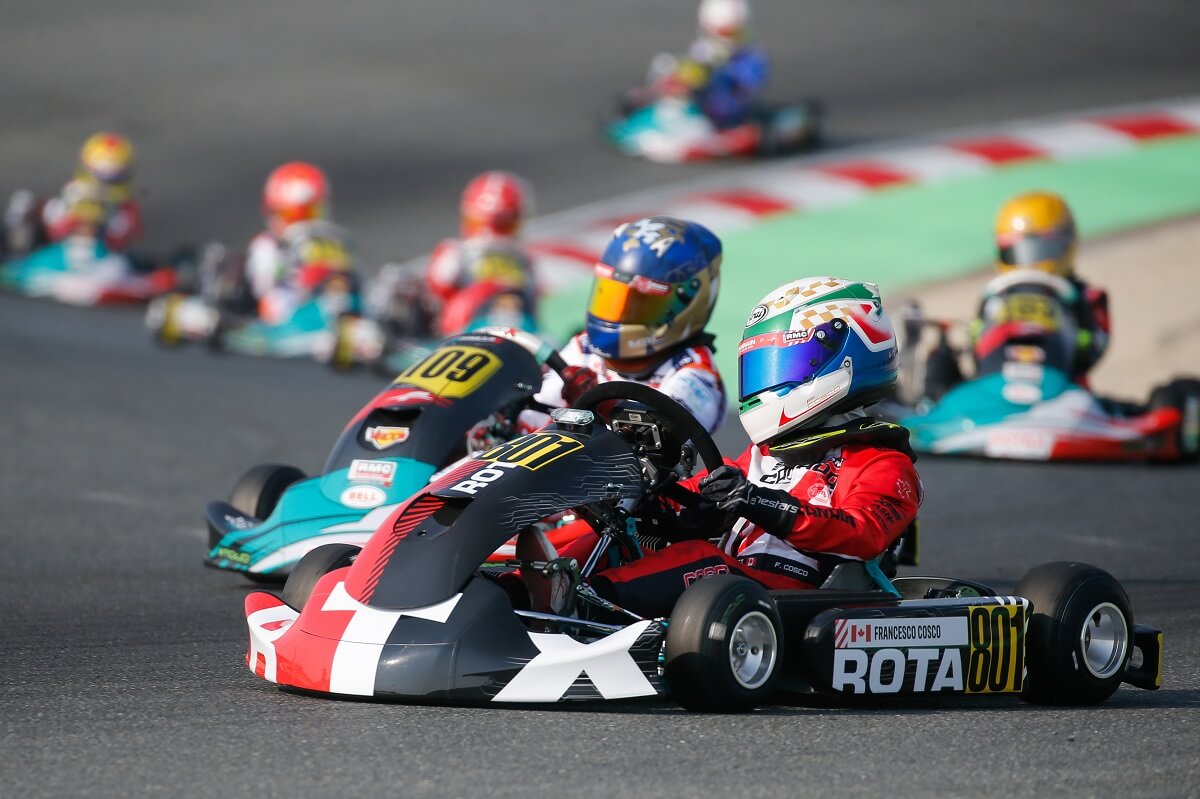
In 2026, the E20 featured at two Euro Trophy rounds, in Senior and Masters: Genk (Belgium) from 25 to 28 June, then Třinec (Czech Republic) from 10 to 13 September. Grand Finals tickets were up for grabs, won in Třinec by Adam Szabo in Senior and Gaston Di Bella in Masters.
The 2026 Rotax MAX Challenge Grand Finals will take place from 7 to 14 November in Portimão, Portugal, with E20 Senior, E20 Masters and E10 Mini categories.
The E10 is also growing at national level. In Sweden, a Mini series kicked off in 2026 with drivers from Sweden, Finland and Norway, and a Grand Finals ticket up for grabs.
For drivers based in Western Europe, Genk is the most accessible E20 event. But travel weighs on the budget: an international event isn't organised like a local championship.
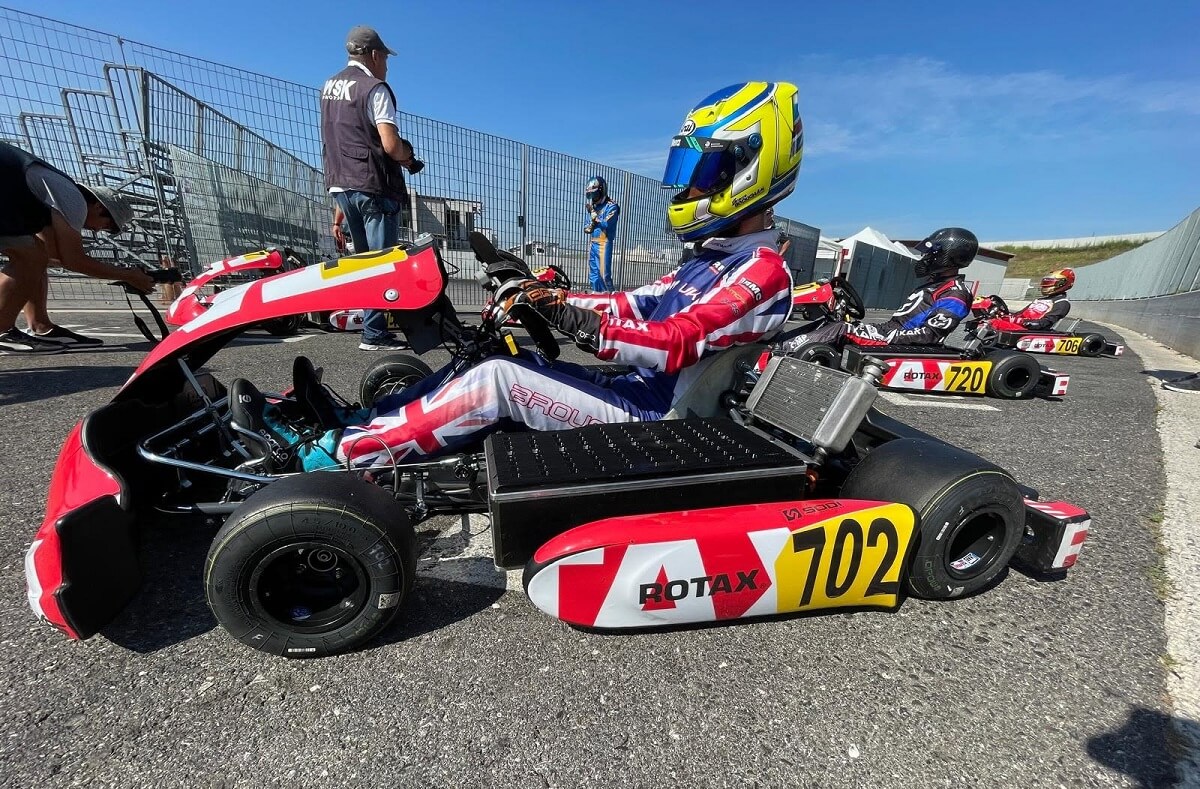
ℹ️ To try before committing, Rotax offers a test request form on its E20 product page. Availability depends on its network and events. It's a question that comes up a lot on social media: many people would like to try one, without knowing where.
How much does it cost to race a Rotax E20?
The regulations for the 2026 Třinec meeting set out the mandatory fees:
| Item | Price |
|---|---|
| Kart rental and entry, Thursday to Sunday | €3,050 incl. VAT |
| Mandatory package: two sets of slicks, one set of wets and Friday free practice | €750 incl. VAT |
| Total | €3,800 incl. VAT |
Personal costs come on top: travel, accommodation, meals, gear, any support and damage. Genk lists similar prices (€2,500 excl. VAT for rental and entry, plus a €750 incl. VAT package). Doing both meetings therefore comes to around €7,600 incl. VAT before logistics.
And with a petrol kart? At the 2026 Rotax Winter Cup, the entry in Senior MAX or DD2 costs €600 incl. VAT, plus the same €750 mandatory package (tyres and Friday practice), so €1,350 incl. VAT. But then you need to bring your own kart, or go through a team. And Rotax itself states that full team support at a top-level national or international event typically starts at a few thousand euros per event, on top of the entry fee. The E20 includes the kart and powertrain, so the gap narrows considerably once you compare it with a team package.
For the Grand Finals, Rotax publishes an E20 offer at €5,500 excl. local VAT, kart and tyres included, with mechanic and damage at the driver's expense. Drivers who earned a ticket, on the other hand, receive an invitation with entry, kart, tyres and tools covered.
With petrol engines, there's no comparison possible: at the Grand Finals, all equipment is supplied by Rotax and seats can't be bought, they're earned in championships. Being able to pay for a seat in the E20 is therefore specific to electric, not the norm for the event.
How much does a Rotax E10 cost to buy?
At KartodroM, a Rotax dealer in Germany and Austria, the E10 engine kit is listed at €4,990 incl. VAT, with mounting parts and charging cables, chassis not included. For comparison, a complete new petrol Rotax Mini MAX evo engine costs around €2,250: electric costs more than twice as much to buy.
For a ready-to-race kart, you therefore need to add the chassis, brackets, the charger depending on the offer, and possibly a second set of batteries to run back-to-back sessions. Rotax itself acknowledges an initial investment generally higher than with petrol, offset according to the brand by lower running costs. The number of track days then becomes decisive.
To compare with a petrol budget, see my article on the budget for recreational competition karting, and the karts for sale on GoToTheGrid.
Why do people sometimes mention €55,000 for an electric season?
That figure mainly comes from the Monaco E-Kart Championship. At its presentation in late 2021, the organisers announced budgets of €42,000 to €55,000 per year, with kart (Birel Art chassis) and mechanic provided for all races and test sessions. A different programme from the Rotax E20, and a reminder that the cost of a season depends far more on support, the calendar and travel than on the energy consumed.
Is electric cheaper to maintain?
On the engine side, the advantage is obvious: no more pistons to replace, fuel mix to prepare or carburation to adjust. After an E20 meeting in 2022, Blake Choquer of BBR Karting explained that he spent more time coaching his driver and analysing data than preparing the engine.
The rest of the kart, however, still wears: tyres, brakes, bearings and chassis still need looking after, and an off costs just as much as with petrol. For an owner, you also need to factor in battery life, warranty and replacement cost.
ℹ️ The most immediate gain is mainly time and simplicity. For the overall budget, it all depends on the equipment bought and how much you drive.
Why are electric karts so divisive?
Acceleration that leaves a mark
On social media and in the comments on videos I've seen, those who have tried it talk about much punchier acceleration than with petrol, and a very physical kart: some come out of their session aching all over.
Throttle modulation is more divisive. Some describe a rather "on/off" response, whereas Kyle Lawrence, in his test published by Rotax, finds the throttle progressive and easy to modulate. On lap times against the X30, you also read that electric is slightly slower, but without times or precise conditions. Even among drivers who have raced, opinions differ: Christophe Adams saw the DD2 ahead in Sarno, while Yanek Sterzel of TKART talks about comparable lap times at his race. The circuit and conditions clearly make a difference.
Noise is part of the fun
For many, noise is life! The scream of a two-stroke, its vibrations and the sound of the pack are part of the fun, including from the grandstands where they add to the sense of speed.
Behind the wheel, electric lets you hear other things: the tyres, the kerbs, the kart's reactions. Rotax makes this an argument in its response to critics: hearing your kart better would help you understand it better.
Weight and tyre wear are a concern
The E20's 142 kg gets people talking. In the feedback I've read, people describe a kart that "really goes", but heavy, putting a lot of load on the front and wearing the front tyres quickly. An individual impression, which also depends on the circuit and setup, but one that matters given how much tyres weigh in a karting budget.
Off the track too, you need to be able to lift and move such a heavy machine: the question comes up often in comments and on forums.
Still hard to access
To convince a driver to switch equipment, they need to be able to drive regularly, find rivals and get support close to home. Not to mention charging: an electric fleet needs a suitable power supply in the paddock, and not every circuit is equipped.
Trying it can change minds, though. Yanek Sterzel of TKART is a good example. He described himself as a purist, firmly opposed to electric racing karts, which he saw as upgraded rental karts.
Taking part in a Euro Trophy round in the E20 in 2024 changed his view. He discovered a real racing kart, with power well put down on track and lap times comparable, in his view, to those of the Rotax DD2s at that circuit. He doesn't hide the weight, though: around 220 kg with the driver, about fifty kilos more than a shifter kart. Without being fully converted, he admits his opposition in principle no longer really holds.
Less noise: a chance to drive more?
This may be the most useful argument for circuits. Less noise potentially means longer opening hours and tracks in noise-sensitive areas, subject to local permits. For drivers, that could mean more track time and circuits closer to home.
The environmental footprint, however, goes beyond track use: battery manufacturing and lifespan, the source of the electricity and travel to races all count too.
My take: an interesting alternative, but still expensive
I haven't had the chance to try an electric racing kart yet. If Rotax wants to invite me, I'll gladly accept! 😁 But on paper, I think the fun should be there: instant push, a physical kart and performance close to a petrol 125.
Above all, electric can meet the needs of some drivers: less mechanical work, more simplicity, more time spent driving than preparing your engine. With a sealed powertrain that's identical for everyone, the tuning arms race disappears too. For kids and parents just starting out, the E10 clearly has its arguments.
It remains to be seen how it feels on track with nearly 60 kg more than a Rotax Max, and how charging fits into a day of driving. And above all, the price is still high to buy: nearly €5,000 for the E10 engine kit alone, more than double an equivalent petrol engine, and around €3,600 for a second set of batteries in Mini. As a rental, the E20 holds up better: €3,800 per meeting, kart included, compared with petrol in a team, the gap isn't that big. But for anyone who wants to drive often on a tight budget, a used petrol kart is still far more affordable today.
That said, these limits aren't set in stone. Batteries are improving fast: lighter, more range, faster charging. Rotax already announces an E20 around 7% lighter than its predecessor, according to its datasheet. Weight and charging, so hotly debated today, could well become a non-issue within a few generations.
And then there's a question we can't avoid: will we always have a choice? Between noise restrictions around circuits and environmental pressure, electric could one day be imposed rather than chosen. All the more reason to take an interest now, rather than discover it the day it's no longer optional.
👉 What about you: would you be ready to try an electric racing kart? Or are the noise and character of the two-stroke part of the sensations you want to keep ❓


I'm Robin, 36, amateur driver and internet entrepreneur. I founded GoToTheGrid (GTTG) to create an intuitive platform dedicated to motorsport enthusia... See more