


 Login
Login
 Post an ad


TDF/One: A Real Formula 1 Car Transformed for Amateur Drivers
By RobinB on 05 October 2026 Circuit / Trackday Circuit / Race Miscellaneous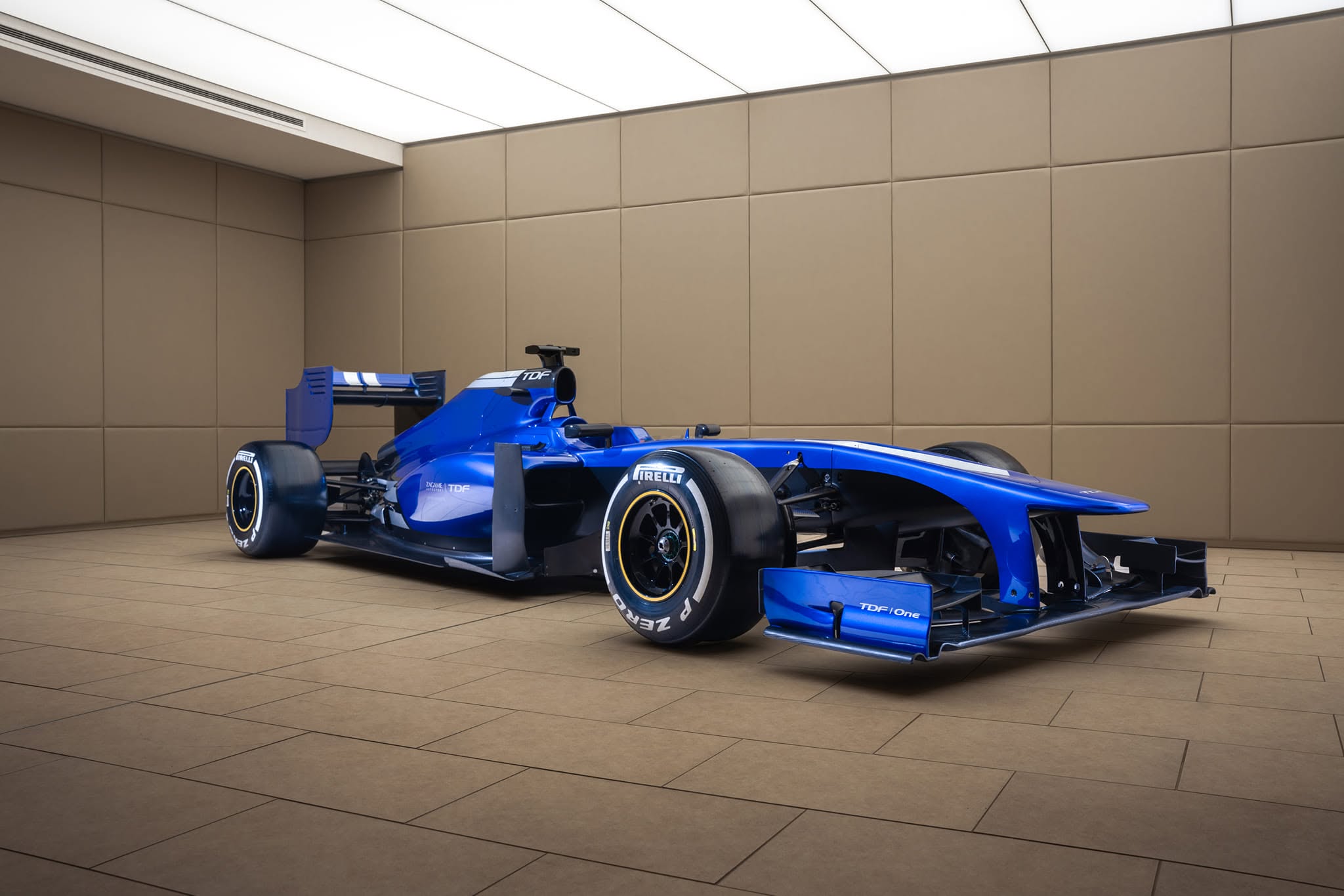
Buying a retired Formula 1 car is possible if you have enough money. Actually getting it to run on a regular basis is sometimes another story. Between start-up procedures, ageing electronics, engine rebuilds and parts that can no longer be found, your dream car can quickly end up spending more time in the workshop than on track 😒
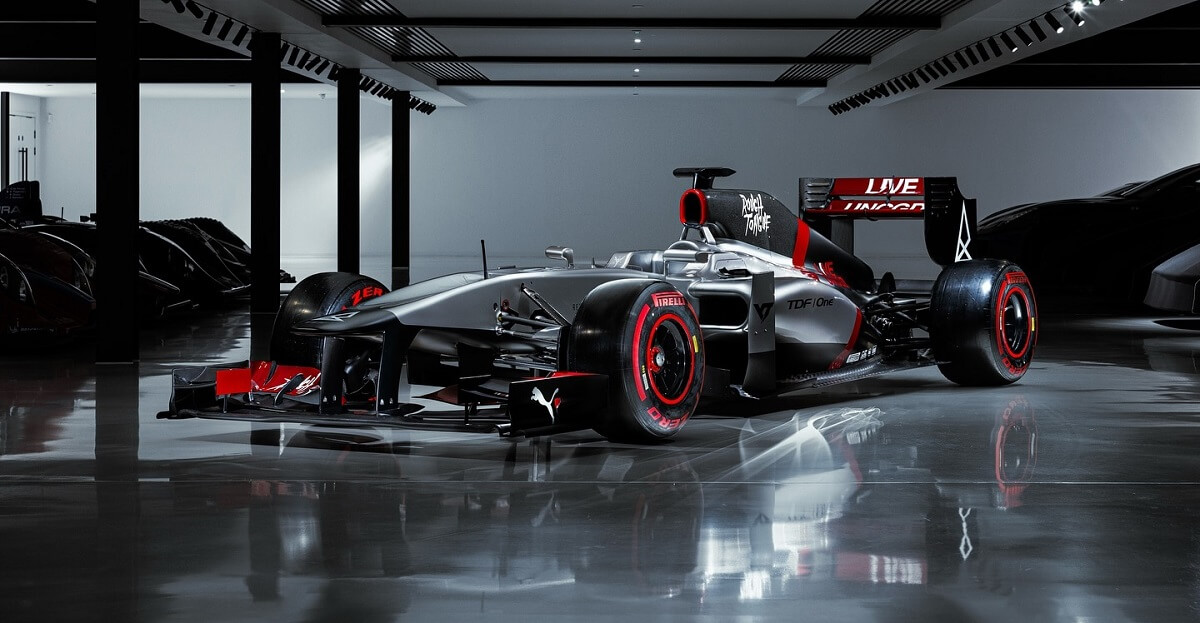
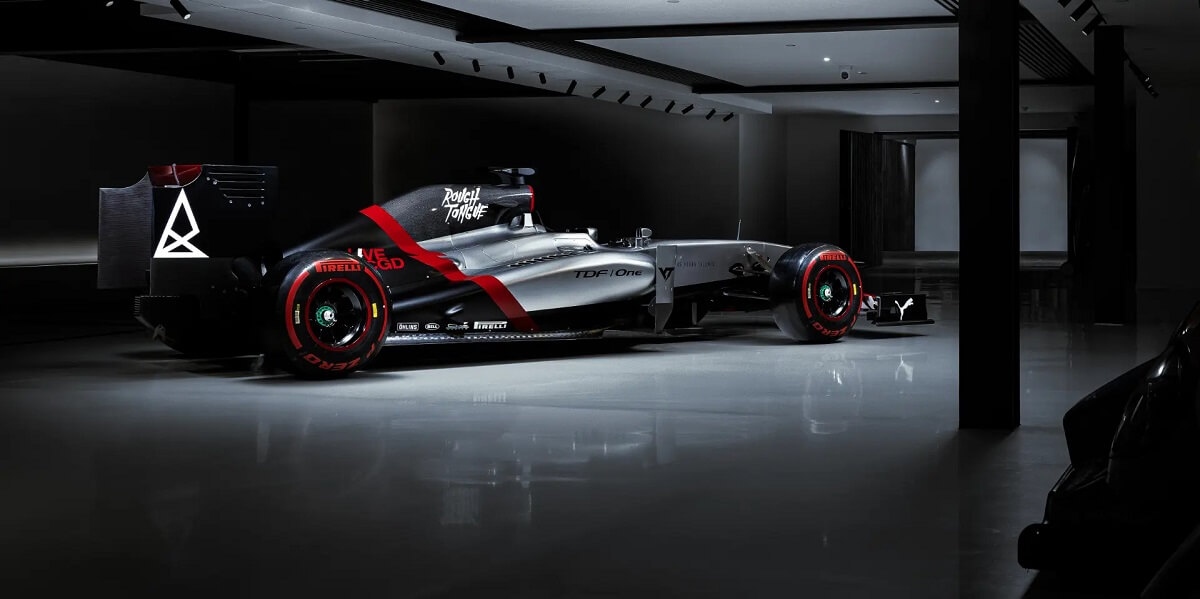
This is exactly the problem TDF is tackling with its TDF/One programme. The British company starts from genuine F1 chassis that have raced in Grands Prix and transforms them so that a private owner can really enjoy them. On the menu: simplified mechanicals, redesigned systems, a bespoke cockpit and performance that remains extremely demanding, even for an experienced driver.
ℹ️ Prefer to watch a video? This article is also available as a video on YouTube, click here! 🎥
With a starting price of £1.25 million, or roughly €1.46 million or US$1.65 million, the TDF/One is aimed at a very small clientele. Its engine may also come as a surprise: the original powertrain is replaced by a turbocharged four-cylinder. This choice, however, answers specific constraints in terms of packaging, maintenance and ease of use, which I'll go through in detail.
To prepare this article, I studied the technical documentation and spoke directly with TDF in September 2026. These exchanges allowed me to clarify several aspects of the programme, including running costs, the number of cars delivered, repair options and build times 😉
Why running a retired F1 car can become a headache
A Formula 1 car is designed to operate with a specialist team, dedicated equipment and extremely close maintenance. Running one as a private owner therefore means recreating part of that expertise and equipment.
On some generations, starting the car requires pre-heating the engine and fluids, plugging in external equipment and communicating with specific ECUs. Sometimes you even have to keep the original software and computer hardware from the period. All of this before you've even left the garage.
Once on track, parts availability becomes another issue. A faulty sensor, a damaged suspension component or a transmission part that can't be found can leave the car stranded. When a component has to be redesigned and then remanufactured as a one-off, costs and lead times can become significant.
For a collector whose main goal is to preserve a piece of history, these constraints can be part of the game. For someone who wants to enjoy their Formula 1 car, really drive it and have fun on track, they become far more frustrating.
ℹ️ TDF's goal is to make running a retired F1 car simple and predictable enough to drive it regularly. The owner should be able to enjoy their day, with a small team and parts whose manufacture remains under control.
Who is behind TDF?
TDF relies on a team drawn from top-level motorsport. The company claims more than 50 years of combined experience, particularly in Formula 1 and Formula 3.
Its Technical Director, James Densley, worked at Mercedes-AMG Petronas F1. Dean Chandler, Head of Car Build, comes from Marussia F1, while Simon Gregory, Head of Design and Manufacturing, worked at Renault F1. Their backgrounds are presented on TDF's official website.
The company is split into three activities: TDF/One, for transformed F1 cars aimed at private owners; TDF/Works, for the restoration, preparation and running of historic racing cars; and TDF/Precision, for design and manufacturing work.
This last activity makes it possible to scan parts, model them, machine them or redesign them. An essential capability when you're working on cars whose parts can no longer all be ordered from a catalogue.
A genuine Grand Prix chassis as a starting point
The TDF/One is built around an authentic Formula 1 monocoque, selected and inspected before its transformation. Its history is part of the project: which car, which season, which drivers and which Grands Prix? 🥰
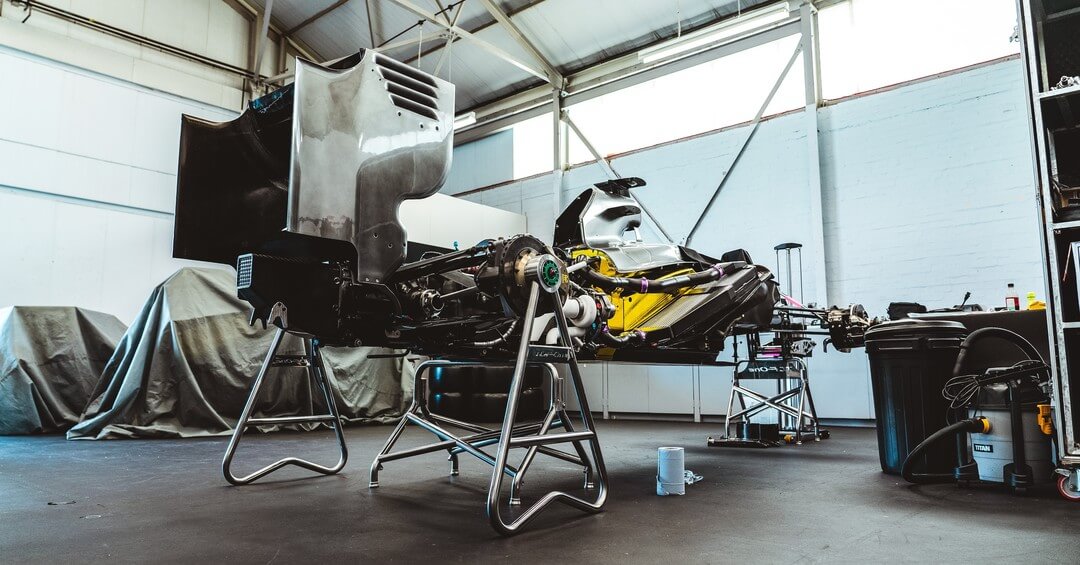
The first TDF-1s (the programme's original name) were notably based on Marussia Virgin and Sauber chassis. The cars currently showcased by TDF include several 2011 Virgin MVR-02s, raced by Jérôme d'Ambrosio or Timo Glock. The history relates to the chassis itself, beyond the model it comes from. Depending on the available archives, the owner can identify the Grands Prix their car took part in and the drivers who raced it, and find photos or videos of its outings. They therefore get behind the wheel of a monocoque that genuinely raced in the World Championship, with a traceable racing record. And for an enthusiast, sitting in the very car you watched race in a Grand Prix is priceless!
According to the information I obtained from TDF, the programme covers chassis that raced between 2011 and 2017. This period spans two different generations: naturally aspirated V8 F1 cars up to 2013, then the V6 turbo-hybrid era from 2014 onwards. The TDF/One transformation involves replacing the powertrain, whichever generation is chosen.
The idea is to keep the carbon monocoque and much of the aerodynamic package, while removing the mechanical and electronic constraints that make private use complicated.
ℹ️ When I spoke with them in September 2026, TDF confirmed they had delivered five TDF/Ones, with other projects already secured by deposits. Production remains very limited and each car is specified individually with its owner.
Why replace the original V8 with a turbocharged four-cylinder?
On a 2011 MVR-02, the naturally aspirated 2.4-litre V8 was obviously part of the show. With the TDF transformation, that engine is replaced by a turbocharged four-cylinder developed with Mountune, paired with a six-speed semi-automatic gearbox.
The current spec sheet lists power outputs of 450 to 600 bhp and a maximum of 8,500 rpm. The official website also gives a weight of around 700 kg including the driver. Keep this last detail in mind when comparing the car with other single-seaters quoted dry and without a driver.
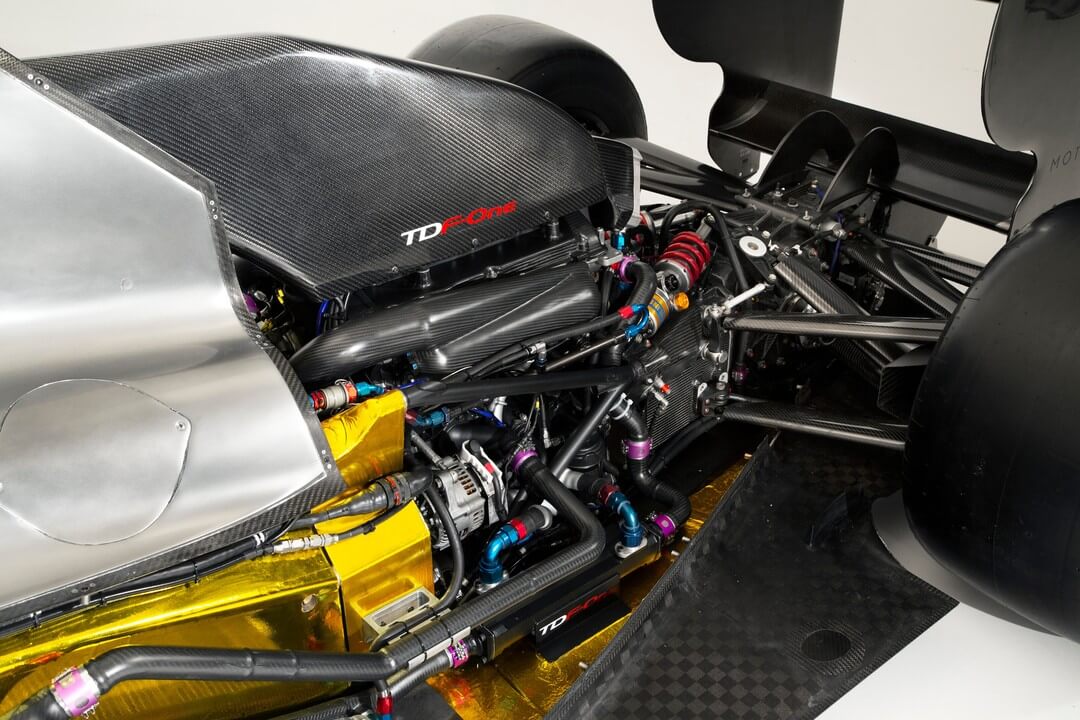
The choice of a four-cylinder answers several constraints. It allows the use of an engine that is simpler to start and maintain, with dimensions compatible with these very compact cars. Fitting another large engine could require far more modifications around the monocoque, the bodywork and the existing structures.
That said, this choice may raise some reservations. The sound, revs and character of an F1 V8 are part of the experience some enthusiasts are looking for. Replacing them inevitably changes the sensations and the mechanical faithfulness to the original car.
ℹ️ TDF accepts losing some of that authenticity in exchange for ease of use. Ultimately, the debate is less about power than about the sensations each owner expects from their car.
And for those who absolutely want a V8 or V10, TDF can study a specific project through TDF/Works. This falls outside the TDF/One programme, which is designed as a coherent package built around its own powertrain.
A transformation that goes far beyond the engine
Swapping the engine alone wouldn't make an F1 car manageable with a small team. TDF also reworks the electronics, the controls and several components whose maintenance would be too demanding for private use.
In an interview about the project, James Densley gives the example of certain carbon steering columns. Very light, they can require frequent inspections. A suitable metal part may add weight, while reducing the inspection burden.
This approach doesn't apply in the same way to every part, though. TDF told me, for instance, that they had reproduced carbon suspension components to the original specifications. Each modification depends on the part's role, the loads it carries and how it fits into the car.
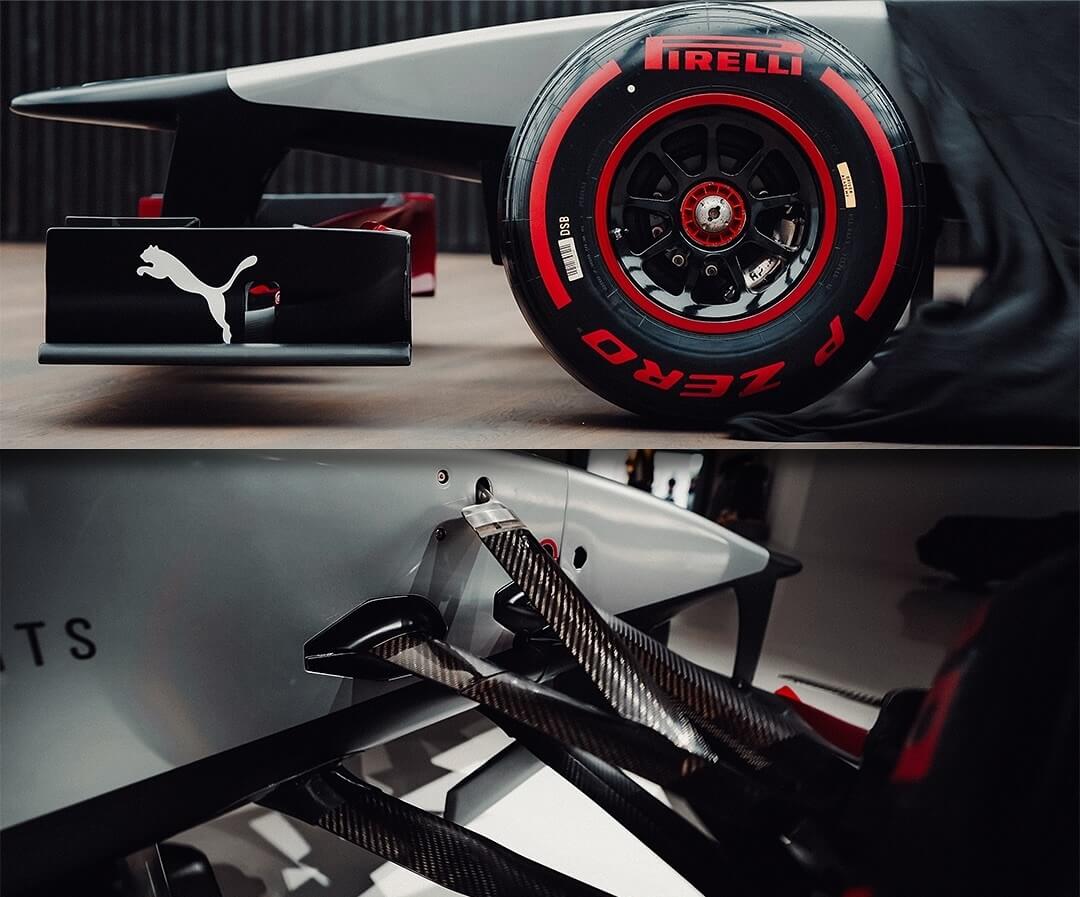
Tyres and brakes are also part of this push for simplicity. The car runs on Pirelli tyres, with several compounds and a wet option. It is designed to be run without tyre blankets, although they can still be used depending on conditions. Of course, that doesn't remove the need to bring the tyres up to temperature gradually.
For the brakes, Densley describes a development aimed at offering a wider operating window. The goal is to make them easier to use for a driver who doesn't always brake with the intensity of a professional.
The first TDF-1s also retained a DRS, with an automatic closing safety feature. The aim was to limit the risk of a driver entering a fast corner with the wing still open and reduced rear downforce. The idea is therefore to adapt an F1 car to an amateur driver so they can enjoy it, with systems designed around their use.
An F1 car tailored to its owner, right down to the cockpit
Each TDF/One is specified with its future driver: livery, finish, driving position, moulded seat, pedal box, steering wheel and control layout.
You don't need to already own a retired F1 car before contacting the company. TDF holds a stock of chassis and can select a base according to the project, but also to the owner's build. The dimensions of the monocoque remain a constraint, though: cockpit customisation has to respect the available space and safety requirements.
The work also covers the learning curve. Power and certain settings can be adjusted to the driver's level, then evolve with their experience. TDF explains that many owners already find the setting of around 450 bhp more than enough.
When power is restricted, an overboost or push-to-pass function can give occasional access to the maximum available. The owner can thus discover the car with reduced power, then progressively unlock its full performance 🚀
Easier to run, but still very demanding to drive
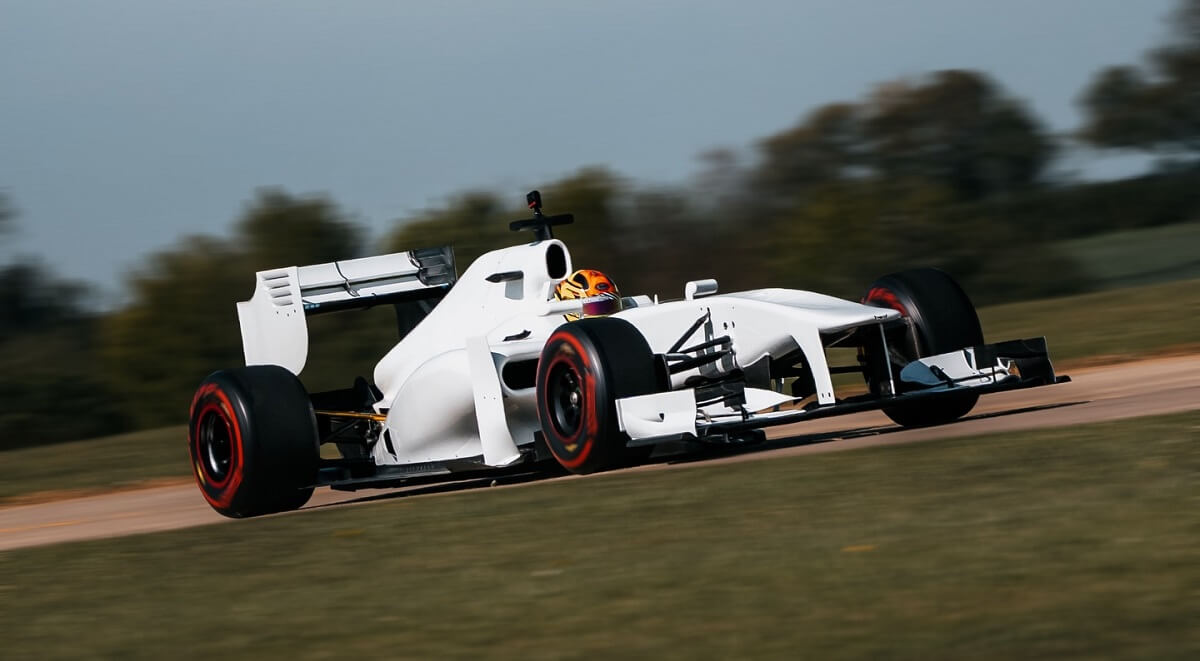
A TDF/One isn't meant to match the lap times of the F1 car it comes from. It can be heavier, less powerful and run on different tyres. Densley also explains that the car can run at a higher ride height to protect the floor and reduce the risk of damaging it while the owner gets up to speed.
ℹ️ That still leaves considerable performance. TDF's data and explanations mention a top speed above 320 km/h (200 mph), around 3 to 3.5 g in corners and up to 4 to 4.5 g under braking. These claimed figures depend on the configuration, the circuit, track conditions and the driver's level.
At this level, physical fitness becomes a real issue. TDF explains that the owner's neck often reaches its limits before the car does. Lateral loads and deceleration require proper preparation to string laps together in good conditions.
Mechanical simplification doesn't mean everything is assisted either: no ABS or traction control in the configuration described. The driver still has real work to do on braking, throttle application and making the most of the aerodynamic downforce.
Support therefore matters a great deal: simulator work, coaching, data analysis and physical training can help the owner progress. Buying the car gives access to its potential; learning to use it is another step altogether. And let's be honest, not many of us could fully exploit this kind of car… myself included! 😁
How many people does it take to run one?
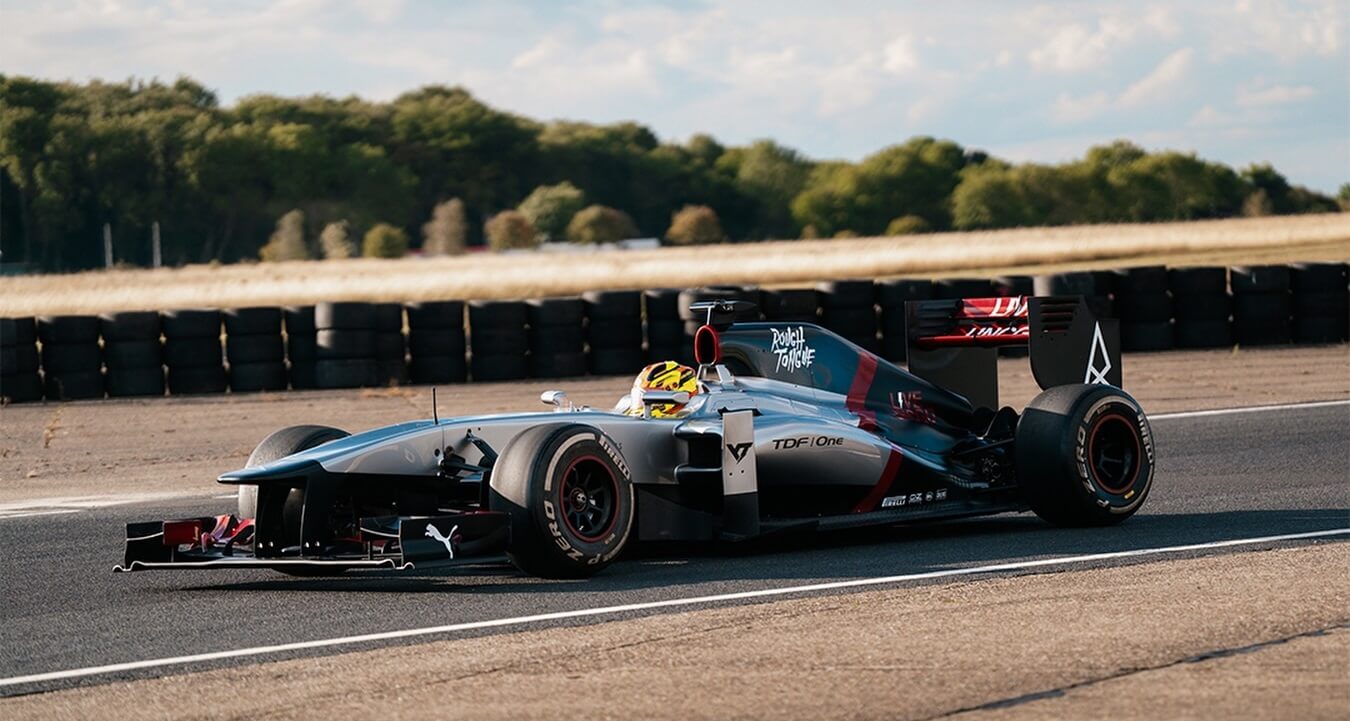
The TDF/One has an on-board starter and is started from the cockpit. According to TDF, it doesn't require the complex external pre-heating setup of some historic F1 cars. The usual warm-up procedure and checks of a racing car still apply.
ℹ️ Two technicians can run it at the track. When the project was launched, TDF even mentioned running it with a single mechanic. The crew needed then depends on the driving programme and the level of support required.
TDF told me it can organise support in many countries. If the owner already has their own team, the company can train their mechanics, provide remote support and step in for larger jobs.
The programme also includes access to private events and technical support. The purchase should therefore be seen as a complete project, with its own preparation, logistics and track time.
Maintenance: an engine rebuild every 3,000 km
The key figure to remember is 3,000 kilometres (around 1,865 miles) between engine rebuilds. I asked TDF whether this was just a recommendation: the company confirmed it is indeed the standard planned cycle.
An extension may be considered after inspection, depending on usage and the condition of the engine. But it isn't a deadline you automatically push back just because the car is still running well.
In the interview used to prepare this article, Densley also mentions a general overhaul around that mileage and an ultrasonic inspection of the front suspension at around 1,500 km. Maintenance then depends on the car and its usage programme.
This is still a racing machine, with monitored components and precise service intervals. The intended advantage is being able to plan this maintenance and keep access to the technical resources needed to run the car.
How much does a TDF/One cost?
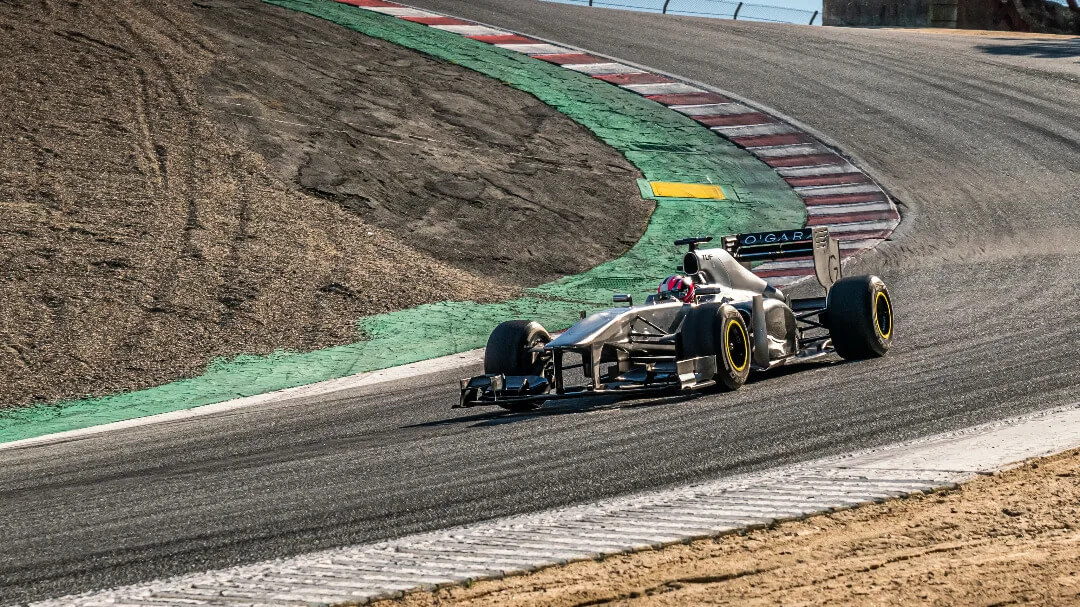
The TDF/One programme is listed from £1.25 million, or roughly €1.46 million or US$1.65 million. As each car is bespoke, this amount is a starting point. These conversions are rounded, based on reference exchange rates on 1 October 2026. The final budget will depend on the exchange rate, the chosen configuration and the terms of the quote.
The offer includes a track-ready car, the specification work with the client, the necessary equipment and technical support. The duration and scope of these services need to be clarified in the individual offer, especially to distinguish included services from work billed separately.
As for lead time, TDF told me it aims for around 18 months after final sign-off of the specification. This period starts once the technical and aesthetic choices have been finalised with the manufacturer.
How much does a TDF/One cost to run?
This is one of the most interesting pieces of information I got from my exchanges: TDF targets running costs of £50 to £70 per km, or roughly €58 to €82 per km or US$66 to US$92 per km, depending on the owner and their usage.
ℹ️ Applied to 100 kilometres of track time, that works out at £5,000 to £7,000, or roughly €5,800 to €8,200 or US$6,600 to US$9,200. The calculation gives an idea of the scale of the budget, without being a guaranteed price for a full day.
TDF compares this level of spending to that of a GT3 car, while highlighting a smaller staffing requirement. This comparison remains the manufacturer's own: budgets vary enormously from one programme to another.
Tyres, fuel and circuit fees are among the recurring costs mentioned. Support depends on the service requested. You'll also need to clarify what the estimate covers in terms of servicing, transport and other programme costs.
The budget remains substantial. But for an owner planning to drive a retired F1 car regularly, being able to anticipate these costs and rely on a defined structure is a significant advantage.
What happens after an off?
Parts availability and repair options were among the points I discussed directly with TDF.
The company explains that it scans the entire car and can reproduce virtually all of its components. Bodywork, wings, suspension parts: some of these can be supplied to the owner without the car having to go back to the workshop every time.
On the other hand, a heavy impact requires a return to TDF for a full inspection. Repairing a bodywork panel and assessing structural damage call for different procedures.
Above all, this ability to reproduce parts limits the risk of the car being stranded for months while you hunt for a period part. Repairs can still be expensive, but this setup addresses one of the main difficulties of running a retired F1 car.
Are we sacrificing a piece of history?
This is probably the most interesting question raised by the project. A Grand Prix monocoque keeps its history, but a car stripped of its original engine, gearbox and electronics inevitably loses part of its authenticity.
Transforming an iconic, complete F1 car with a significant race record would raise genuine preservation questions. But the situation is different for a less sought-after chassis, already largely stripped or difficult to return to the track in its historic configuration.
TDF told me that the chassis they acquire usually arrive missing most of their components, citing around 90% of the original components missing in their reply. So the programme doesn't systematically involve dismantling a complete, working F1 car.
The company explains that it preserves the main mounting points of the monocoque and the critical areas of the chassis. The powertrain is integrated using an adaptation that leaves open the possibility of a future restoration.
Returning to a configuration close to the original would, however, take much more than an engine swap. Finding a compatible engine, gearbox and equipment can represent a considerable amount of work. TDF/Works can study this type of restoration, possibly with modern electronics.
ℹ️ The transformation therefore preserves the option of returning to a more authentic configuration, without guaranteeing a simple restoration or one fully true to the original.
To me, this compromise seems defensible when it allows a stranded chassis to return to the track while preserving the possibility of future restoration. Keeping a car in a collection and driving it on track serve different purposes, and both can help keep the history of these cars alive.
Where can you drive a TDF/One?
The TDF/One is intended exclusively for track use. It isn't road-legal and TDF has no plans for such a conversion within the programme. The quoted ride height of around 25 mm alone illustrates the constraints road use would involve.
When I spoke with them in September 2026, TDF told me that none of the five cars delivered had yet taken part in a competition. They were being used for private track days. There was no dedicated championship either.
I had specifically asked the company about possibly entering BOSS GP. However, the chassis's F1 origins don't guarantee eligibility for a championship: that depends on its regulations and on the car's technical configuration.
The intended use remains high-end recreational track driving, on days suited to single-seaters and with the necessary support. Access to a track day has to be approved by the organiser, taking into account safety conditions and compatibility with the other cars on track.
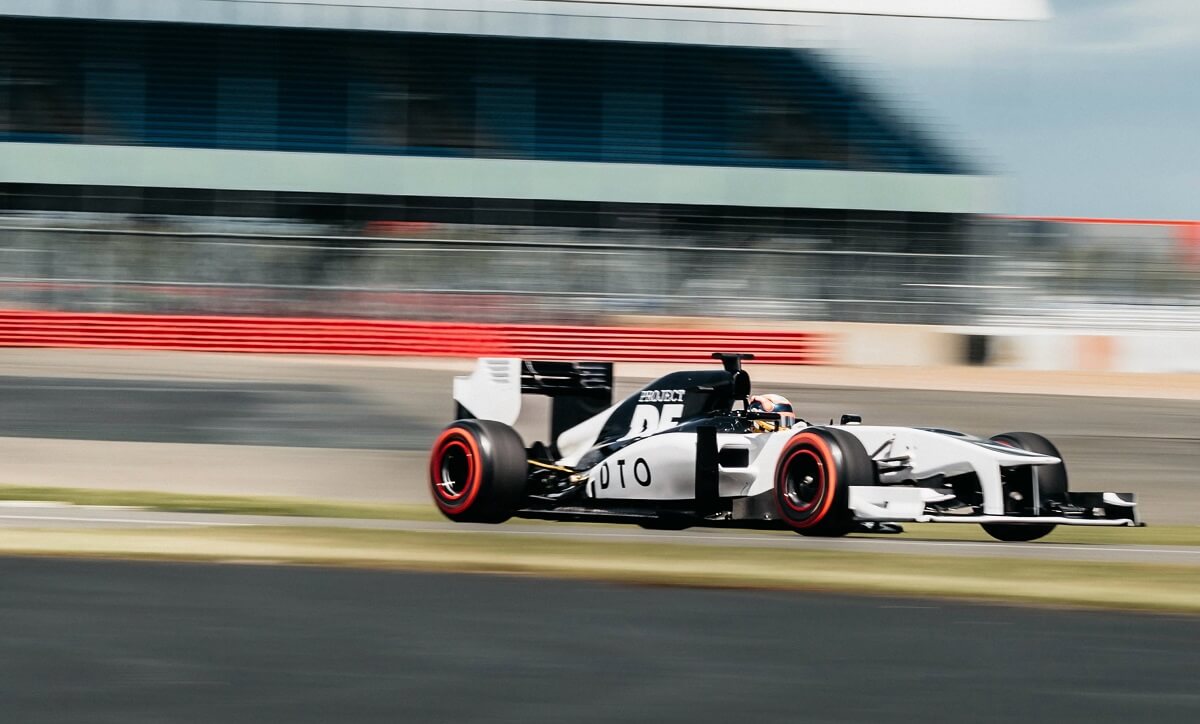
You can also drive one without buying it. Based at Silverstone, DTO Motorsport runs two 2011 Marussia F1 cars transformed by TDF as part of its Formula Experience programme. It runs over two days: a first day in a Dallara single-seater, then track time in the F1 car, supervised by engineers and professional driver coaches.
Why choose this car over another single-seater?
If you want to go very fast and discover aerodynamic downforce, there are plenty of other options. An F3, a Formula Renault or an older single-seater from a higher category already offer considerable performance, with an initial investment that can be much lower. Running them, however, also requires the right resources.
The Rodin FZED takes a different approach: this descendant of the Lotus T125 project has a Cosworth V8 rated at 675 bhp, for 609 kg without driver according to Rodin. This setup may appeal to enthusiasts who value the character of a high-revving naturally aspirated engine. But its chassis never raced in the Formula 1 World Championship.
And this is where TDF stands out. The owner buys a very high-performance car, but also a specific monocoque, its history and the link with the drivers who raced it in Grands Prix.
To explore more accessible options, you can also check out my guide to single-seater racing and the single-seaters for sale on GoToTheGrid. And if you just want to live the experience once, F1 driving experiences are another way in.
My take: another way to keep a retired F1 car alive
To me, the project's appeal lies in its consistency: adapting a retired F1 car to its owner, simplifying how it's run and maintaining the resources needed to look after it. The work on parts, maintenance and support addresses very real difficulties for anyone wanting to use this type of car regularly.
And then there's that childhood-dream-come-true side: building your own F1 car, choosing your livery, adapting the cockpit to your build and specifying the components with the team. A Formula 1 car designed for you, right down to the details… For an enthusiast, it's hard not to dream about it!
The price, however, restricts this experience to a very small audience. Replacing the original powertrain is also a major choice: it brings practical benefits, while changing part of the car's historic character. At this budget, other single-seaters and racing cars can meet different expectations.
The appeal of the TDF/One therefore depends on how much weight you give to its history and to the chance of experiencing it on track. For some, the Grand Prix chassis will be enough to make the experience unique. For others, the absence of the period engine will take away too much of the dream.
👉 What about you: how far can a Formula 1 car be modified before it loses what makes it so special? Are the chassis and its history enough for you, or is the original engine essential ❓
[VIDEO] They transform REAL F1 cars so you can ACTUALLY drive them! (TDF One) – in French


I'm Robin, 36, amateur driver and internet entrepreneur. I founded GoToTheGrid (GTTG) to create an intuitive platform dedicated to motorsport enthusia... See more


