

 Login
 Post an ad


Road-legal Radical: the racing prototype that drove to the Ring
By RobinB on 27 October 2026 Circuit / Trackday Circuit / Race Miscellaneous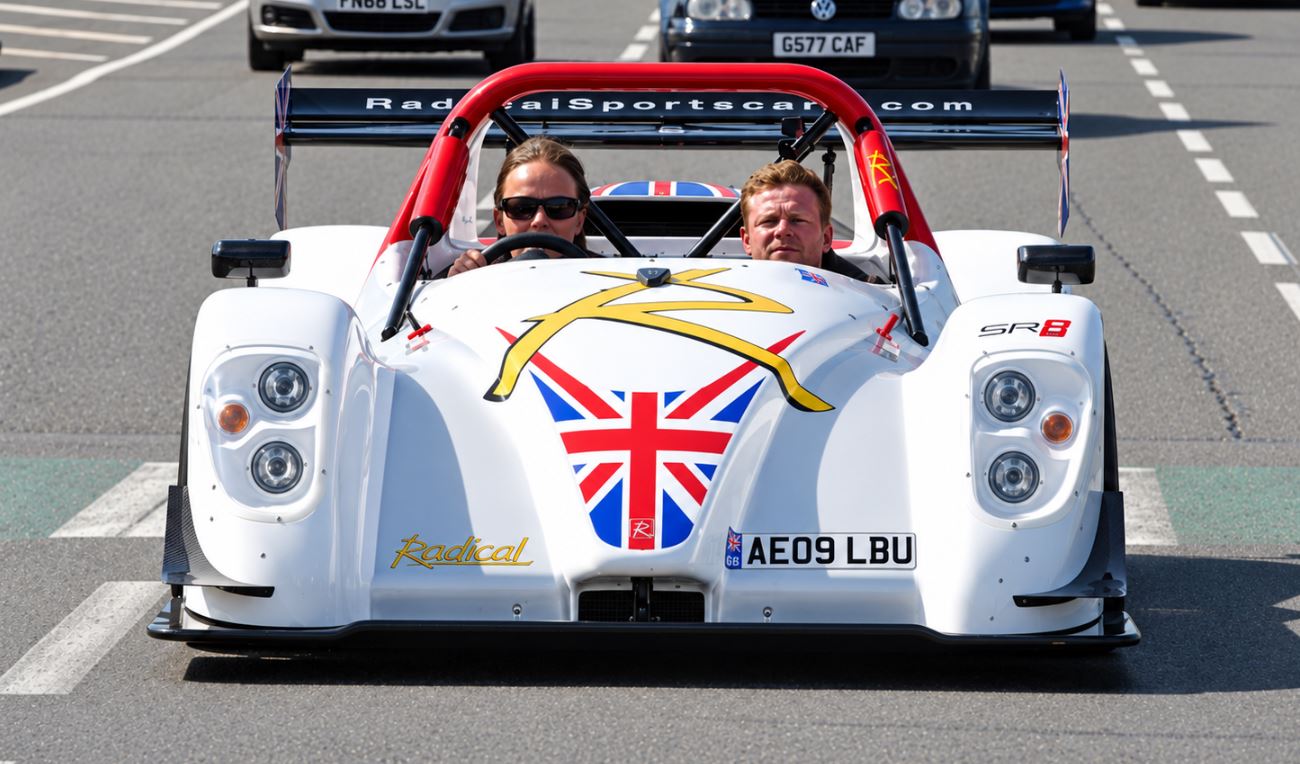
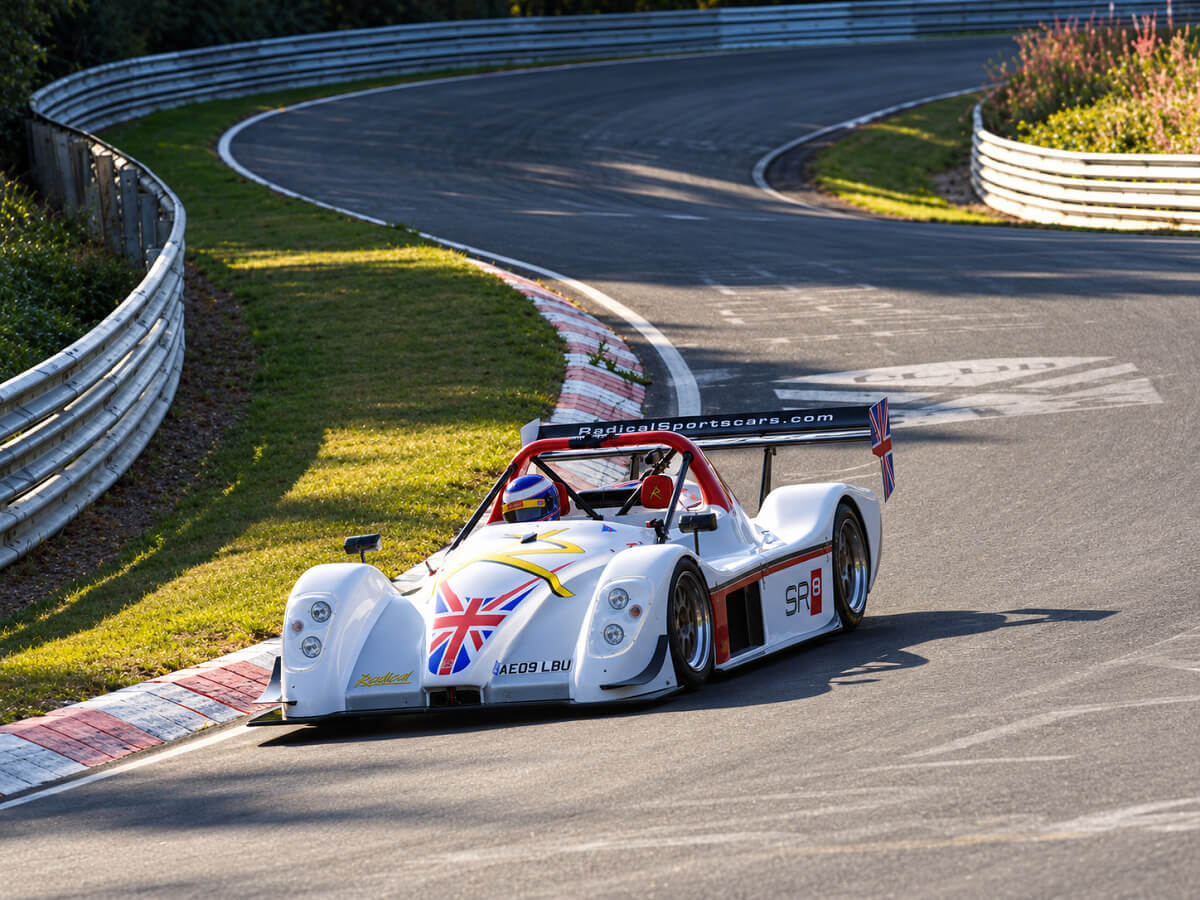
August 2009. A Radical SR8 LM leaves the factory in Peterborough, England, wearing number plates, and heads for the Nürburgring by road. The next day, Michael Vergers laps the Nordschleife in 6 min 48 s, on the same set of tyres. At the time, no road-legal car had ever gone that fast around the Green Hell 🤯
Yet a Radical is a proper racing car: a driving position just above the ground, a tubular chassis, a big rear wing, a sequential gearbox and often a motorcycle-derived engine. The kind of machine you can hardly picture anywhere but in a paddock.
And yet several Radicals really were allowed on the road. Some with a simple UK approval, others with a full European approval. Here's which ones, how it was possible… and why the brand stopped.
Radical, the racing car designed for amateurs
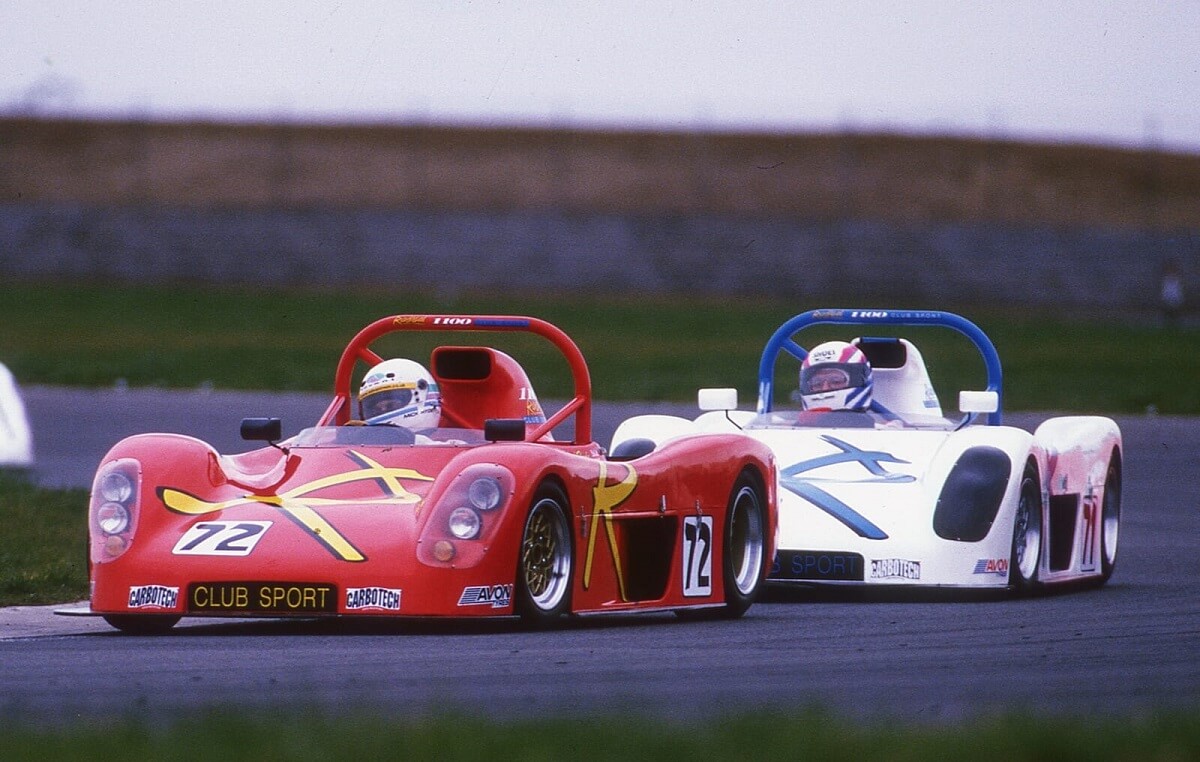
Radical was founded in England in 1997 by two racing drivers, Mick Hyde and Phil Abbott. The idea: offer a real sports prototype, light and fast, but much cheaper and simpler to run than a traditional prototype.
The first car, the Clubsport 1100, combined a motorcycle four-cylinder, from the Kawasaki ZZR1100, with a very light tubular chassis, with no roof or windscreen. It took off straight away: by 1999, there were enough Radicals to launch a one-make championship.
The recipe hasn't changed since: low weight, lots of downforce, and power that doesn't need to be outrageous to go very fast 🚀
The model that really made the brand arrived in the early 2000s: the SR3. Radical calls it "the world's best-selling race car", with more than 1,500 delivered. Its current version, the SR3 XXR, produces 232 bhp for just 620 kg, thanks to a 1,500 cc four-cylinder derived from the Suzuki Hayabusa and reworked by the brand's engine division, Radical Performance Engines (RPE). It revs to around 10,000 rpm.
Road-legal Radicals, model by model
Not all plated Radicals are equal. There are two very different cases:
- UK individual approval (SVA, then IVA from 2009): each car is inspected one by one, and can then be driven in the UK;
- European type approval: the model is approved once and for all, and can be registered in every European Union country.
| Model | Engine | Approval |
|---|---|---|
| SR3 (2000s) | Motorcycle-derived four-cylinder | UK individual (SVA) |
| SR8 and SR8 LM (2005-2009) | 2.8-litre RPE V8, around 460 bhp | UK individual (SVA) |
| SR3 SL (2011) | 2.0 Ford EcoBoost turbo, up to around 300 bhp | European small series |
| RXC Turbo (2015) | Twin-turbo Ford EcoBoost V6, over 530 bhp | Full European |
| Rapture (2019) | 2.3 Ford EcoBoost turbo, 350 bhp | UK individual (IVA) |
This table covers the main models. From the very beginning, the first Radicals (Clubsport, Prosport) were already designed to be registered in the UK and driven on track without modification. Over the years, many cars received plates this way, on a case-by-case basis.
SR3: a kit to pass the UK inspection
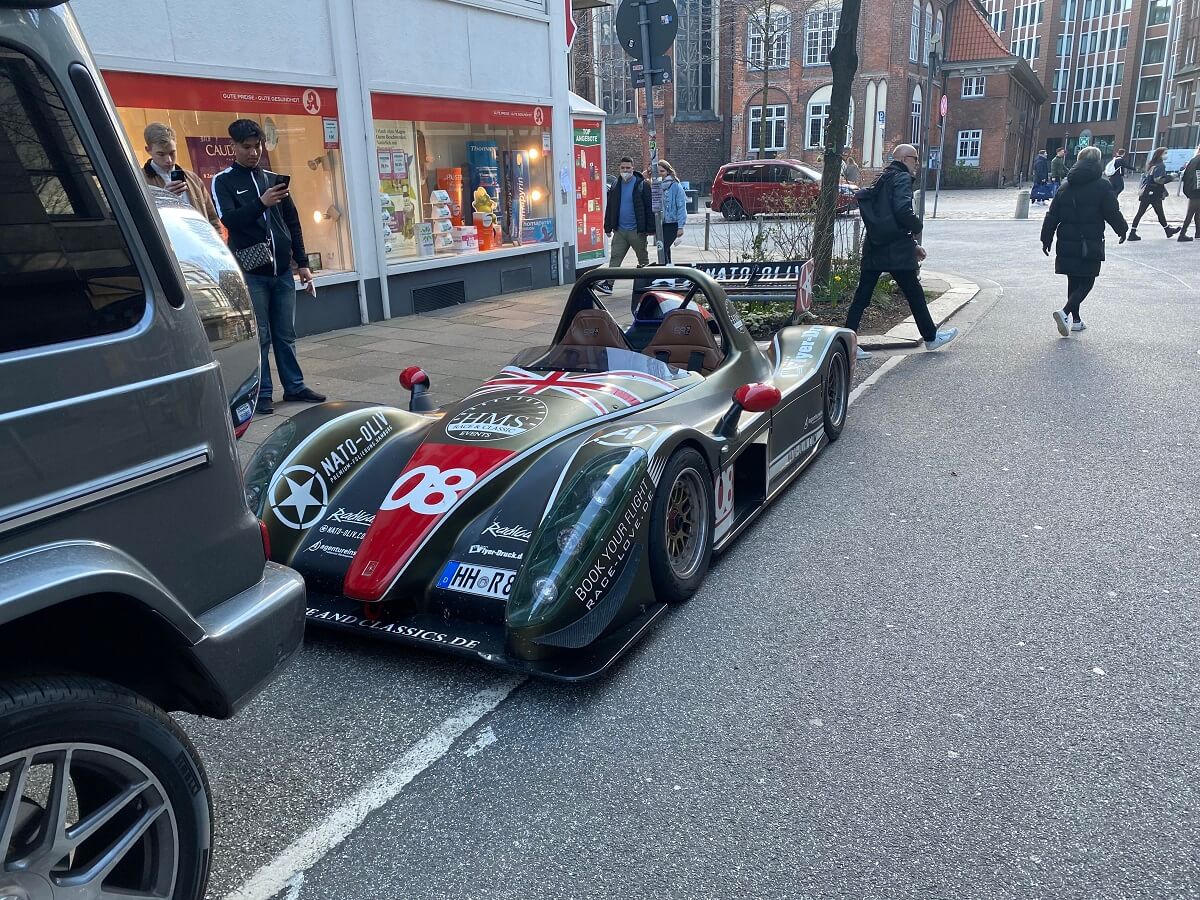
The UK has a long tradition of low-volume cars and kit cars, thanks to its individual approval system. Radical made the most of it: the brand offered a kit to make an SR3 compliant with the SVA inspection, with road lighting, a handbrake, a horn, mirrors, a silencer with catalytic converter and a modified steering column.
Once inspected and approved, the SR3 got its plates and could legally be driven on British roads. A proper racing car… to pop out for bread 😁
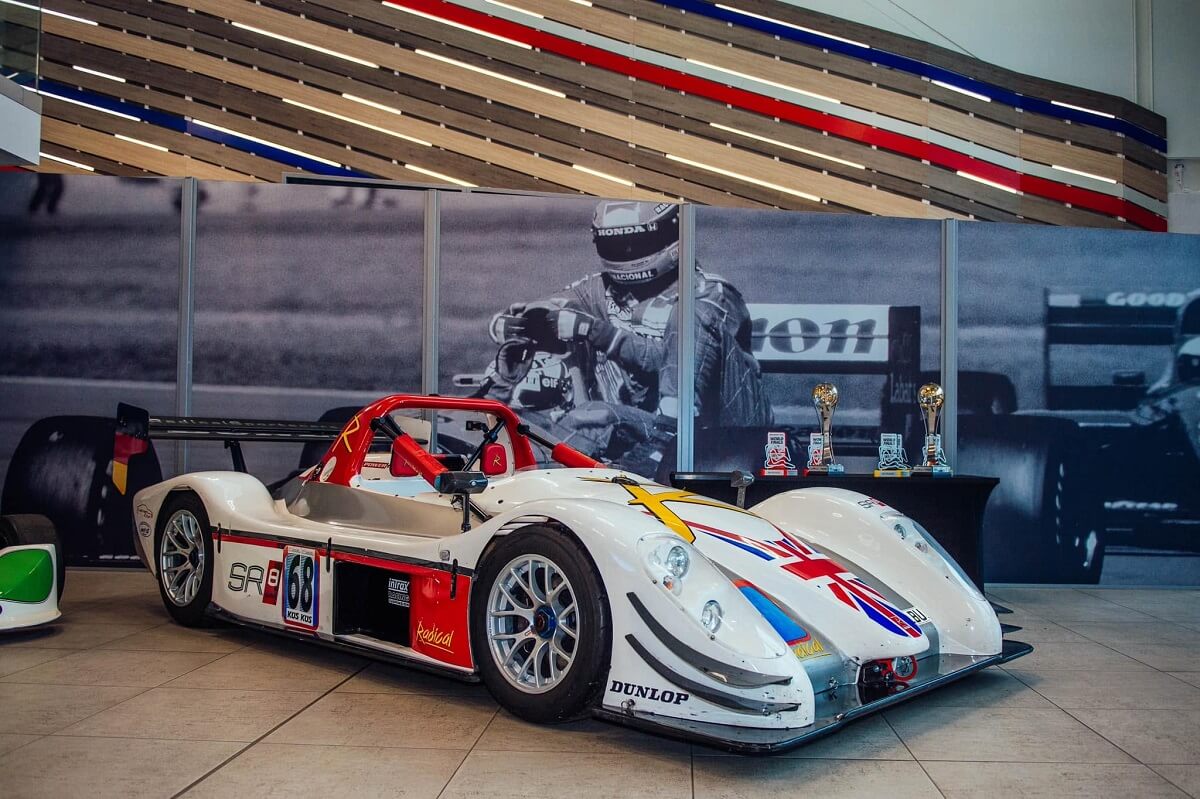
SR8 LM: to the Nürburgring by road, then 6:48 on the Nordschleife
The SR8 pushes the concept much further with a unique engine: a V8 derived from the Suzuki Hayabusa, developed by RPE. In practice, Radical took two Hayabusa cylinder heads and mounted them on an in-house engine block. In the SR8 LM, it displaces 2.8 litres and produces around 460 bhp, for around 700 kg.
In fact, Radical already held the record. In 2005, Dutch driver Michael Vergers had lapped the Nordschleife in 6 min 56 s in an SR8 Supersport. Four years later, the brand came back to beat its own time, with the same recipe, the same driver and an SR8 LM with revised aerodynamics: more downforce, less drag.
The story of this second record, as told by Radical, is quite something. On 18 August 2009 at 8 am, Michael Vergers left the Peterborough factory in chassis no. 73, a UK-registered SR8 LM. There was no room for luggage at all: the team had to tape the change for the Dartford Crossing toll inside the cockpit 😅 Then the motorway, the ferry across the Channel, and on to Germany.
At 5 pm the next day, the same car, still on the same set of tyres, set off on its flying lap. Perfect conditions: 6 min 48 s, at an average of more than 180 km/h (113 mph). Eight seconds faster than in 2005! All on fairly hard track-day tyres, with no tyre warmers, the very same ones that had done the road trip. Michael Vergers said he had less than a kilometre to warm them up before the timed lap started, and reached around 270 km/h (168 mph) at top speed. Once the lap was done, he kept going… and on the next lap, a tyre blew out completely, tearing off part of the bodywork. He managed to catch the car. Lucky it didn't happen one lap earlier 😬 The record would stand for eight years, until September 2017, when the Porsche 911 GT2 RS driven by Lars Kern lapped the Nordschleife in 6 min 47.3 s, barely a second quicker.
Back in England, the Union Jacks on the wing endplates and engine cover were replaced with German flags to celebrate the feat. In 2023, Radical said chassis no. 73 was on loan from its Northern Irish owner to the Silverstone Museum. An owner who still took it out now and then… for a McDonald's drive-through when the weather was fine 🍔
ℹ️ Radical billed this time as the Nürburgring record for a road-legal car. A contested title: the SR8 LM only had a UK individual approval, not a series-production approval like a Porsche or a Lamborghini. Still, it took until 2017 and the Porsche 911 GT2 RS for a production car to beat it, by about a second.
Michael Vergers has a simple answer: many other record-setting "road" cars ran with a roll cage, stripped-out seats and near-slick tyres. Today, the production car record actually belongs to the Mercedes-AMG One, at 6 min 29 s… with a Formula 1-derived engine. Not exactly the kind of car you see in the supermarket car park 😉
And for those wondering how a UK-plated Radical could drive all the way to Germany: a car registered in its home country can be used temporarily in other European countries, just like when you go on holiday. Registering it elsewhere, however, is another story (see below).
SR3 SL: the real road-going Radical
In 2011, Radical stepped things up with the SR3 SL, for Street Legal. This time, the car was designed from the outset for road and track, and received European small series type approval. It could therefore be sold and registered anywhere in the European Union.
It was also the first Radical with a car engine: the 2.0 Ford EcoBoost turbo from the Focus ST, tuned to around 300 bhp. Softer suspension, road tyres, a heater, electric mirrors: Radical made it a little more livable.
Only a little. No boot, no roof, acrobatic access and a ground clearance that turns every speed bump into an ordeal: the SR3 SL is still a sports prototype with number plates. And that's exactly the point 😉
RXC: the coupé approved for Europe
In 2013, Radical changed direction with the RXC, a closed coupé styled after endurance prototypes. The brand drew in particular on its experience with the SR9, its prototype raced at the 24 Hours of Le Mans.
In 2015, with the RXC Turbo 500 (over 530 bhp), Radical secured full European type approval, after a year of certification: crash tests, emissions, noise. It's the most "officially" road-legal Radical ever, registrable throughout the European Union.
The RXC came in several road-legal versions: naturally aspirated V6 and V8 at launch, then RXC Turbo, Turbo 500 and Turbo 500R (offered in road or track form). The RXC Spyder and Turbo 600R, on the other hand, were track cars, apart from a few one-off road-legal examples.
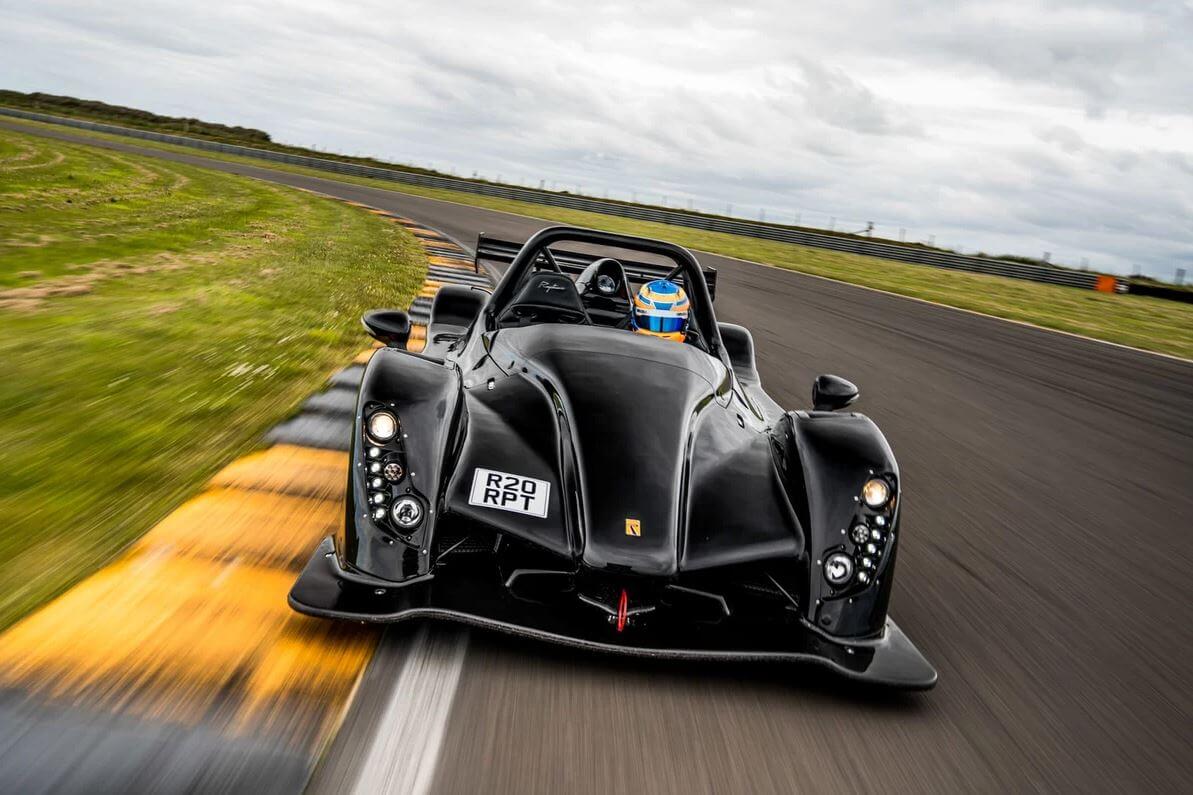
Rapture: the last road-going Radical
In 2019, Radical unveiled the Rapture: a tubular chassis with an FIA-compliant safety cell, composite bodywork, 765 kg and a 2.3 Ford EcoBoost turbo reworked by RPE to produce 350 bhp and 434 Nm, with a paddle-shift sequential gearbox.
Later versions went up to 360 bhp. The Rapture was approved in the UK through IVA. At launch, Radical said it was targeting Europe, with pre-orders from France and Germany, and promised approval in other countries "to follow". But there's no trace of a full European type approval like the RXC's. Radical then refocused on racing: in all likelihood, that European approval was never obtained.
Can you register a Radical outside the UK?
It all depends on the model… and above all on the individual car.
- With a European certificate of conformity (SR3 SL, type-approved RXC), registration follows a standard procedure in EU countries.
- With only a UK approval (SR3, SR8, Rapture), a British plate isn't enough. You'll usually have to go through an individual approval in the destination country (in France, for example, a "Réception à titre isolé" with the DREAL), with no guarantee of success.
ℹ️ Before buying a "registered" Radical, check the exact type of approval, the conformity documents, the registration history and whether you can realistically register it in your country. A Radical already registered where you live remains the safest option.
If what you're really after is a car that's both road-legal and effective on track, see also my guide: which road-legal car to choose for track days.
Why Radical no longer makes road cars
In May 2022, Radical Sportscars became Radical Motorsport. The name change was no accident: the brand refocused on racing. The SR3 SL and road-going RXC disappeared from the range. The Rapture stayed listed for a while, but it has now gone too: only track cars remain.
And it's working out pretty well. In January 2025, Radical celebrated its 3,000th car, an SR3. By its own figures, the brand describes itself as the largest race car manufacturer in the UK and the second largest in the world.
The Radical range in 2026 and its prices
The current range has five models, all track-only:
| Model | Power | Weight | Base price* |
|---|---|---|---|
| SR1 XXR | 188 bhp | 510 kg | €68,733 |
| SR3 XXR | 232 bhp | 620 kg | €113,375 |
| SR10 XXR | 425 bhp | 725 kg | €176,337 |
| RXC | 719 bhp | 1,130 kg | €234,102 |
| RXC Spyder | 654 bhp | 1,010 kg | On request |
* Base prices listed by the official dealer Radical Nederland, for guidance only. The site doesn't state whether they include VAT, but they're consistent with prices excluding VAT (Radical France lists its SR3 XXR demonstrator at €115,000 excl. VAT). Prices vary by country, taxation and options.
On paper, 232 bhp for an SR3 might sound modest. But with 620 kg, slicks and plenty of downforce, Radical quotes a lap time of around 2 min 02 at Silverstone. Nothing like a road sports car with the same power 😳
Watch out for options too: brakes, dampers, air jacks, data logging, endurance fuel tank or carbon parts can quickly add tens of thousands of euros.
What about used?
This is where a Radical becomes (relatively) affordable. As I write, well over twenty Radicals are for sale in the Radical listings on GoToTheGrid: Clubsports from €12,000, SR3 RSs between €35,000 and €40,000, a 2022 SR3 XX at €43,999, SR8s between €32,000 and €85,000 or an SR10 at €94,999. There are even two SR3 SLs, the road-legal version, between €60,000 and €70,000 😉 Radical France also lists its 2026 SR3 XXR demonstrator, with the Gen5 1,500 cc engine, at €115,000 excl. VAT.
But as with any real race car, the purchase is only part of the budget: tyres, consumables, engine and gearbox rebuilds. In discussions between owners, the same point keeps coming up: an SR3 is fairly easy to get to grips with, but finding its limit takes a lot of driving skill. Recent generations have improved, though, with a Gen5 engine designed to extend the intervals between rebuilds.
Where can you race a Radical?
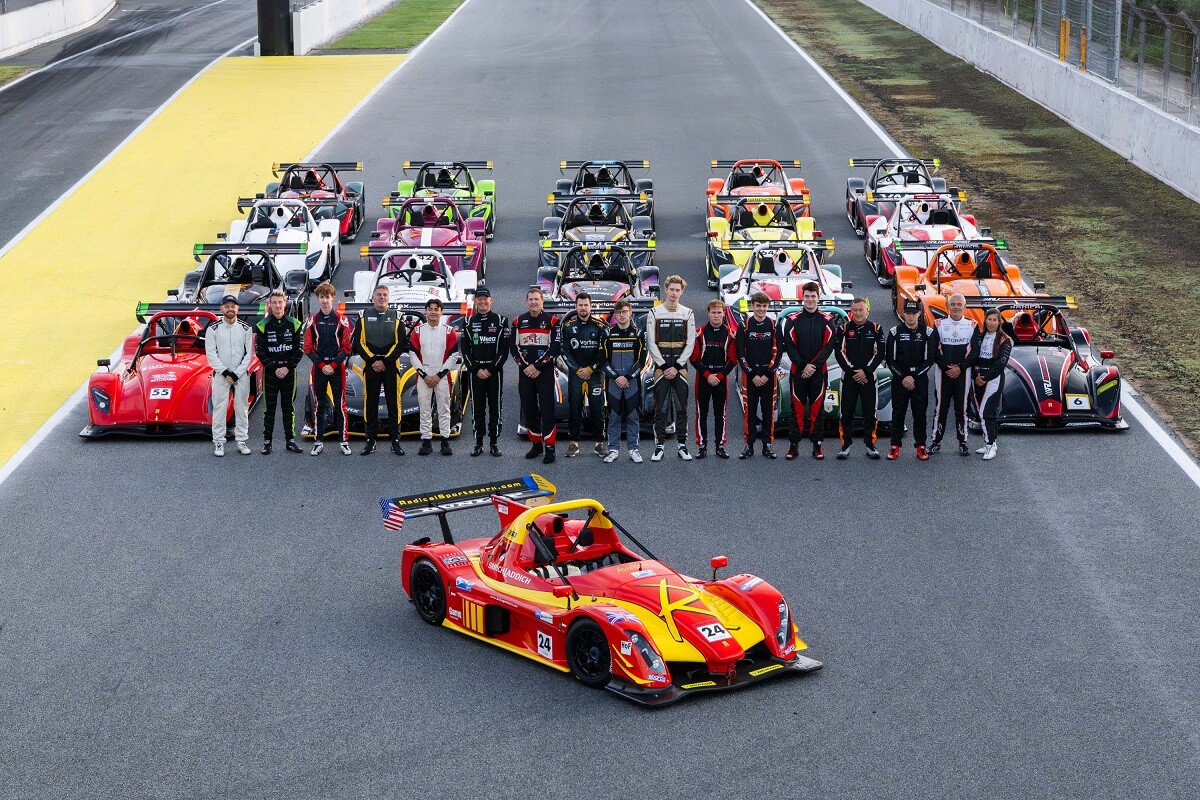
Radical has built a whole ecosystem around its cars: around twenty one-make championships worldwide and more than 30 dealers in more than 20 countries, according to the brand.
In France, you'll see Radicals in FREE Proto or the Coupe de France des Circuits. For a taste of sports prototype racing on a controlled budget, there's also the Trophée Protos de France. And in 2026, the Radical Cup Europe was born, in partnership with Creventic, the organiser of the 24H Series. It welcomes SR3s and an SR10 class, with two endurance races per meeting. In 2027, the Nürburgring drops off the calendar, replaced by the Red Bull Ring. The 2026 calendar:
- Mugello (20-22 March);
- Spa-Francorchamps (16-19 April);
- Paul Ricard (4-7 June);
- Nürburgring (2-5 July);
- Barcelona (18-20 September), which also hosts the Radical World Finals.
And if a Radical doesn't win you over, there are other affordable sports prototypes: the Funyo, the Nova Proto NP02 or, one step up, LMP3 cars. To get started, see also my guide to getting started in circuit racing.
A new Radical dealer in France
Since 26 May 2026, France has an official dealer again: Atelier Motorsport, now Radical France. The company is based in Frontenaud, at the Circuit de Bresse, between Lyon and Dijon.
The team knows the brand well: Mickael Bourcet has been working on Radicals for more than thirteen years, and Xavier Georges owns and races two SR8s. Three factory-trained technicians complete the team, which already looks after around thirty cars in France. On offer: new and used sales, parts, servicing, storage, trackside support and testing at the Circuit de Bresse.
My take: same recipe, different playground
Almost thirty years after the first Clubsport, Radical's philosophy hasn't changed: light, highly aerodynamic cars that give amateur drivers real prototype performance.
What has changed is the playground. And it's a bit of a shame: with today's regulations, we'll probably never again see a brand crazy enough to road-register a sports prototype and drive it to the Nürburgring on the motorway. Registered SR3 SLs, RXCs and Raptures remain rare curiosities, and probably future collector's items.
For everyone else, a Radical is still one of the most "affordable" ways to drive a real prototype. On track, this time 🏁 And if it's your first time, see my tips on preparing for your first track day.
👉 What about you: would you go for a road-registered Radical? Or does a car like this belong nowhere but on a track ❓
FAQ: road-legal Radicals
Which Radicals are road-legal?
Mainly the SR3 SL (European small series approval), the RXC (full European type approval since 2015), the Rapture (UK IVA approval), plus some SR3s and SR8s individually approved in the UK.
Does Radical still sell road cars?
No. Since 2022 and its name change to Radical Motorsport, the brand has refocused on racing. The Rapture stayed listed for a while, but today only track cars remain.
How much does a Radical cost?
New, from €68,733 for an SR1 XXR to over €230,000 for an RXC (indicative base prices). Used, you'll find SR3s from around €35,000 and SR8s from €33,000.
Can a UK-registered Radical be registered elsewhere in Europe?
Only if it has a European certificate of conformity. Otherwise, it needs an individual approval in the destination country, with no guarantee of success.
What is the Radical SR8 LM's Nürburgring record?
6 min 48 s on the Nordschleife, in August 2009, by Michael Vergers, in a UK road-registered SR8 LM that had been driven to the circuit.


I'm Robin, 36, amateur driver and internet entrepreneur. I founded GoToTheGrid (GTTG) to create an intuitive platform dedicated to motorsport enthusia... See more