

 Login
Login
 Post an ad
Professional

Machines With A Miss...
25 classifieds

Send message
Report this ad


 See all 4 photos
“Mr Drake”
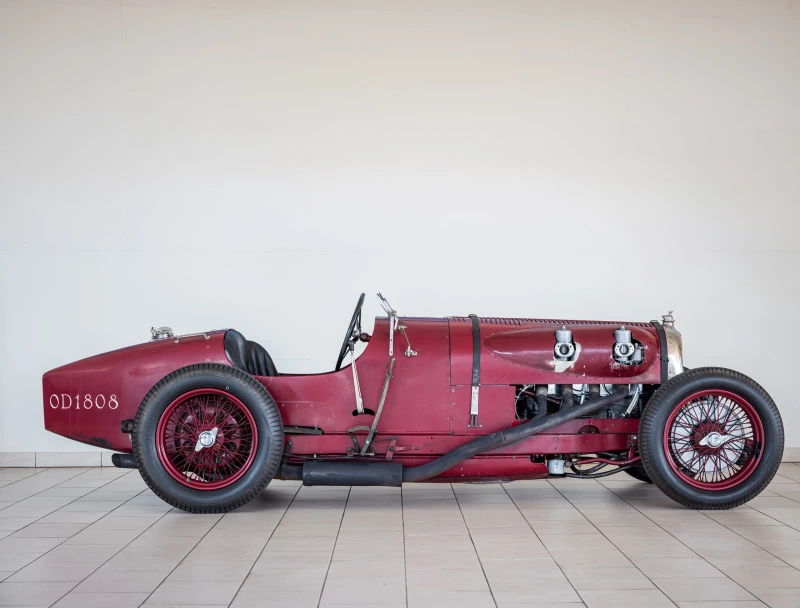
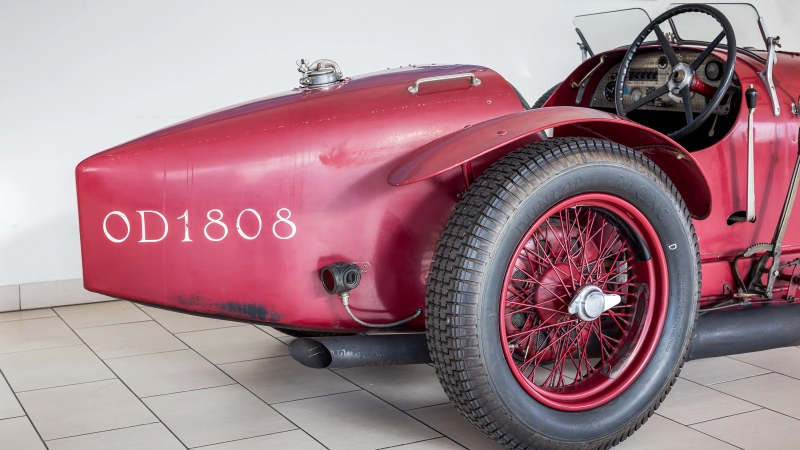
1928 Riley Nine-De Havilland Special
The bold experiment of bolting an aero engine to a Roaring 20s Riley
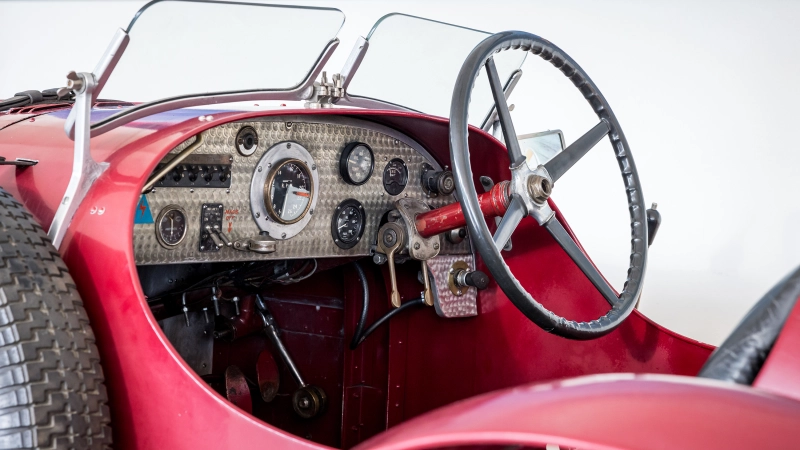
Who would ever have thought of mating a 6-litre De Havilland engine from a Gipsy Moth biplane to the narrow confines of the quintessentially British sportscar of the Roaring Twenties? Well, Dr. Geraint Owen has, and the result is this hair-raising automotive creation nicknamed ‘Mr Drake’. The special wasn’t created in the timeframe of the 1928 Riley Nine’s naissance, but instead the operation was successfully completed in the nineties.Soon after, Dr. Owen entered it in hillclimbs and Vintage Sports Car Club races, and one time took it out for a leisurely drive to the Le Mans Classic.
Its hillclimbing and circuit racing purpose is obvious once you realise that the Nine’s original Riley engine produced a modest nine horsepower – hence the name. Yes, the car was as light as a feather, a definite plus on hillclimbs and circuits, but with its stock engine, it certainly lacked oomph. That’s where the idea of installing an aero engine surfaced. It’s a process with famous examples throughout time, ranging from Louis Zborowski’s 1923 behemoth Chitty Bang Bang with its 23-litre Maybach engine to the more recent Curtiss-engined GNs created by Mark Walker and Duncan Pittaway, cyclecar specials that could equally star at a steampunk festival as well as on the racetrack.
This Car
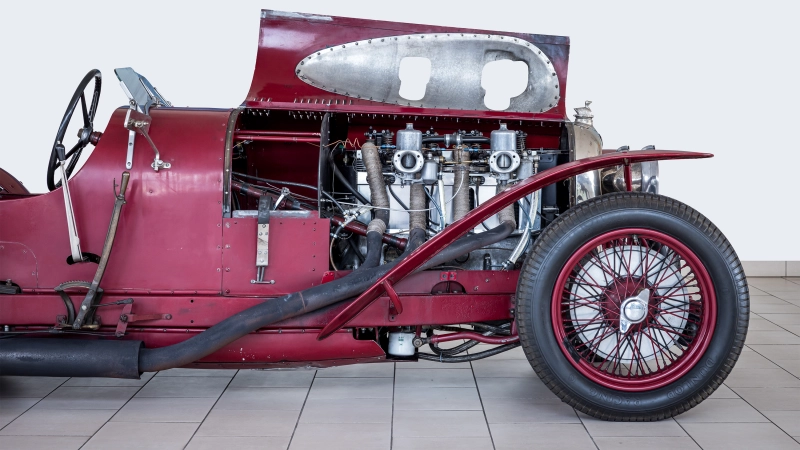
A Ph.D. in automotive design, a professor at the University of Bath and a VSCC and Historic Grand Prix Car Association member latterly known for campaigning the ex-Fred Agabashian 1954 Offenhauser-engined Kurtis 500C ‘Merz Engineering Special’ Champcar beast, Dr. Owen soon found the powerplant that would fit the purpose of adding a further 191 horses to the Riley’s nine existing ones. The 6124cc De Havilland Gipsy II engine that powered the Gipsy Moth produced a staggering 200 hp and loads of low-end torque and could still be shoehorned into the nimble Riley Nine chassis. Transferring the engine’s power was a Rolls-Royce 20/25 four-speed gearbox with straight-H pattern delivering power to the rear wheels. Additional stopping power was provided by fitting the car with 13-inch drum brakes. Quite remarkably, none of the standard Riley parts ever broke on the car!
In 2000, the car won the MotorSport Brooklands Memorial Trophy for best aggregate performance in pre-war circuit racing. It also grabbed the spoils in Mallory Park’s Patrick March Trophy and Cadwell Park’s John Holland Trophy and took second place in the vintage class in its first year at Prescott Hillclimb. Since then, it proved to be the consistently winning vintage car in the unlimited class at Wiscombe, Shelsley Walsh, Loton Park, Prescott, Curborough and Brooklands. It still holds the outright pre-war record at Etretat in France and vintage record at Prescott and Loton Park.
Some specs
The Riley is a 1928 Nine MkII chassis locally boxed and stiffened with additional cross members to account for the additional load of the aero engine. The chassis is shortened to a 8’6” wheelbase but uses standard Riley Nine front and rear axles, with ¼ elliptic springs at the rear. The Alfin drum brakes are hydraulic, the Dunlop tyres are 500x19 at the front and 600x19 at the rear. Comes with optional mudguards
The DH Gipsy engine has Carello H-pattern rods and Arias forged pistons, aluminium heads, sodium-filled exhaust valves, twin 2” SU carburetors and rebuilt BTH magnetos. In 2023 the engine benefitted from a complete overhaul by a De Havilland specialist. It was decided to slightly reduce the compression ratio for easier operation and the use of standard fuel.
Still an agile Riley at heart, the car is surprisingly easy to drive quickly, also as a road car. With the engine’s rev limit of 2200 rpm, the Le Mans roundtrip was done at a remarkably frugal 18 mpg, while maintaining a comfortable cruising speed of 95 mph. Its top speed is well in excess of 100 mph. Have a safe flight.
 Category :
Race cars
Category :
Race cars
 Brand : Riley
 Sport :
Historic Race Car
Sport :
Historic Race Car
 Status : For sale
 Location : United Kingdom




 United Kingdom

 Promoted