

 Login
 Post an ad


Clio S1600: the little Renault that screamed at 8,750 rpm
By RobinB on 10 November 2026 Rally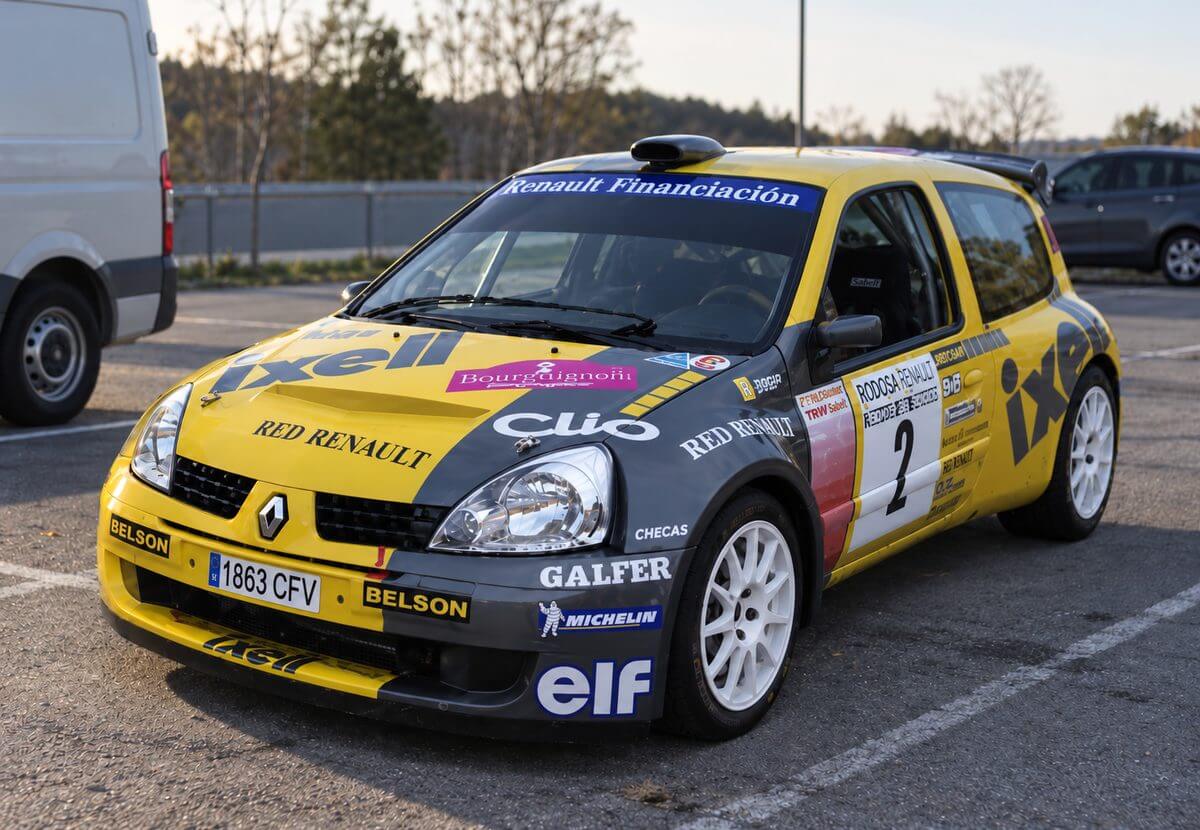
When people talk about Super 1600, one car comes up more than any other: the Renault Clio S1600. A bit like the 306 Maxi when it comes to Kit Cars.
As a teenager, I even had a poster of this car in my bedroom: the Clio in a hairpin, inside rear wheel in the air, with Simon Jean-Joseph at the wheel 😍
And for those who still mix things up: no, this isn't tuning 😅 The Clio S1600 is a real race car, developed by Renault Sport and homologated by the FIA. The huge arches aren't there for looks: they cover widened tracks and competition-specific running gear.
After the C2 Super 1600, it's the Clio's turn: tech, results, price when new and what it's worth on the used market today.
2001: the FIA creates Super 1600 for young drivers
It all starts in 2001, with the FIA Super 1600 Drivers' Cup. The idea: an international category more affordable than WRC cars, to help young drivers come through. On paper, it sounded great. In practice, budgets would soon climb (more on that later). The rules fit in one line: 1.6-litre engine, no turbo, two-wheel drive.
The first winner is... Sébastien Loeb, in a Citroën Saxo. He wins all five rounds he enters. The only one he misses is because Citroën put him in a WRC car in Sanremo... where he finishes second.
In 2002, the cup becomes the Junior World Rally Championship (JWRC), restricted to drivers under 29 from 2003 onwards. Keep that detail in mind for later.
Everyone joins in: Citroën with the Saxo, Suzuki with the Ignis, Fiat with the Punto, Ford with the Puma, Volkswagen with the Polo, Peugeot with the 206, not to mention Opel, Proton and MG.
Renault joins the party with the Clio Super 1600
Renault knows a thing or two about rallying. The brand was coming off an incredible period with its 2-litre Kit Cars: the Clio Maxi, then the Mégane Maxi, which won the 2-litre World Rally Cup in 1999.
The Clio Super 1600 was announced in 2001 and sold to teams from January 2002. At first, Renault presented it as a customer car, with no official comeback. But a year later, a works team was born anyway: the Clio Team, with two cars prepared by Oreca.
The man who developed the car was Simon Jean-Joseph. He did all the development work from 2002 to 2006: safe to say he knew it inside out.
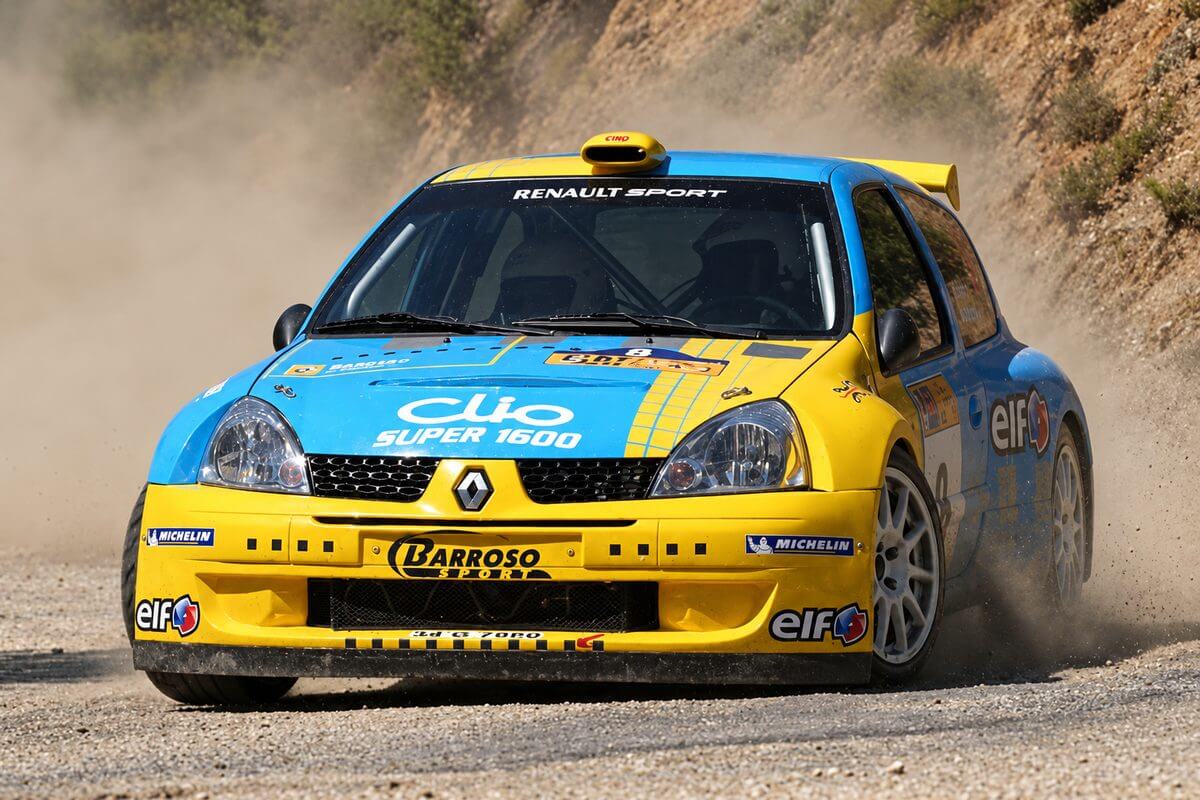
With customers, it was an instant hit:
- at the end of 2002, at the Rallye du Var, there were already 5 Clios out of 17 cars entered in Super 1600, in its very first season;
- in March 2004, Renault Sport counted 47 Clio S1600s competing across Europe;
- at the 2006 Rallye du Limousin, there were at least five Clios in S1600... against a single C2 and a single 206.
One of those Clios was driven by Cédric Robert. For years, he had been THE Peugeot driver in the 206 S1600, the one trying to beat the Clios. At the end of 2004, Peugeot didn't renew his contract... and in 2005, he took over Simon Jean-Joseph's Clio. Some Peugeot fans weren't too happy about it. But it was the car to have, so everyone wanted to drive one. And Cédric Robert soon proved his point: in October 2005, he won the Rallye d'Antibes outright in his Clio S1600.
Clio S1600 specs: 220 hp for 1,000 kg
You might think Renault started from the 2-litre Clio RS. Not at all: the rules limit engines to 1.6 litres, and the engine must come from one of the brand's production units. So the starting point was the very ordinary Clio 1.6 16V, with its 110 hp K4M engine.
Renault's 2004 spec sheet quotes 220 hp at 8,750 rpm and 200 Nm at 7,750 rpm. Power was doubled, and even the bore and stroke were changed to chase revs. The latest evolutions went even further: a Clio S1600 with a Sodemo Evo engine currently for sale is quoted at 235 hp on an SP98 map and 240 hp on SP102.
The downside: everything happens at the top. Exit a hairpin in the wrong gear and there's nothing there. You have to keep the engine on the boil at all times... and that's also why we love listening to them: they scream all the time 🔊
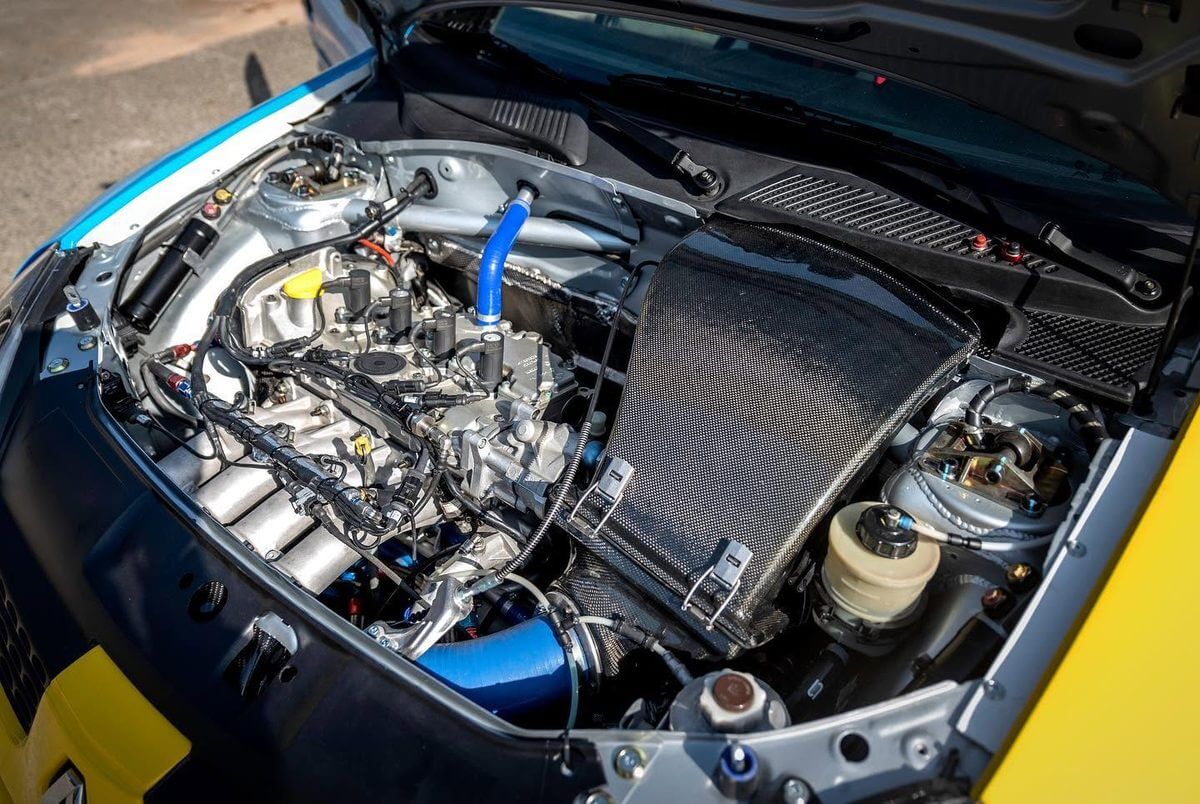
The rest of the recipe:
| Item | Clio S1600 |
|---|---|
| Engine | 1.6 L naturally aspirated 4-cylinder (K4M base), 220 hp at 8,750 rpm |
| Torque | 200 Nm at 7,750 rpm |
| Gearbox | 6-speed sequential, limited-slip differential |
| Bodyshell | Supplied by Matter, reinforced with about 40 m of tubing |
| Suspension | MacPherson front, independent rear, Renault Sport dampers |
| Tarmac | 17-inch wheels, 342 mm front discs |
| Gravel | 15-inch wheels, 285 mm discs |
| Weight | 1,000 kg (without crew), about 4.5 kg/hp |
40 metres of tubing, in a Clio! And the limited-slip diff is no luxury: on a front-wheel-drive car, the front wheels do all the work, steering and putting the power down at the same time.
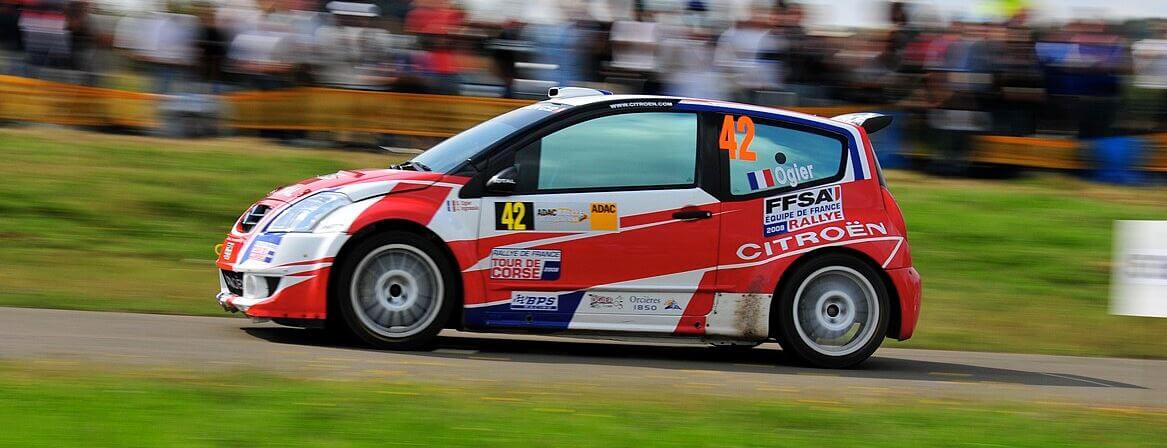
Against the C2 S1600, it's neck and neck on paper: Citroën quoted 225 hp at 8,500 rpm at launch, for 1,000 kg as well.
In the archives, Simon Jean-Joseph described a car that was easy to drive, tough and reliable. On the 2003 Acropolis, one of the roughest rallies on the calendar, the team didn't change a single structural part at service, and the Clios set 17 class fastest times out of 21 stages 💪

2003: Junior world title and a grand slam for Renault
In 2003, the Clio Team fielded Simon Jean-Joseph and Brice Tirabassi. Tirabassi came from Citroën. In 2002, in a Saxo, he won the very first French championship reserved for Super 1600 cars: at the time, France had two titles, a Super 1600 championship and a tarmac championship open to WRC cars. At 25, he became the youngest French rally champion in history. A record since broken by Yohan Rossel, champion at 24 in 2019 in a Citroën C3 R5.
Both raced in the World Championship. But Jean-Joseph was over 29, so he wasn't allowed to fight for the Junior title. He raced in class A6, the 1600 category of the World Championship, and strung together four class wins in a row (spanning late 2002 and early 2003). His real target that year was the French championship.
Tirabassi, on the other hand, went for the Junior title. He won Monte-Carlo, almost a home event for a driver from the Var, then the Acropolis and Catalunya. Final round in Great Britain: engine failure, retirement. All he could do was wait at the side of the road.
The only driver who could still take the title from him was Salvador Cañellas, in a Suzuki Ignis. He finished fourth, and that wasn't enough: Tirabassi was Junior World Champion by two points. Two years after a certain Sébastien Loeb 😉
In France, it was the opposite story. To keep his title, Tirabassi had to win the final rally, the Var, at home, ahead of his own teammate. And he got a puncture on a stage: four minutes lost. Jean-Joseph won the rally and became French Super 1600 champion.
Final tally: Renault took a one-two in the championship, won the manufacturers' title, and the press at the time called it a grand slam.
2004-2006: European champion and a second world title
For Jean-Joseph, what came next was less rosy. In summer 2003, he was announced at Citroën in the World Championship for 2004... but it fell through at the last minute. He bounced back in the European Championship, still in an Oreca Clio, and finished the season with four wins: Barum, Turkey, Greece and Antibes. 2004 European Champion 🏆
In 2002, 2003 and 2004 alone, he started more than 40 rallies in the Clio, on top of developing the car. That's a lot of miles.
Meanwhile, the Clio Team carried on:
- in the 2004 JWRC, Nicolas Bernardi and Larry Cols took over, and Bernardi finished runner-up;
- in France, there was no longer a championship reserved for Super 1600 cars in 2004: the Clios took on the WRCs. Stéphane Sarrazin won the title in a Subaru, and Jean-Joseph finished third in the championship, behind two WRCs;
- the Clio Team's record over 2003 and 2004, according to Renault: 76 starts, 53 podiums, including 31 wins.
In 2005, Renato Travaglia became European champion in a Clio too. That year, with the private teams, the Clio collected twelve national and international titles. In total, the European Championship credits it with 11 outright wins and 25 podiums in ERC history.
And at Ypres, in Belgium, it did even better. It's a very fast tarmac rally, better suited to big cars. Yet the Clio won it outright two years in a row: Larry Cols in 2004 (ahead of Jean-Joseph), then Kris Princen in 2005.
In 2006, a second Junior world title came with Swede Patrik Sandell.
A little nod: Jean-Joseph would be European champion again in 2007... in a C2 S1600. So the same driver won titles in the two cars everyone loves to compare. And it would take until 2021 to see a Renault driver crowned in the European Championship again: Jean-Baptiste Franceschi, in a Clio Rally4 (ERC3).
Why the Clio S1600 still makes people dream
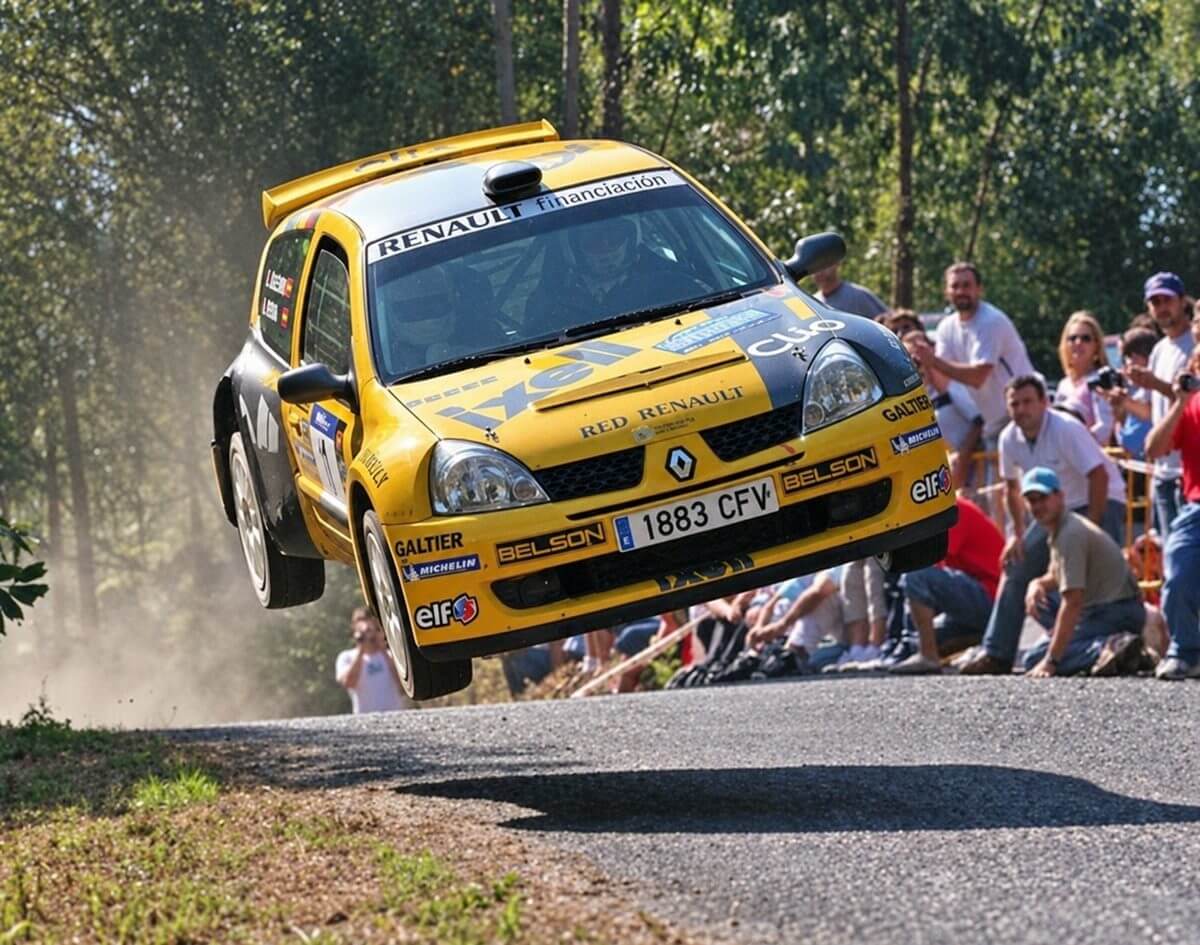
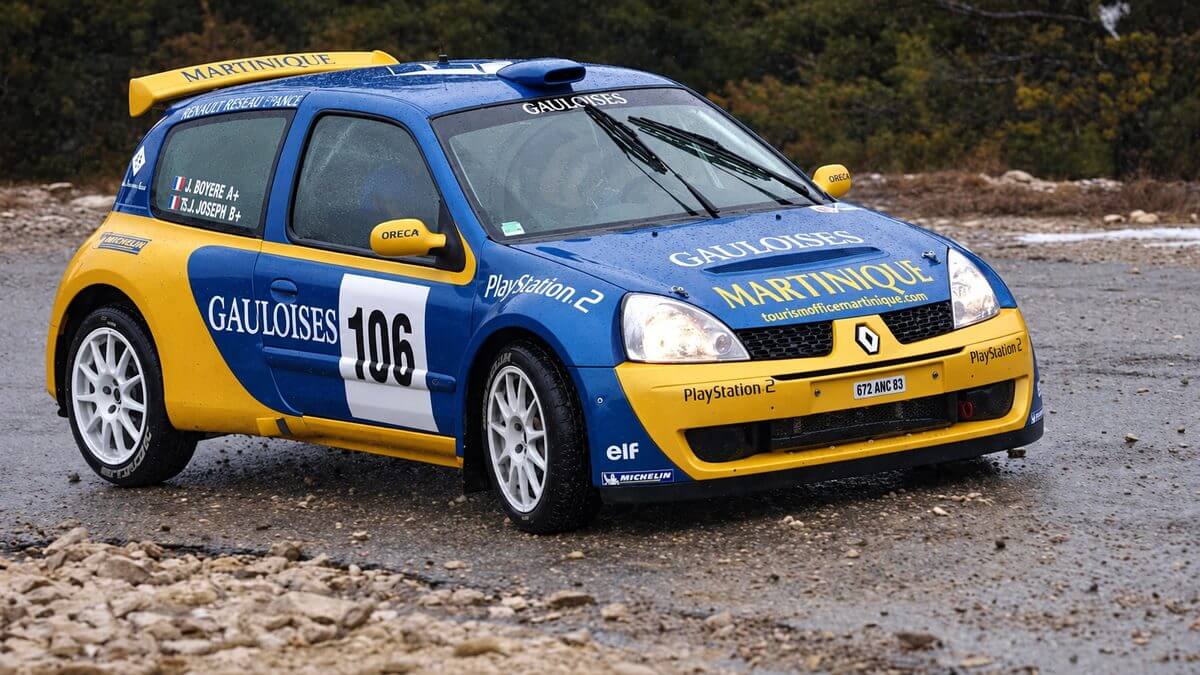
The engine noise, the looks, and of course a few legendary liveries: the yellow and grey PlayStation / Elf, and the blue and yellow Gauloises. Those are the two that come to mind straight away for me.
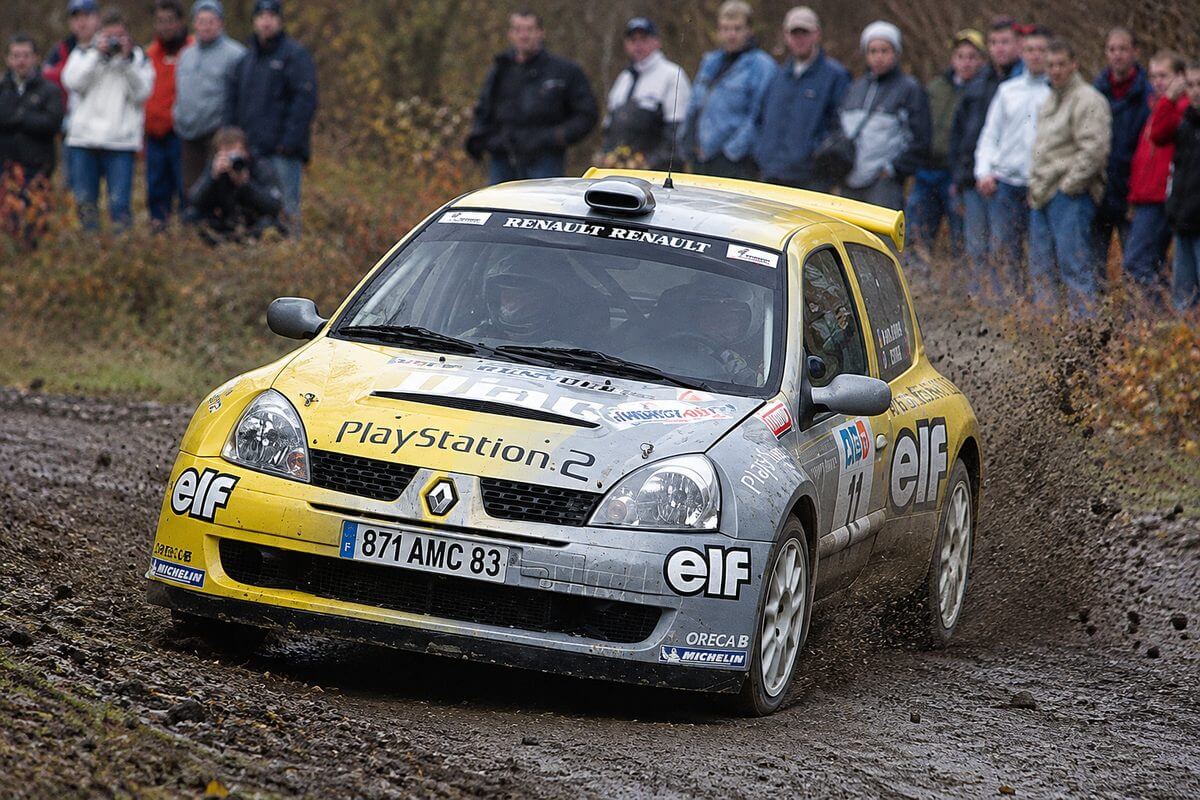
Even today, standing by the side of the road and hearing it coming is magical. And the best part is that even younger fans love it. Video games have a lot to do with it: it's in DiRT, DiRT Rally and DiRT Rally 2.0. A whole generation drove it with a controller or in sim racing before seeing it for real 🎮
Renault got the message. In 2021, the brand launched the Challenge Philippe Bugalski, a cup within the French tarmac championship reserved for three cars: the Clio Maxi, the Mégane Maxi... and the Clio S1600. Its first winner, Thomas Anacleto, drove a Clio S1600.
The fans haven't forgotten it either. At the end of 2024, the European Championship ran a vote to elect the best ERC car since 2004: 16 cars in head-to-head duels, with the public voting. The Clio knocked out the C2 S1600 in the first round (too bad for C2 fans, me included), then the Lancer Evo IX and the Fabia Rally2 Evo. It only lost in the final, to the Fabia S2000.
A little front-wheel-drive car from 2002 reaching the final against much more recent four-wheel-drive machines: hats off.
How much did a new Clio S1600 cost?
In 2004, the Clio S1600 kit cost €110,000 excl. VAT, or over €130,000 including VAT at the time. And that's just the kit: you still needed the base car and the build 😬
At the end of 2006, Renault unveiled its replacement, the Clio R3, a naturally aspirated 2-litre developed... by Simon Jean-Joseph, him again, with over 2,000 km of testing. The pitch was clear: performance close to a Super 1600, for the price of a Group N car.
| Car | Kit price (at the time) |
|---|---|
| Renault Clio S1600 (2004) | €110,000 excl. VAT |
| Citroën C2 S1600 | around €120,000 |
| Renault Clio R3 (2007) | €49,600 excl. VAT |
Renault even gave a cost per kilometre: €23 for the R3, more than double for a Super 1600. For 1,000 km of stages, that's in theory €23,000 for the R3, versus over €46,000 for the S1600. In other words, the brand admitted the S1600 was expensive.
The irony is that in 2001, the FIA created the category precisely to keep costs down for young drivers. A few years later, kits cost over €100,000. For a category meant to be affordable, that's a miss. But it gave us some incredible cars!
Used Clio S1600: what's it worth today?
How many were built? In its late-2006 press kit, Renault spoke of nearly 80 cars. Some specialist dealers put the figure at 103. It's hard to say without a full chassis register, especially since some shells were rebuilt. Either way, it's a rare car.
And it shows in the listings:
- a while ago, a Clio S1600 was listed on GoToTheGrid at €130,000 with a small spares package. The seller had just fully rebuilt it over the winter, with an engine rebuilt to the latest evolutions: a €27,000 invoice for that alone;
- more recently, a former works car was for sale in Italy with a minimum price of €145,000. The seller said he had received 60 messages in 12 hours.
These are asking prices, not sale prices. Sales are too rare to talk about a real market value, but a nice twenty-year-old S1600 is now a highly sought-after car. From the listings I've seen, good Clio S1600s are generally advertised a bit higher than C2 S1600s, and they are probably the most expensive S1600s today. For comparison, an ex-Kris Meeke Puma S1600 was recently listed at €80,000 on GoToTheGrid. And personally, I'm convinced their value will keep rising. It's the same trend as for other small rally cars, whose prices are soaring.
⚠️ Buying it is only the beginning. Engine and gearbox need regular rebuilds, parts are getting scarce and the service bills hurt. You need deep pockets to run an S1600.
For less money, you can also find superb F2000 Clios for around €40,000 to €50,000. It's not an official Clio S1600 with a history, but the preparation rules are much more open. Check out our rally cars for sale on GoToTheGrid.
A 110 hp Clio turned legend
It started as a 110 hp Clio 1.6, the one you saw in every car park. It ended with:
👉 Two Junior World Championship titles (Tirabassi 2003, Sandell 2006), two European Championship titles (Jean-Joseph 2004, Travaglia 2005), national titles galore and outright wins ahead of much bigger cars.
No wonder it still makes people dream, more than 20 years later. And if that era speaks to you, check out what a Peugeot 306 Maxi is worth today 😉
FAQ: Renault Clio S1600
How much power does a Clio S1600 have?
Renault quoted 220 hp at 8,750 rpm and 200 Nm in 2004, from the production 1.6 16V K4M engine (110 hp). The latest evolutions reach 235 to 240 hp depending on the engine map.
How much does a Clio S1600 weigh?
1,000 kg without crew, about 4.5 kg per horsepower.
How much does a used Clio S1600 cost?
The few cars for sale are listed at around €130,000 to €145,000, or more for a former works car with history. On top of that, budget for high engine and gearbox maintenance costs.
How much did a new Clio S1600 cost?
In 2004, the kit cost €110,000 excl. VAT, or over €130,000 including VAT, not counting the base car and the build.
What did the Clio S1600 win?
Junior World Champion with Brice Tirabassi (2003) and Patrik Sandell (2006), European Champion with Simon Jean-Joseph (2004) and Renato Travaglia (2005), French drivers' and manufacturers' titles, and two outright wins at the Ypres Rally (2004 and 2005).


I'm Robin, 36, amateur driver and internet entrepreneur. I founded GoToTheGrid (GTTG) to create an intuitive platform dedicated to motorsport enthusia... See more