

 Login
Login
 Post an ad


Mitjet 2L Turbo 2026: Turbo Engine and a New Era for the Formula
By RobinB on 02 March 2026 Circuit / Race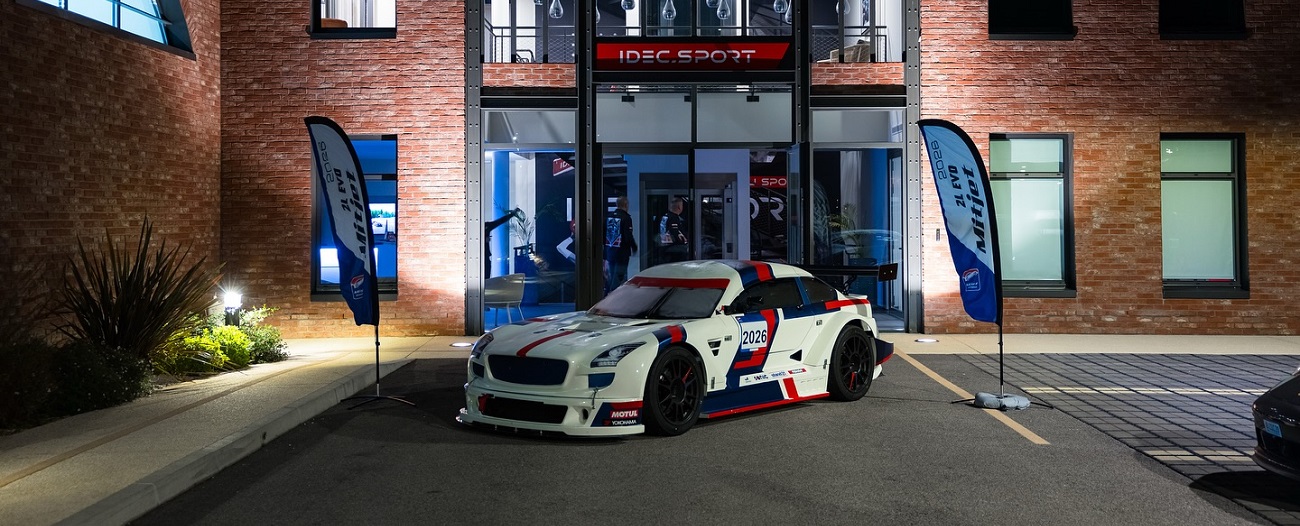
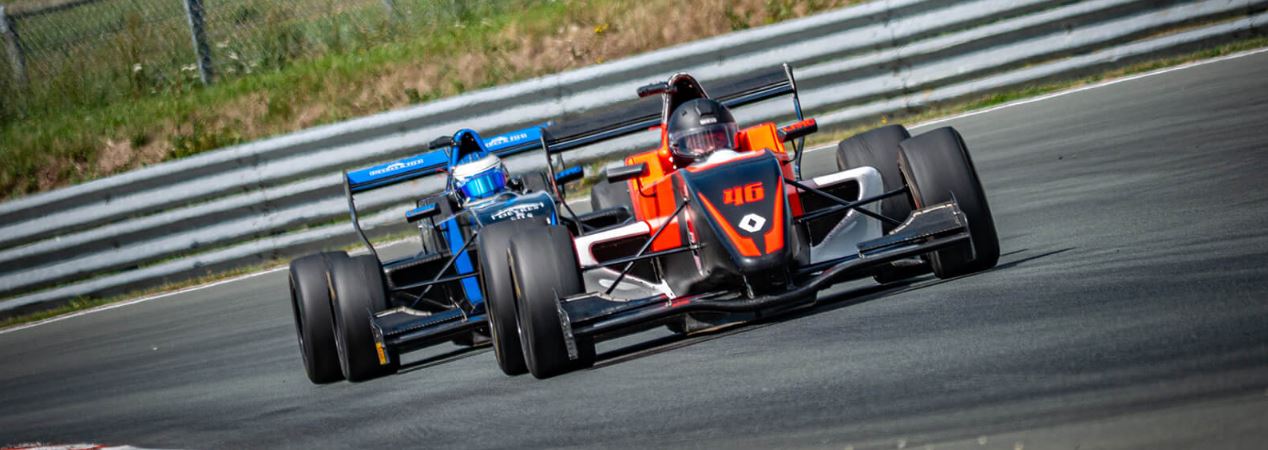
For nearly twenty years, the Mitjet formula has held a particular place in the French motorsport landscape. Designed as an accessible, development category and relatively budget-controlled category, it has gradually established itself as a credible gateway to circuit racing, especially for young drivers coming from karting as well as for gentlemen drivers 👌
The 2026 season, however, marks a significant turning point in the recent history of the discipline. With the arrival of a major technical evolution, full integration into the French FFSA Circuit Championship, and the introduction of a structured prize system leading towards GT racing, Mitjet International is entering a new phase of its development 🥳
ℹ️ Do you prefer watching a video? This article is also available in video format on YouTube, click here! 🎥
A New Turbocharged Mitjet 2L for 2026
The main evolution naturally concerns the car itself.
After more than a decade using the naturally aspirated Renault F4R four-cylinder engine, Mitjet is now switching to a turbocharged engine developed by Horse Powertrain, stemming from the industrial partnership between Renault and Geely 🤝
Output is set at 245 horsepower with torque close to 360 Nm, representing a gain particularly at low revs compared with the previous naturally aspirated version. The engine is actually capable of producing significantly more power, potentially exceeding 280 horsepower, but it is deliberately limited to 245 horsepower in order to prioritize reliability and mechanical longevity. The objective of this transition is therefore not only outright performance, but also to improve overall robustness and ensure industrial consistency, as the historical naturally aspirated engine is no longer produced.
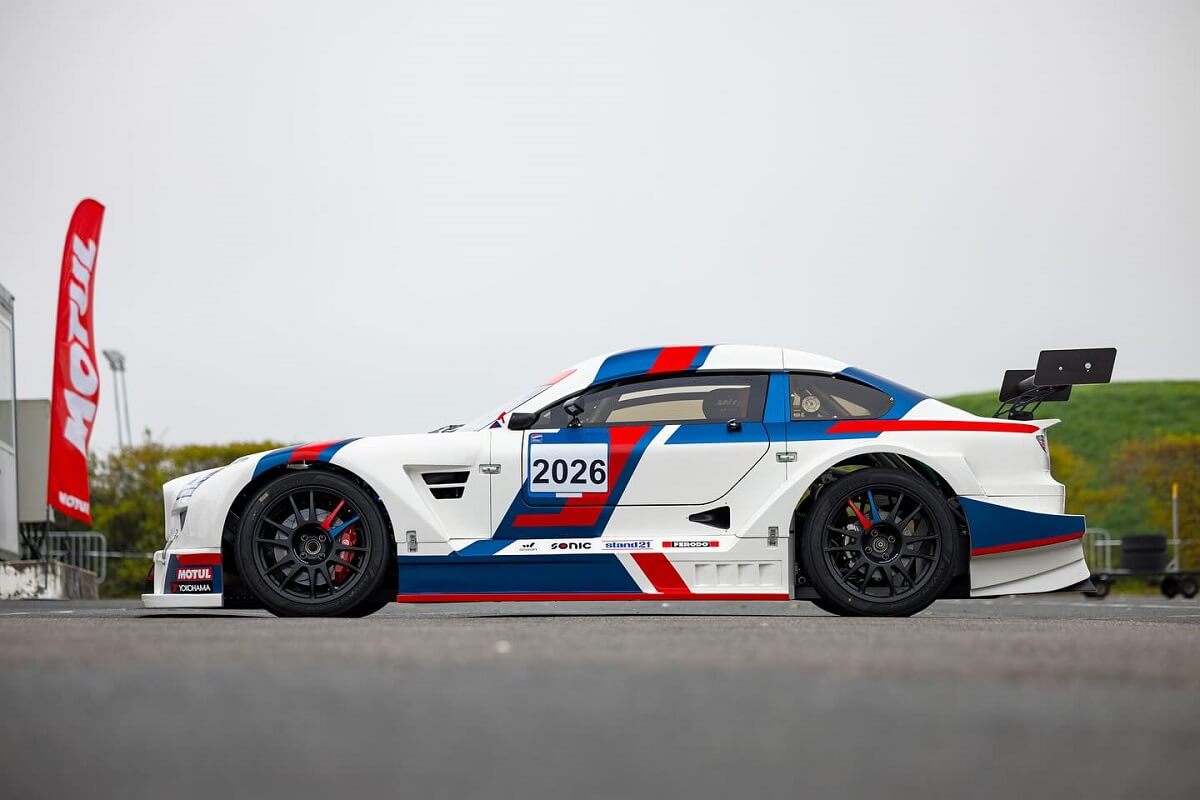
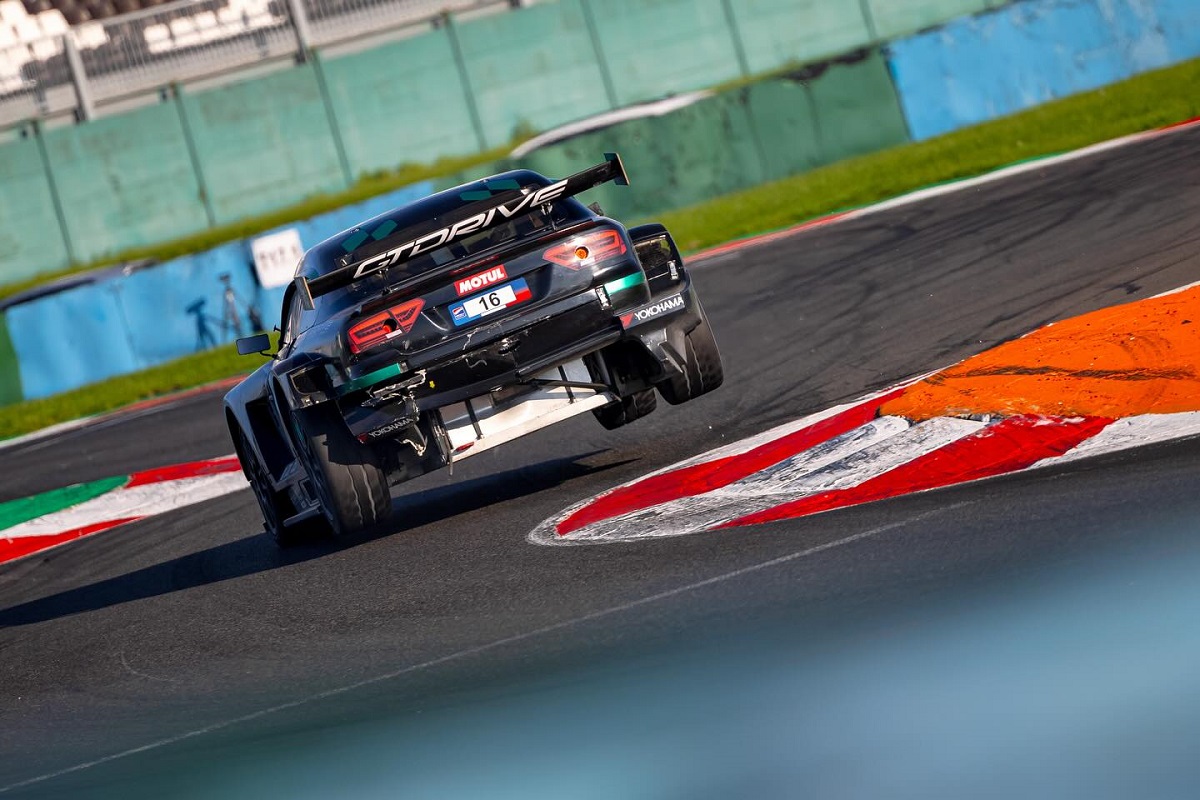
The tubular chassis remains unchanged, but this 2L Turbo version comes with several adjustments: a revised front splitter providing more aerodynamic downforce, along with a reworked rear wing that also contributes to increased downforce. The car now has a dry weight of around 860 kg, which is about 20 kg more than the previous version. Overall, the goal is mainly to modernize the car without upsetting the balance that has made the formula successful since 2012 😎
At the same time, the naturally aspirated Mitjet 2L cars will still be allowed to compete in 2026, running directly alongside the new Mitjet 2L Turbo models on the grid, but with separate classifications to preserve sporting fairness. Around twenty Mitjet 2L Turbo cars have already been announced, which means the naturally aspirated versions should ultimately be relatively few in number on the grid.
ℹ️ To better understand the brand’s history and its different generations of cars, you can also consult the article dedicated to Mitjet, its models and championships.
A Full Return to the French FFSA Circuit Championship
Another major development: from 2026, the Mitjet France Trophy will be integrated into the meetings of the French FFSA Circuit Championship, organized by SRO Motorsports Group.
This move changes several things.
First in terms of visibility and sporting structure.
Competing within the SRO environment means benefiting from a well-established organization, major circuits and greater media exposure, with TV production and live broadcasts of all races throughout the season 😋
Secondly, it reinforces the logic of a pathway towards GT racing 💪
Mitjet now clearly positions itself as a first level in the pyramid leading to the French FFSA GT Championship, and potentially towards international categories.
Finally, this return aligns with the discipline’s historic ambition: to remain accessible while offering a credible professional framework for progressing drivers.
As part of this development pathway, Mitjet International has also launched the Mitjet Academy, a detection and training program aimed at young drivers wishing to discover the discipline within a structured environment. Offered in the form of intensive training camps supervised by professionals, these modules combine track time in a Mitjet 2L, personalized coaching, data analysis, and physical and mental workshops. The objective is clear: to provide a first concrete immersion into the world of competition and identify profiles capable of progressing into the championship 🔍
At the same time, the discipline is also continuing its development in the world of sim racing. From 2026, the leading platform iRacing will introduce the Mitjet to its catalogue of cars. Its arrival on one of the most widely used simulators in the world will allow virtual drivers to discover the car and could also become a new tool for training and visibility for the discipline 👌
Mitjet France 2026: Race Format and Calendar
🏁 The sporting format remains faithful to the Mitjet spirit:
- two 30-minute free practice sessions
- two 15-minute qualifying sessions
- four 20-minute sprint races per meeting
An out-of-championship endurance race could also be renewed at the end of the season, as was the case with the 2025 4 Hours of Paul Ricard, which featured 17 cars on the grid.
📅 The 2026 France Trophy calendar includes five events:
- Nogaro — April 4-5
- Dijon-Prenois — May 16-17
- Spa-Francorchamps — June 19-21
- Magny-Cours — July 31-August 2
- Paul Ricard — October 9-11
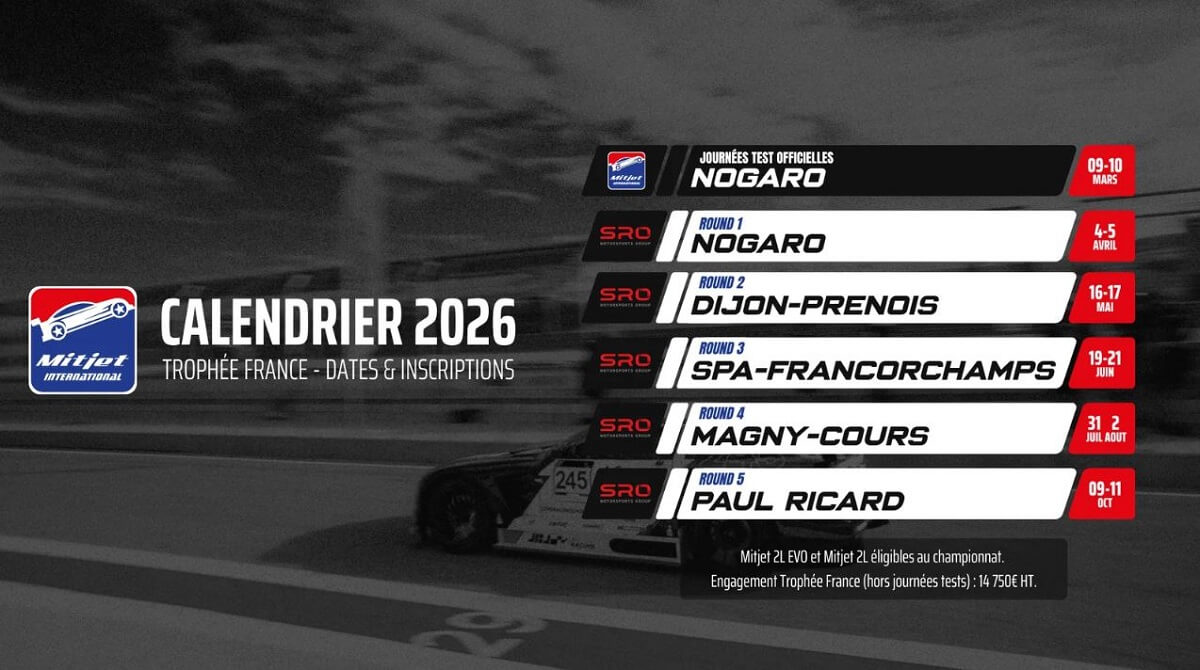
A short but dense program, consistent with the formula’s cost-control philosophy.
2026 Prize Fund: A Gateway to GT Racing
The 2026 season comes with a structured financial incentive system, designed to support driver progression.
💰 The main announced prizes are:
- €50,000 for the overall champion to access GT4 France
- €30,000 for the Junior champion (ages 16-21), cumulative with the overall prize
- €10,000 for the best Gentleman driver
- €10,000 for the best team
- €10,000 for the Mitjet 2L naturally aspirated champion
In total, the overall prize fund exceeds €100,000, with a significant portion directed toward access to the French FFSA GT Championship 🤩
This approach is part of a broader development ladder that may lead the best profiles toward international GT programs through SRO initiatives.
How Much Does a Mitjet 2L Season Cost?
In terms of budget, the philosophy remains that of a promotion formula… but with figures that are now well established.
- New car: around €73,200 excl. VAT
- Evo kit: €26,900 excl. VAT to convert a Mitjet 2L into a 2L Turbo
- Full season rental: around €70,000 excl. VAT, or €14,000 excl. VAT per meeting
- Entry fee: €3,600 excl. VAT per meeting or €14,750 excl. VAT for the season
ℹ️ It remains possible to share the car between two drivers, each contesting two races per weekend, which allows for a significant reduction in budget without affecting championship standings. This option is one of the levers that maintains the formula’s relative accessibility compared to more expensive categories such as GT4.
To limit operating costs, Mitjet International strictly regulates tire usage: each car is limited to a maximum of twelve new semi-slick dry tires per season, plus four wet tires, supplied exclusively by Yokohama France on behalf of Mitjet International.
The organization also sets up a Mitjet Village at each event. Teams are grouped within a shared infrastructure, which helps simplify logistics and limit certain paddock setup costs, while maintaining a structured and professional environment for the competitors.
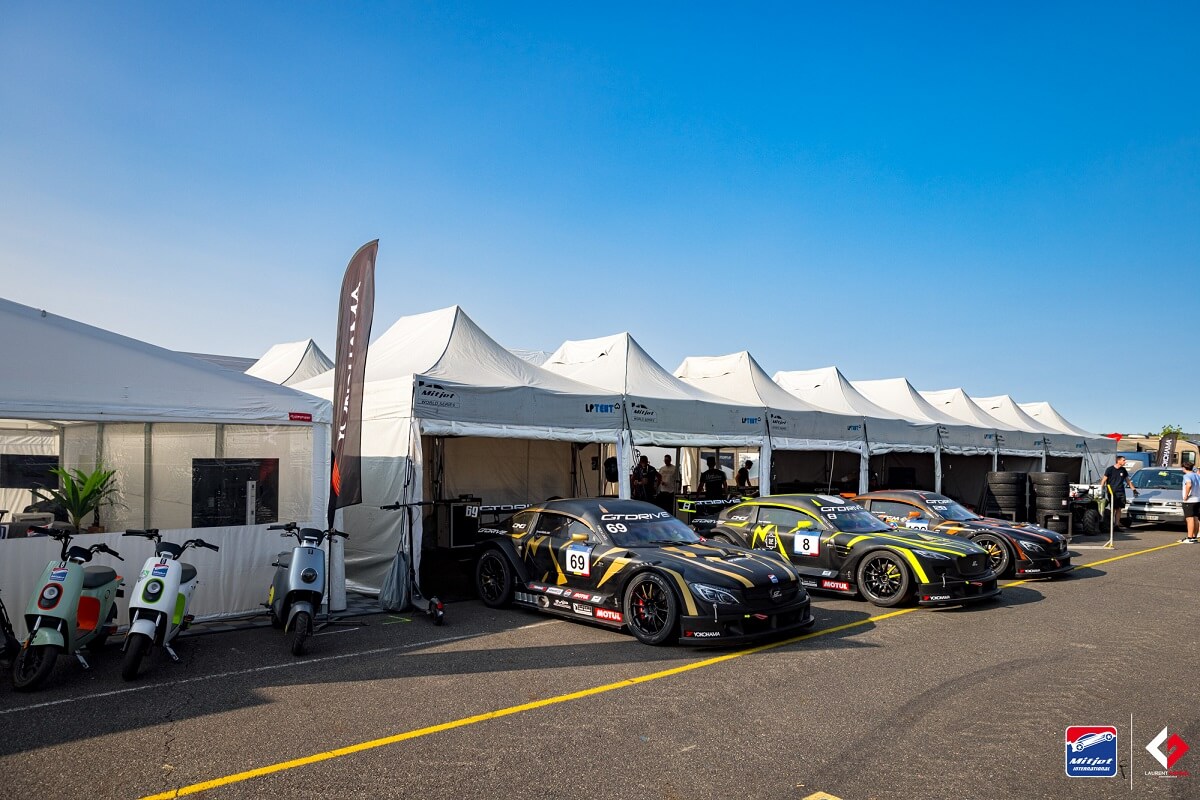
Despite this framework, the actual budget will always depend on numerous factors: private testing, potential damage, or additional services that can quickly increase the final bill.
See also: "Legend Grand Prix: the new one-make championship envisioned by Jean-Philippe Dayraut"
A Formula That Evolves Without Losing Its DNA
Despite these changes, the Mitjet philosophy remains broadly intact.
The car stays simple, relatively lightweight, without major electronic aids, and designed to place the driver at the center of performance.
The championship retains a dynamic sprint format and a commitment to accessibility, while moving closer to a more structured professional environment.
The arrival of the turbo, integration into the FFSA Circuit Championship, and the introduction of a financial pathway toward GT racing mainly reflect a logical evolution: maturing the formula without losing what has made it successful for nearly twenty years 💪
Mitjet 2026: A New Step Rather Than a Revolution
Ultimately, the 2026 season does not mark a brutal break, but rather a structuring transition.
- necessary technical evolution with the switch to turbo
- integration into a more visible sporting framework
- prize incentives strengthening progression to higher levels
- maintenance of relative accessibility for drivers
All elements that confirm the unique position of Mitjet in French motorsport: neither a pure entry-level category nor an elite championship, but a genuine intermediate springboard between discovering circuit racing and GT competition.
It now remains to be seen how this new Mitjet 2L Turbo generation will perform on track… and whether this evolution will allow the formula to continue playing its role as a gateway to top-level racing in the years to come 🙂
[VIDÉO] The Mitjet 2L goes turbo: accessible motorsport… REALLY?


I'm Robin, 36, amateur driver and internet entrepreneur. I founded GoToTheGrid (GTTG) to create an intuitive platform dedicated to motorsport enthusia... See more