

 Login
Login
 Post an ad


Formula 20,000: The Return of 100cc Karts Screaming at 20,000 RPM
By RobinB on 16 June 2026 Karting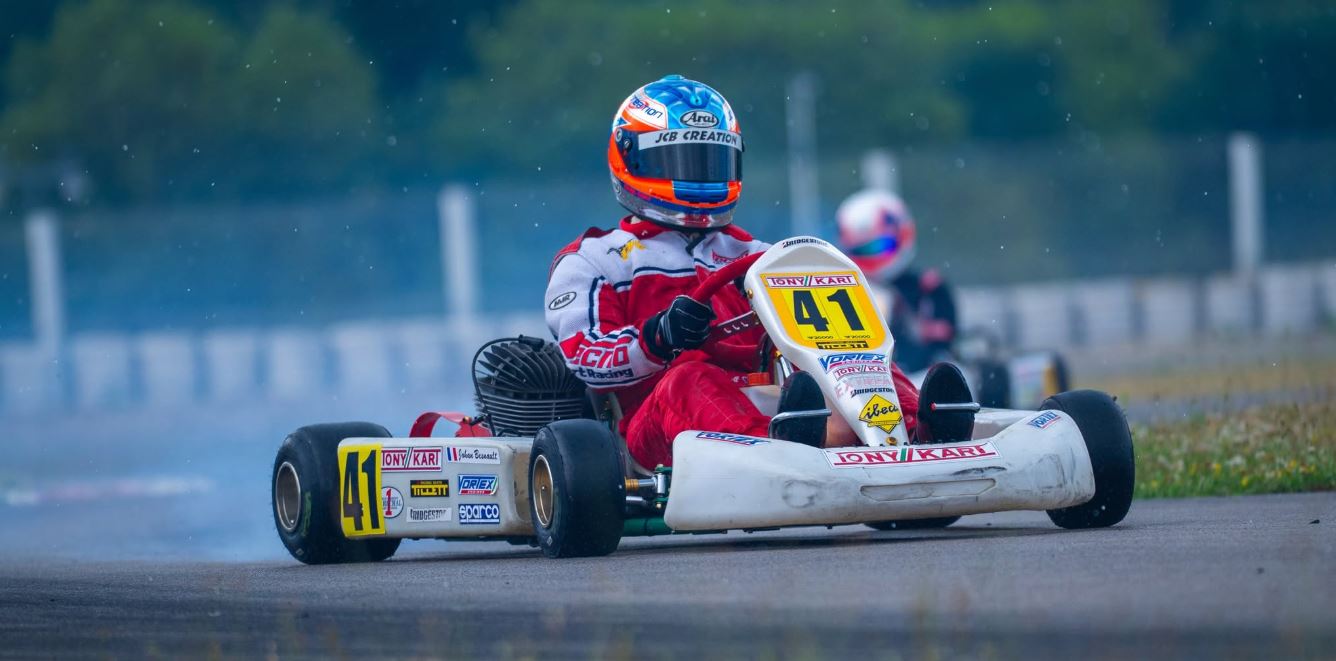
Long considered outdated, these karts from the 1980s, 1990s and early 2000s have enjoyed a real revival in recent years. Formula 20,000 allows them to return to the track within a structured framework, with competitions organised under FFSA approval, a dedicated calendar, and a community of enthusiasts that continues to grow 🤩
Here, there is no electric starter, no clutch, no battery, and no sophisticated electronics. We are talking about lightweight, simple, yet demanding karts to drive, powered by 100cc air-cooled engines capable of revving incredibly high 💥
But be careful: behind the image of the "cheap old kart", reality is more nuanced. Some mechanical components have become rare and can be expensive to find or rebuild. And while the spirit remains focused on passion, enjoyment, and heritage, this is still a genuine racing discipline.
Formula 20,000: what is this historic karting category?
Formula 20,000 is a French historic karting category reserved for machines that could have competed between 1986 and 2002. Its name refers to the extremely high engine speeds reached by the 100cc engines of the era, which were capable of exceeding 20,000 rpm in certain configurations 😲
The philosophy is simple: bring iconic karts from the great era of air-cooled 100cc karting back to the track while preserving the technical and visual spirit of the period.
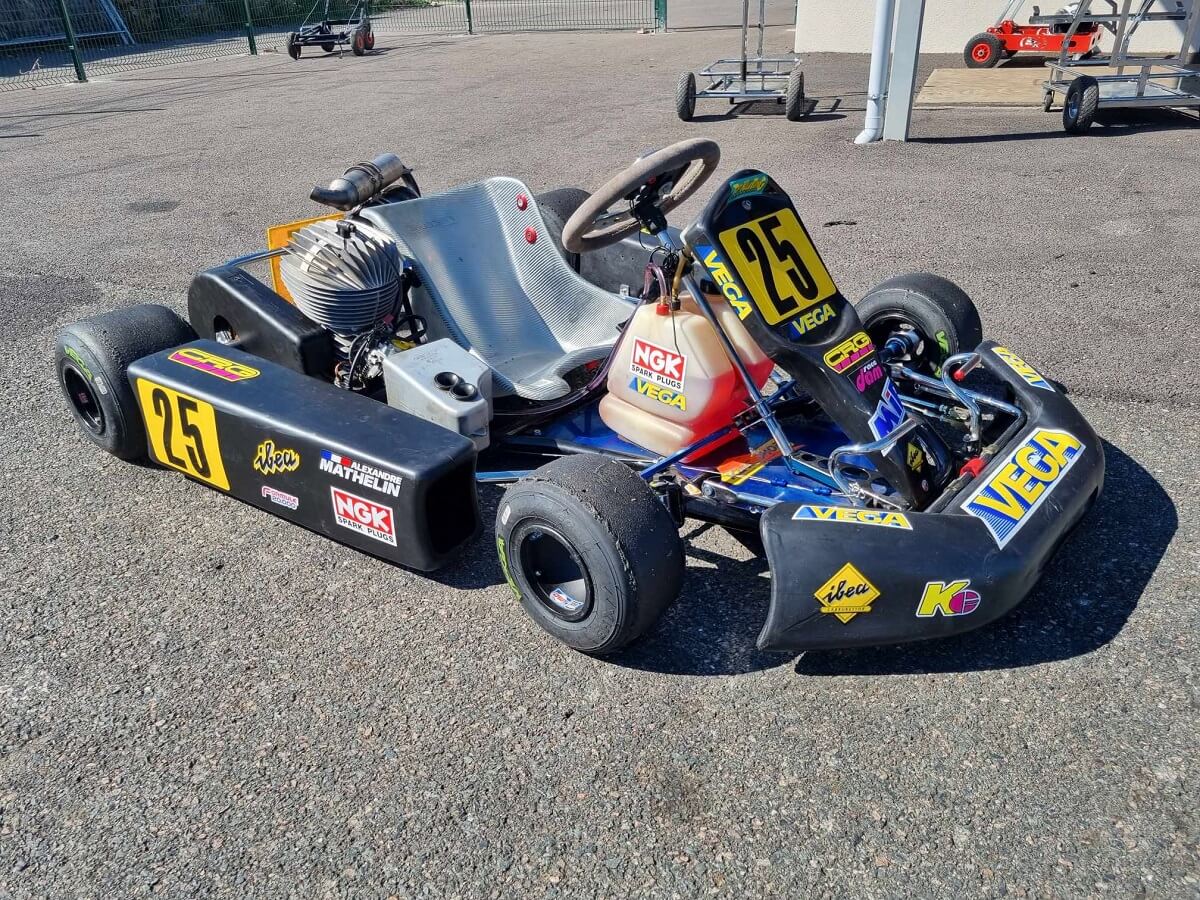
The category therefore features karts without gearboxes, without clutches, without starters, without batteries, powered by 100cc air-cooled engines, with chassis and bodywork compliant with the standards of their period.
The regulations place strong emphasis on the concept of historic authenticity. The goal is not simply to run old karts, but to preserve technical and aesthetic consistency with the original categories.
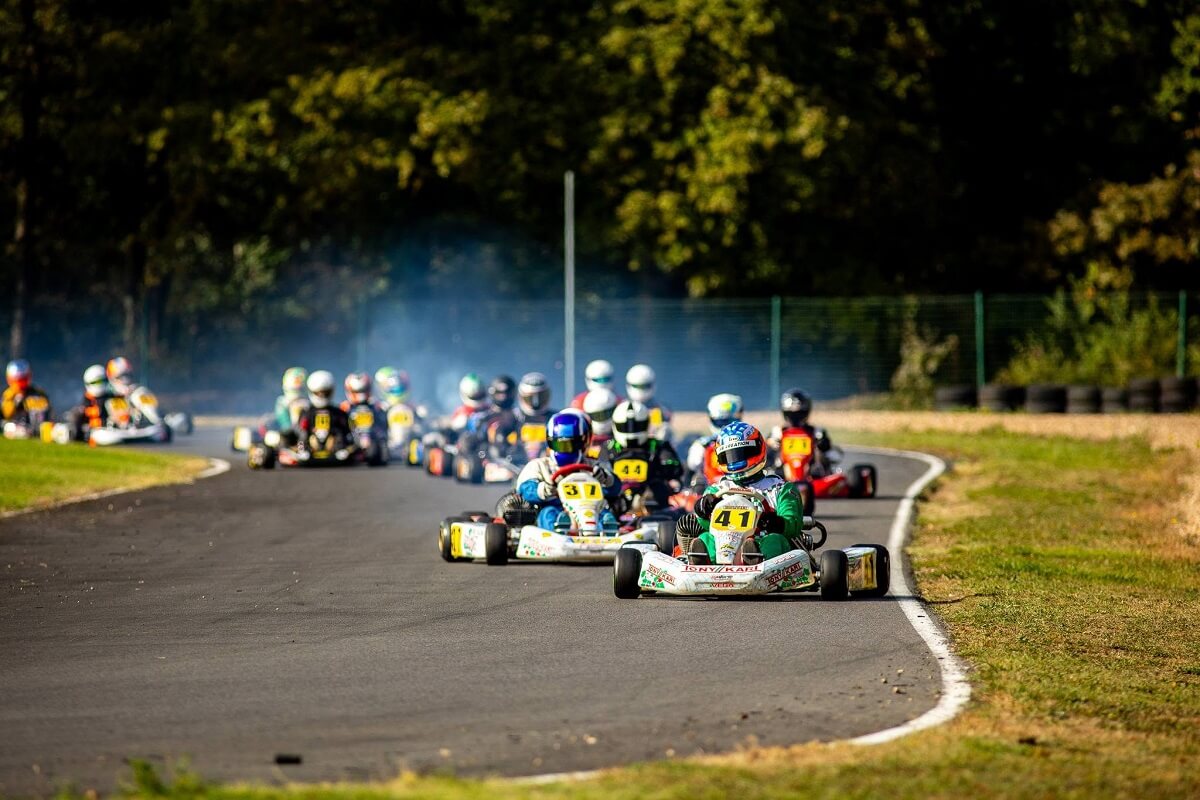
Unlike a simple demonstration event, Formula 20,000 offers genuine competition, with warm-up sessions, heats, prefinals, finals, classifications, trophies, and detailed technical regulations.
Origins of Formula 20,000: from the 2018 Le Mans event to Future Racing Comm
Historic 100cc karting obviously did not wait until the late 2010s to exist. Many machines were already sitting in garages, workshops, or private collections. However, Formula 20,000 in its current form is relatively recent.
It was from this momentum that Romane Didier launched Formula 20,000, with the goal of allowing these machines to return to the track within a serious framework while preventing them from disappearing permanently from the paddocks.
Today, she manages the promotion, communication, and entries for the category through the agency Future Racing Comm.
To discover upcoming events, follow the latest news from the category, or view photos of the karts in action, you can also visit the Formula 20,000 Facebook page.
Why are historic 100cc karts attracting so much interest?
The success of Formula 20,000 is not based solely on nostalgia.
Of course, for many former drivers and mechanics, hearing a field of air-cooled 100cc karts screaming down the track immediately brings back memories of a golden era of karting. The sound, the smell of premix fuel, push starts, and ultra-light chassis are all part of the appeal 🥰
You also still see some of the characteristic techniques of old two-stroke engines, such as temporarily covering the air intake with a hand (see below).
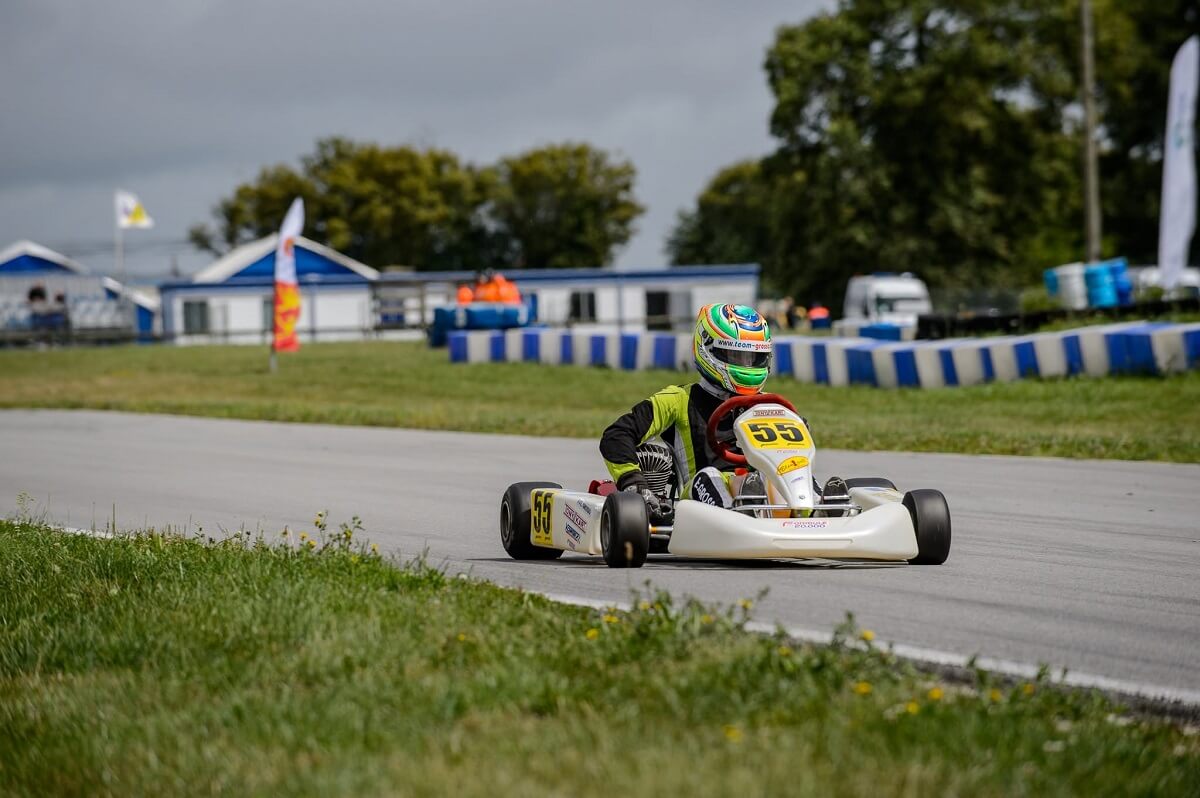
When starting the engine, this helps to enrich the air-fuel mixture and help the engine pick up revs when cold. On track, some drivers also do it at the end of a straight to feed more mixture into the engine, and therefore more oil, helping to improve lubrication and cooling.
On these highly tuned engines, it is an important technique for reducing the risk of seizure, especially when running aggressive and relatively lean settings.
On some air-cooled 100cc engines, drivers may briefly cover the intake with their hand to enrich the mixture and improve lubrication. This practice has virtually disappeared from modern karting categories.
But the category also attracts younger drivers, some of whom never experienced that era firsthand.
You will also find former top-level drivers in the paddocks, some of whom competed in international or world championships during their youth. This also explains why the racing remains highly competitive despite the friendly and historic atmosphere of the discipline.
These karts offer a very different experience from modern equipment. They are more raw, often more physical, with engines that demand rhythm and precision to stay within the optimal power band.
In terms of outright performance, a well-driven Formula 20,000 kart is comparable to a National-class kart and is typically around one second per lap slower than an X30, depending on the circuit and configuration. It is not just "an old kart": it is light, responsive, full of character, and still genuinely fast 😎
See also: "The KA100: the best way to get started in karting?"
There is sometimes debate about the term "historic". For some purists, a kart from the 1990s is not yet truly vintage. But in karting, where equipment becomes outdated very quickly, these machines already belong to a different era. More importantly, many of the technologies they use have now disappeared from modern competition.
Which karts are eligible for Formula 20,000?
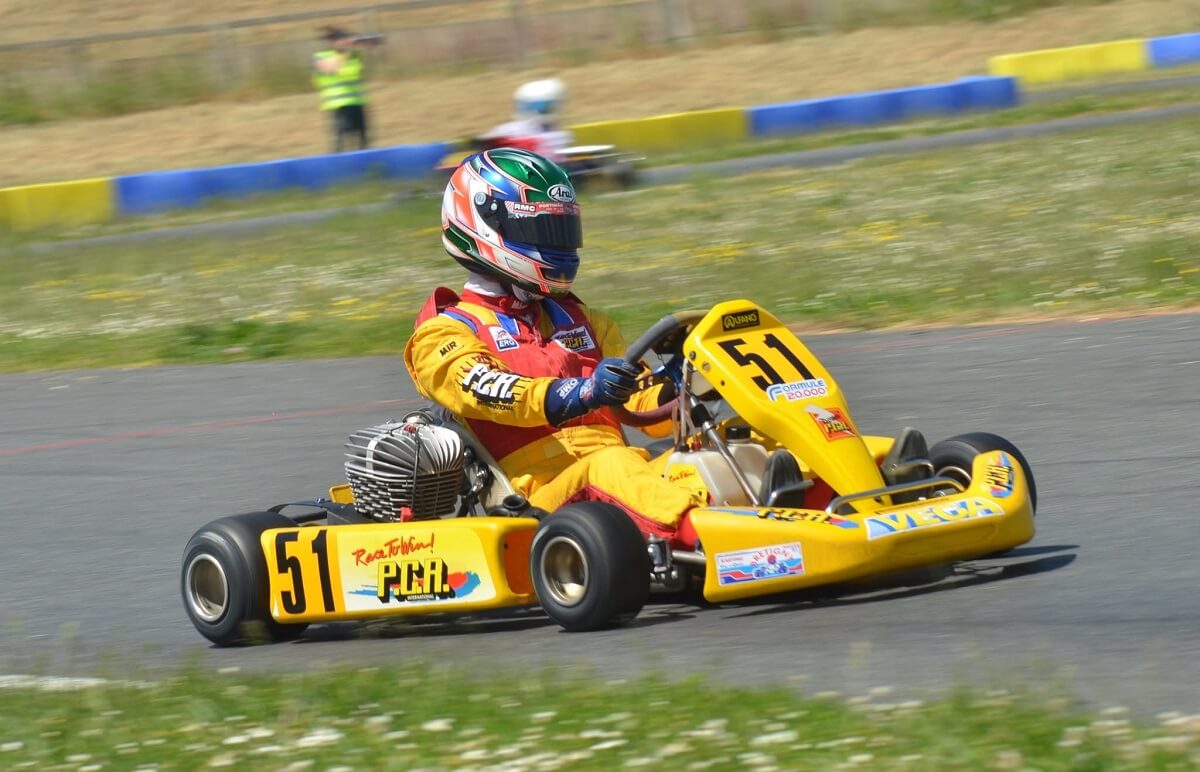
Formula 20,000 welcomes karts that could have been used in competition between 1986 and 2002, powered by air-cooled 100cc engines.
ℹ️ The chassis must comply with the CIK regulations of the period and maintain an appearance consistent with their era. The regulations aim to prevent overly modern builds or configurations that stray too far from the historic spirit of the category.
Typical features include wide square sidepods, a Nassau panel, CIK 02 or earlier bodywork, chassis without suspension, and front brakes are prohibited.
The rear protection system becomes mandatory for chassis built from 1997 onwards. Each driver may use one chassis and two engines during a competition.
Certain modern adaptations remain permitted when they improve safety or reliability. Electronic tachometers and temperature sensors, for example, are allowed.
However, the overall spirit remains far removed from modern karting: no starter, no battery, no clutch, and no rev limiter.
In Formula 20,000, karts are still push-started. The driver is pushed by another person before firing up the engine, exactly as it was done in the 1980s and 1990s.
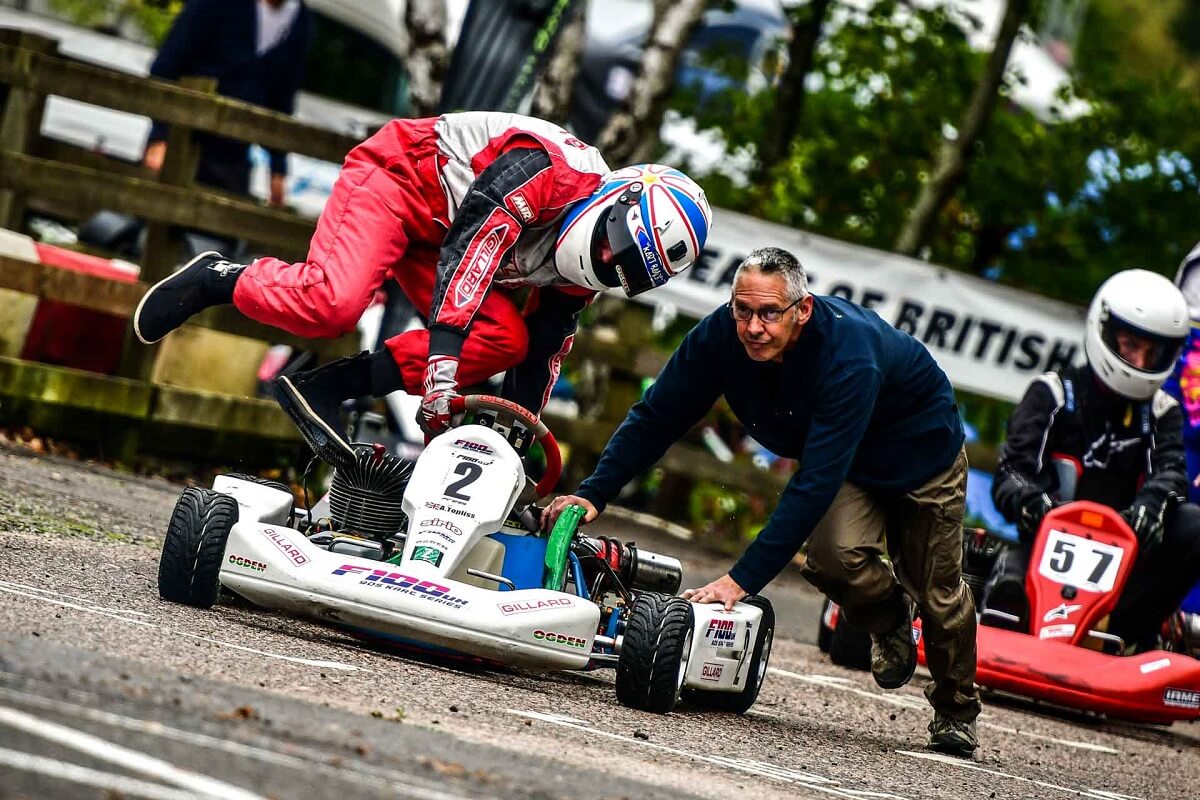
In practical terms, these karts are still push-started, just like in the old days. Having a pusher is therefore highly recommended, although some experienced drivers can occasionally start the kart on their own with the right technique and a properly primed engine 👌
What engines are used in Formula 20,000?
Formula 20,000 is based on air-cooled 100cc engines homologated between 1986 and 2001. The regulations allow reed-valve engines with a diaphragm carburetor, in a configuration that remains broadly faithful to the period.
These engines can produce up to around 28 to 29 horsepower, depending on the configuration 🔥
The standard configuration remains a 24 mm butterfly carburetor maximum, although some alternative setups may be permitted with weight adjustments through the technology equivalency system.
In the paddock, there is a wide variety of chassis and engine combinations. On the early 2026 grids, for example, you can find many Merlin / ATK, PCR / PCR, CRG / Parilla combinations, as well as Tony Kart chassis powered by Vortex, Rotax, Sirio, or Parilla engines.
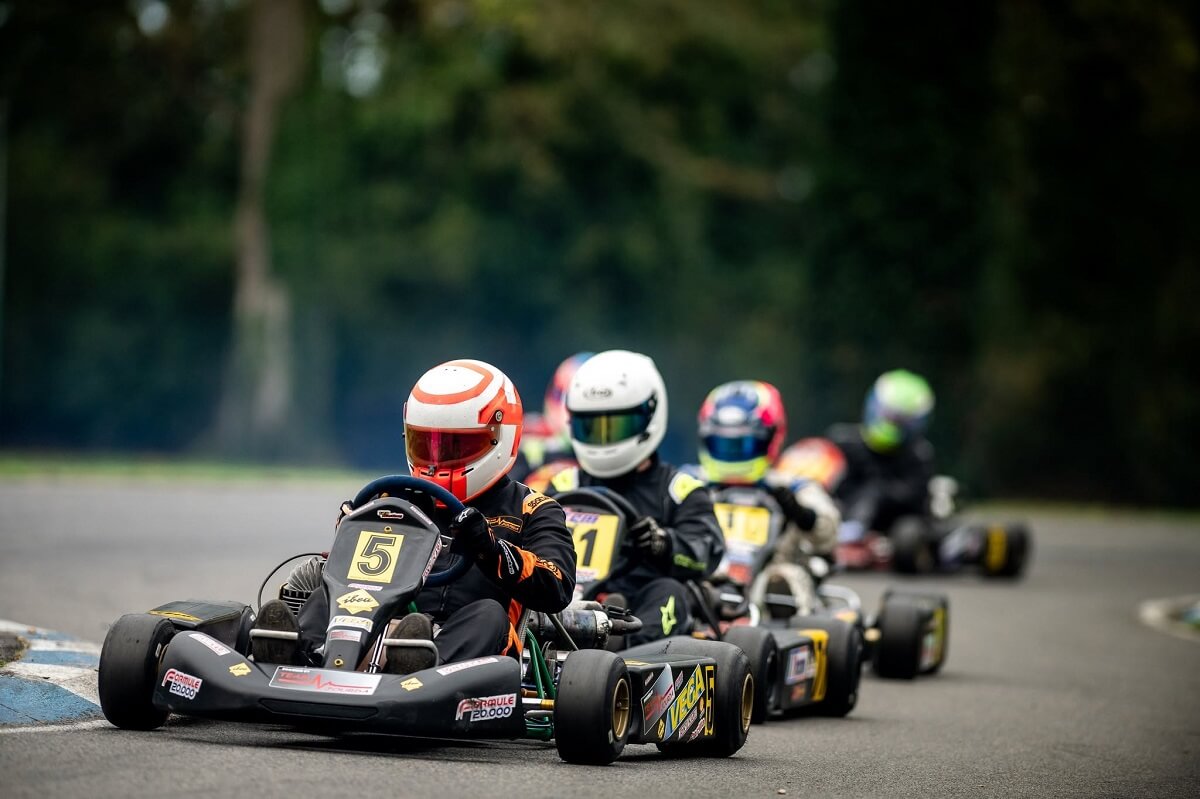
This diversity is part of what makes the category so appealing. Unlike most modern disciplines, which are highly standardised, Formula 20,000 still leaves plenty of room for mechanical variety.
See also: "KFS: A New Era for Low-Budget 2-Stroke Karting"
On paper, Formula 20,000 is based on old and relatively simple engines. In reality, some rare engines have become highly sought after and can now command significant prices on the second-hand market.
But this also creates a side effect: some engines have become highly desirable and can reach relatively high prices 💸
Despite their apparent simplicity, these engines still require genuine technical knowledge to be both competitive and reliable at extremely high rpm. Carburetor settings, ignition tuning, fuel mixture quality, and engine tolerances remain very important topics throughout the paddock 🤫
Formula 20,000, Formula Promo, Formula 100% and Formula 125: what are the differences?
This is a point that often causes confusion. When people talk about Formula 20,000, many use the name to refer to all the historic competitions organized during these meetings. In reality, several different categories exist.
Formula 20,000 remains the flagship category, centred on air-cooled 100cc karts from 1986 to 2002.
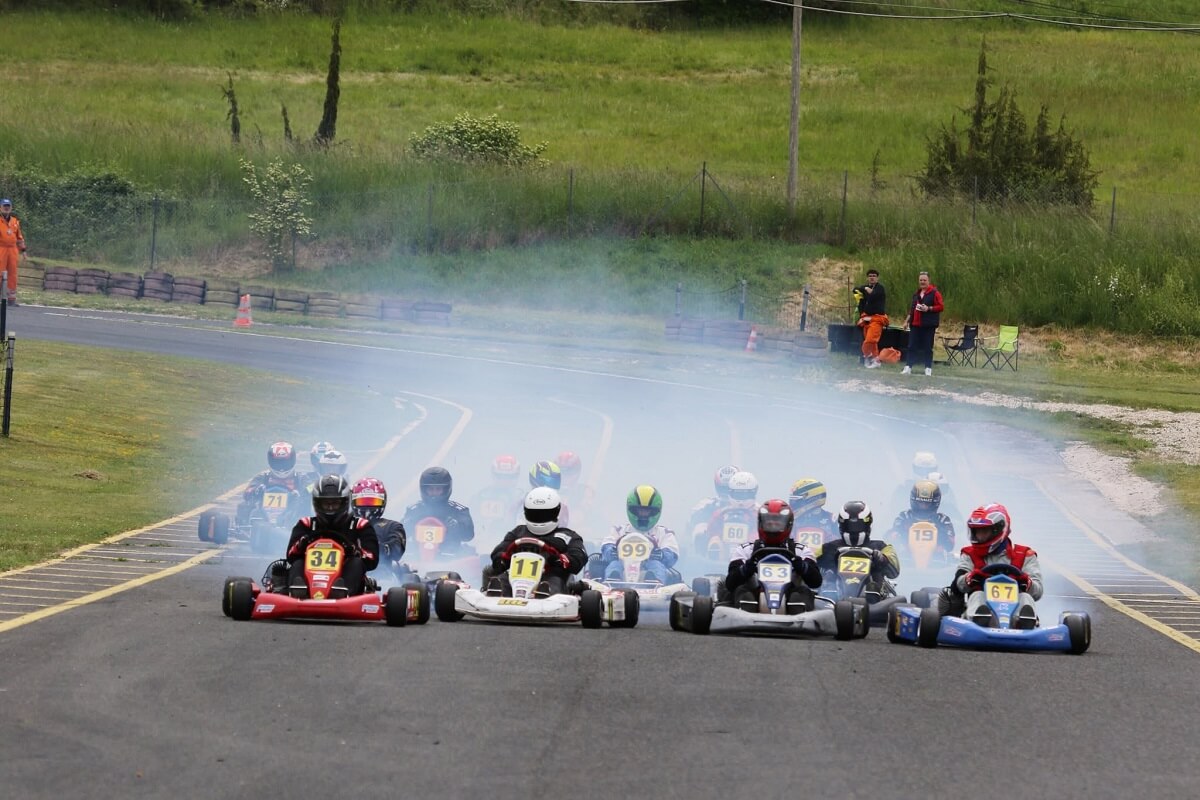
Formula Promo is designed as a more accessible category, inspired by the former French promotion karting categories. It brings together simpler karts, with economical chassis, mechanical brakes, less powerful engines, and theoretically lower running costs. It is divided into Formula Promo A, with around 17 to 20 hp, and Formula Promo B, with approximately 13 to 15.5 hp.
In Formula Promo, although several engines may be eligible, the current grids are largely dominated by the Komet K55, notably inherited from the former Hexagone, Promo 1, and Promo 2 categories. The Minarelli K100, Yamaha KT100, and RKD remain eligible within the spirit of the category, but the K55 has become almost unavoidable today.
Formula 100% is dedicated to water-cooled 100cc karts, using more recent engines, notably from CIK homologations between 1998 and 2004. Formula 125 is reserved for historic gearbox karts.
However, these two categories remain much less developed today than Formula 20,000 and Formula Promo. In the short term, these latter two categories are the ones with genuinely established grids.
Onboard camera: a Formula 20,000 race 😎🎥
Formula 20,000 race format: practice, heats, prefinal and final
Even though the atmosphere remains strongly driven by passion, Formula 20,000 is a genuine racing category with a structured format.
Depending on the event and the number of participants, several formats may be used. In the standard format, competitors generally take part in a warm-up, two qualifying heats, a prefinal, and finally a final.
Depending on the event, drivers may arrive as early as Friday for open practice, followed by free practice sessions on Saturday before Sunday's competition.
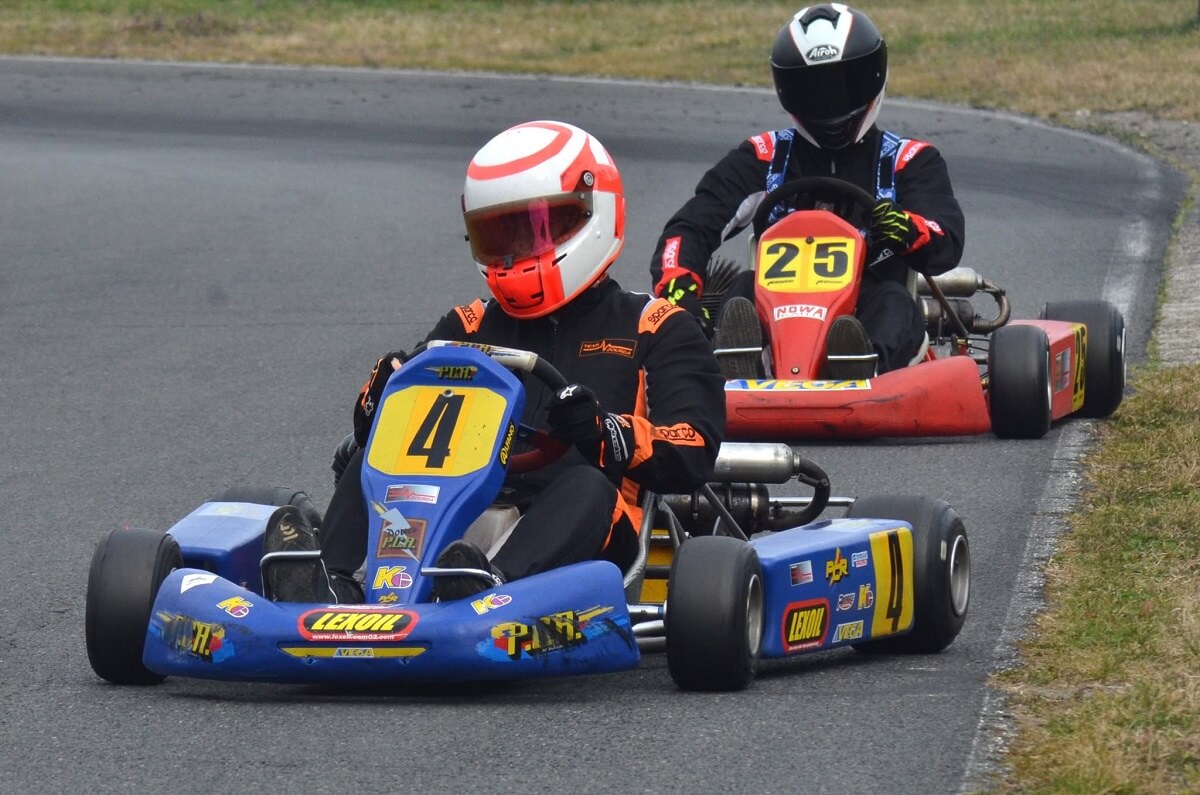
The warm-up session allows competitors to check their equipment and fine-tune their setup. A weigh-in is also organized to verify minimum weight requirements and identify drivers entered in the "+10" class ⚖️
As mentioned earlier, push-starting is a normal part of operating these karts. It is something that must be planned for when organizing the race weekend.
The first heat starts according to a random draw, while the second uses the reverse order of that draw. This helps reduce the influence of outright speed and keeps an element of unpredictability.
The prefinal and final then follow, with the final determining the overall classification of the event 🏁
2026 Formula 20,000 Calendar
The 2026 season marks the eighth year of Formula 20,000 in its current form.
| Date | Circuit | Location | Event Type |
|---|---|---|---|
| May 9-10, 2026 | Soucy | Yonne (89) | Club race |
| June 6-7, 2026 | Saint-Amand-Montrond | Cher (18) | Minarelli Challenge |
| July 18-19, 2026 | Laval | Mayenne (53) | 100% Historic Meeting |
| October 24-25, 2026 | Loudun | Vienne (86) | Central France Circuits Challenge |
The 2026 season also sees the introduction of the Zamp Helmets France Trophy, designed to reward the "Best Driver of the Year" in Formula 20,000, with prizes including a Zamp RZ-57V helmet.
The "+10" category also retains its famous BBQ Trophy, where the prize is... a barbecue. A detail that perfectly sums up the spirit of these competitions 😄
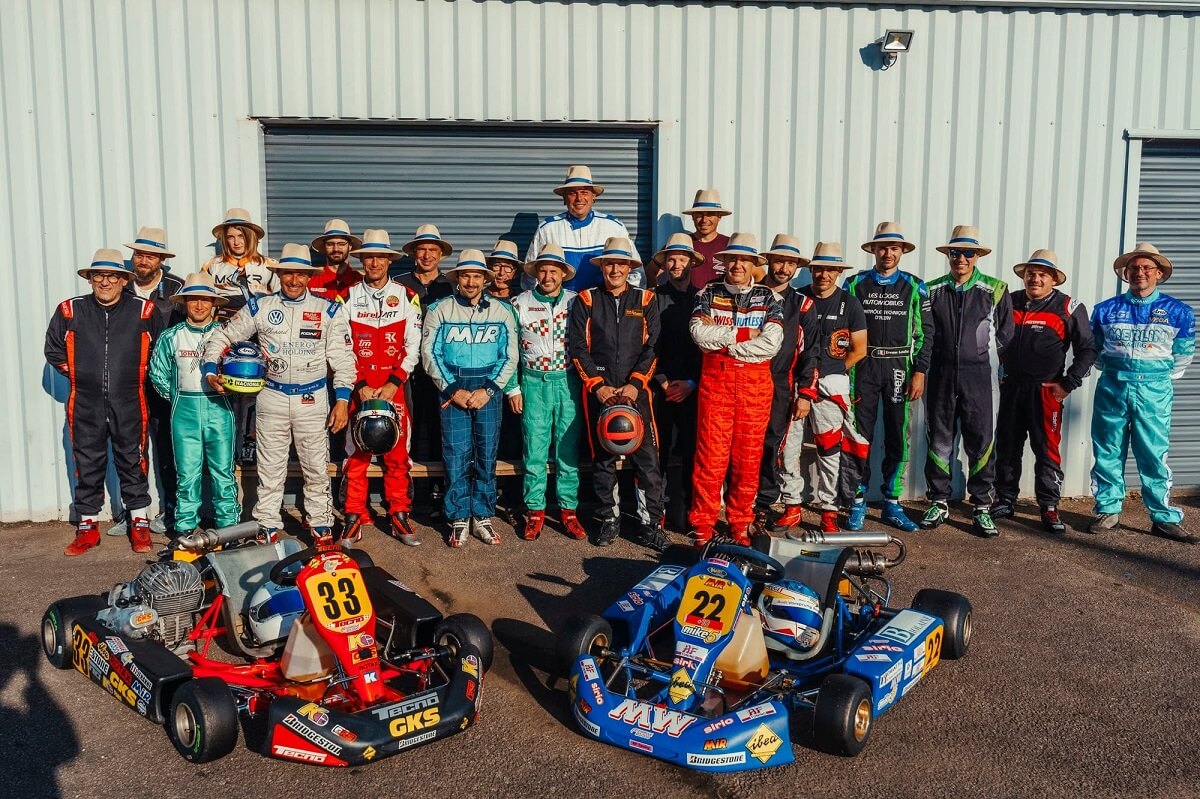
What FFSA Licence Is Required to Race in Formula 20,000?
Formula 20,000 is an officially sanctioned FFSA competition. Drivers must therefore hold either a valid licence or a participation title to compete.
Competitors may enter with a karting training/club racing licence (€113), a national karting competition licence (€179), or an international licence.
For occasional participation, temporary single-event licences are also available. In 2026, the TPNCCK competition participation title costs €48, while the TPNEJK training participation title costs €35.
Please note that the minimum age requirement is 18 years old, unless an exemption is granted by the FFSA based on the driver's experience.
See also: "What Age Can You Start Karting? (Leisure and Competition)"
How Much Does It Cost to Race in Formula 20,000?
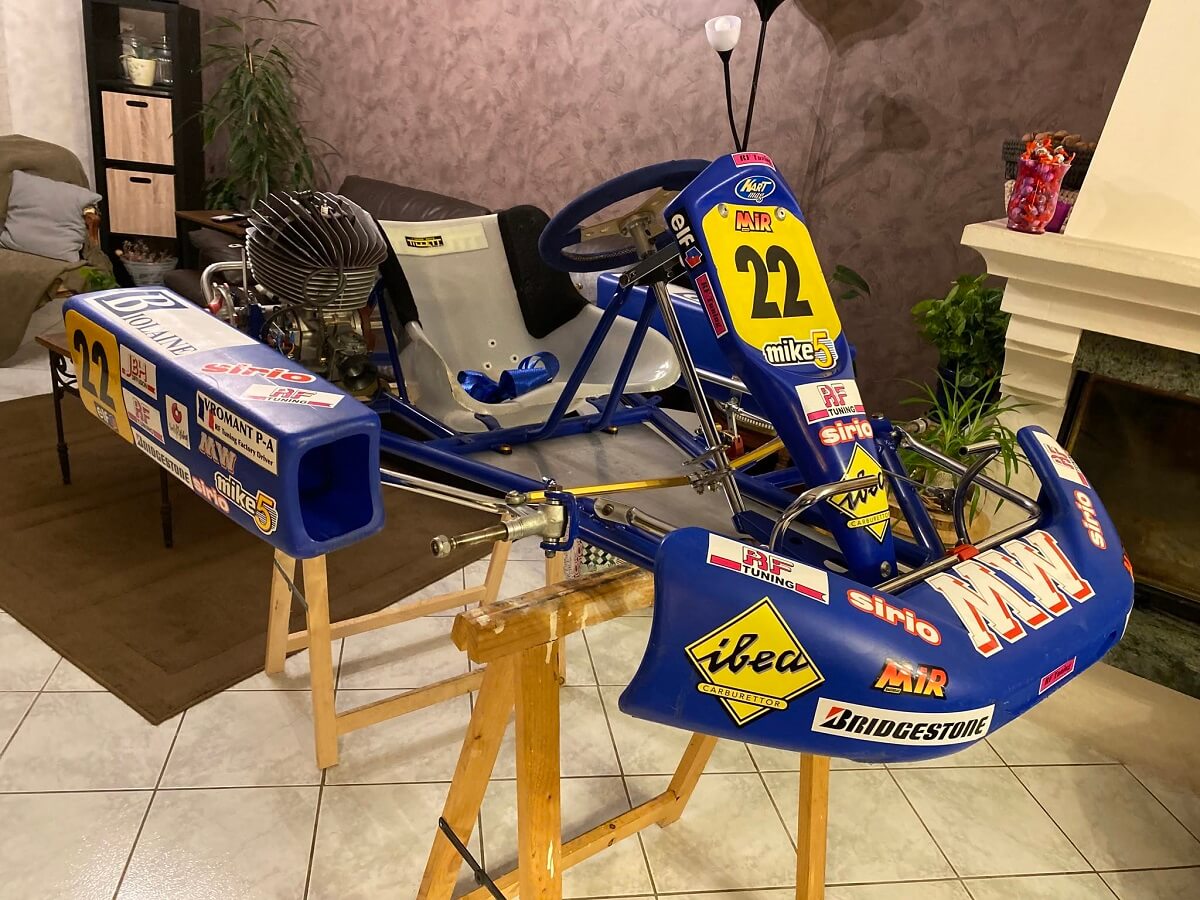
This is the big question. And as is often the case in motorsport, the answer depends heavily on your project, the equipment you already own, and the level of performance you're aiming for 🙂
On paper, Formula 20,000 can seem relatively affordable. In 2026, entry fees generally range between €110 and €130 depending on the event. Saturday practice sessions are usually charged separately, typically around €40, and some circuits also offer track time from Friday onwards.
But the budget goes far beyond the entry fee. You also need to factor in the kart, tyres, fuel, oil, travel expenses, wear parts, and any necessary engine rebuilds.
See also: "Complete karting checklist: the list of essential equipment"
Buying a Formula 20,000 Kart
The first major expense is acquiring the equipment. According to paddock feedback, a clean, race-ready Formula 20,000 kart can generally be found for between €1,200 and €1,500, although condition, brand, engine, and rarity can significantly influence the price.
In Formula Promo, complete packages can sometimes be found for between €500 and €1,000.
An old kart purchased for €500 can quickly require substantial work before it is reliable enough to finish a race without breaking down. With this type of equipment, actual condition, regulatory compliance, and the quality of the restoration often matter far more than the advertised price.
If you want a proper restoration that remains faithful to the kart's original era, costs can rise quickly. Through a professional specialist, you should expect to spend around €2,500 to fully refurbish a Formula 20,000 kart, excluding the purchase price of the kart itself. For a Formula Promo, the figure is generally closer to €1,500.
These are only rough estimates, as everything depends on the kart's starting condition, chassis rarity, parts availability, and the level of finish you are aiming for.
Another interesting characteristic is that, unlike many modern karts that depreciate rapidly, well-restored historic karts that remain period-correct tend to hold their value. Some models are even becoming increasingly sought after, which partly explains why quality second-hand equipment is becoming harder to find.
Engine Maintenance, Tyres, and Running Costs in Formula 20,000
On the chassis side, maintenance is generally straightforward provided the kart starts from a solid foundation. Brake pads are thick, wear rates are moderate, and many components can last for a long time.
The real issue is the engine.
In Formula 20,000, a race engine that regularly operates at very high rpm will usually require rebuilding fairly often: approximately every 4 to 5 hours for the top end and around 8 to 10 hours for the bottom end 🛠️
This means you either need to perform the work yourself or rely on someone experienced with these engines.
Formula 20,000's air-cooled 100cc engines can exceed 20,000 rpm. At these engine speeds, mechanical tolerances are extremely tight, and reliability depends heavily on maintenance, setup quality, and engine preparation.
Formula Promo is generally simpler and more reliable in this respect. Parts are relatively easy to source, and service intervals are typically more forgiving, with rough figures of around 15 hours for the top end and 30 hours for the bottom end.
The category also attempts to limit certain costs through the use of hard-compound tyres, a ban on rain tyres, and a rule allowing a set of tyres to be used for two consecutive races.
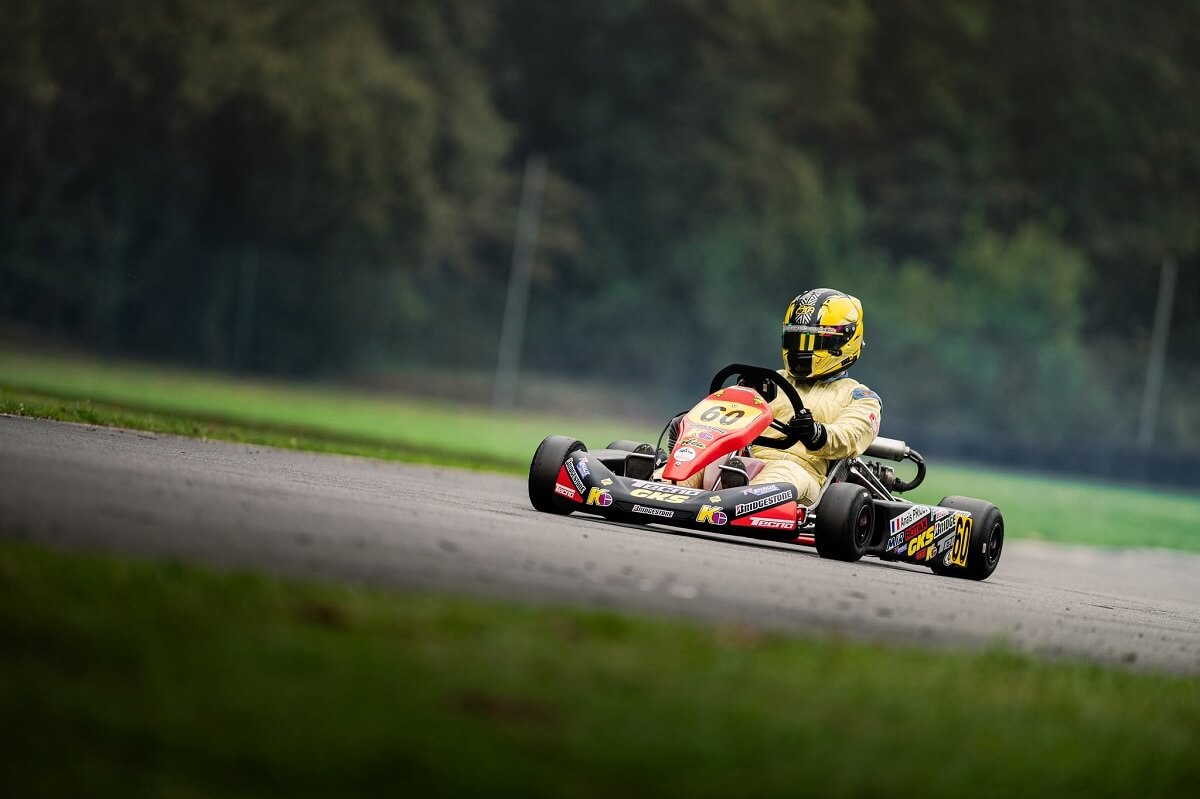
A Category That Isn't Always as Cheap as People Imagine
This is ultimately the paradox of the discipline.
Some drivers manage to race on relatively modest budgets thanks to their experience, network, mechanical skills, or equipment they have owned for many years.
On the other hand, as soon as you start chasing more performance, relying on professional engine builders, sourcing rare components, or frequently rebuilding old racing engines, costs can rise significantly 💰
Formula 20,000 can remain reasonably affordable if you already own the right equipment and have the necessary technical skills, but it is not necessarily a low-cost category when aiming for a competitive package. For those looking to discover historic karting on a tighter budget, Formula Promo is often the more suitable option.
Can You Rent a Kart in Formula 20,000?
Formula 20,000 is primarily built around passionate owners who maintain and race their own equipment. This is very different from modern karting categories where structured rental programmes are widely available.
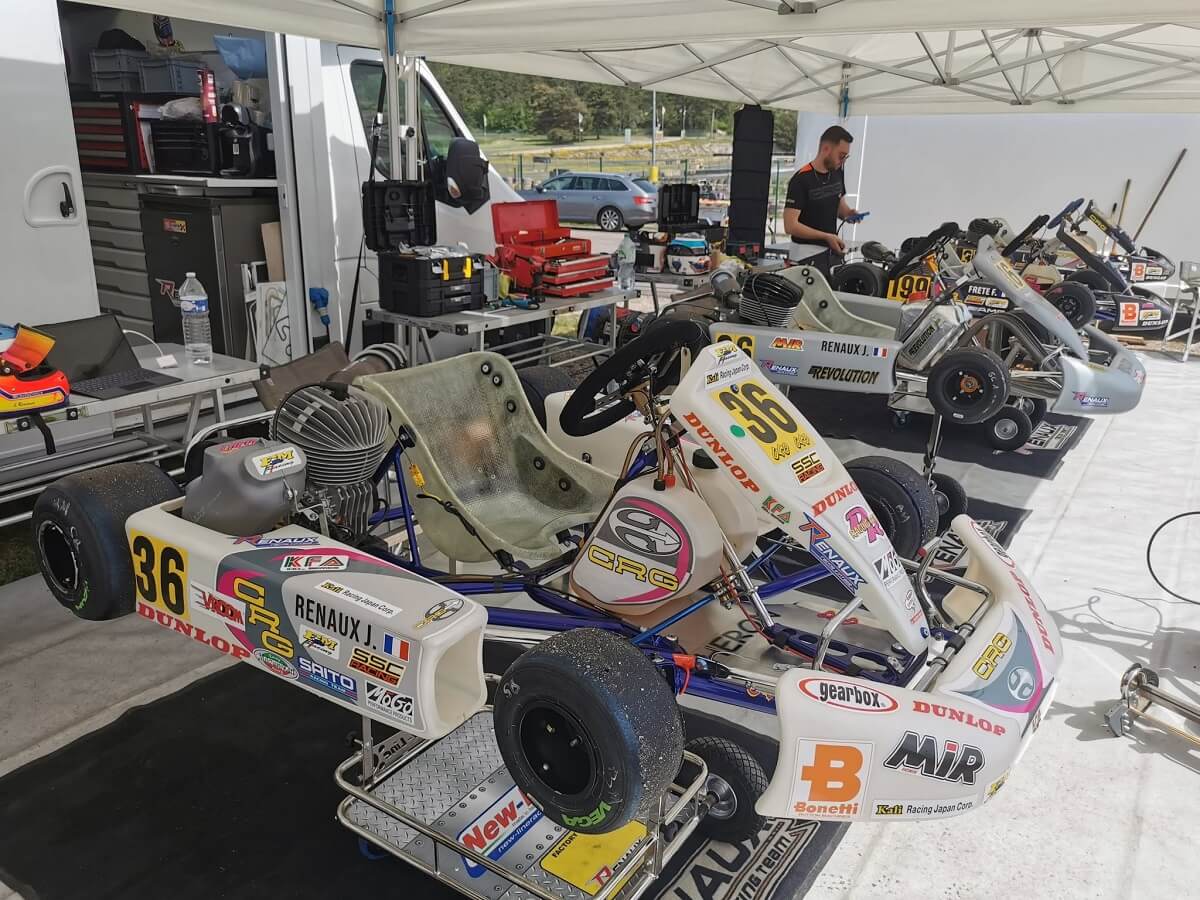
That doesn't mean it's impossible to compete without owning a kart. Some competitors share logistics with friends, family members, or fellow enthusiasts, and occasional loans or informal arrangements do exist. However, these opportunities are usually found through personal contacts within the community.
For a serious project, the easiest approach is generally to contact the organisers or specialists involved in the category directly.
Romane Didier can help direct drivers to the right contacts, particularly when evaluating a purchase, restoration project, or kart recommissioning programme.
In any case, it is often advisable to speak with people active in the category before buying a kart. Doing so can help avoid costly mistakes, verify that the equipment complies with the regulations, and sometimes uncover opportunities that are not publicly advertised on traditional classified platforms.
➡️ Looking for a kart for sale? Browse all kart listings on GoToTheGrid 😋
Formula 20,000 Regulations: Key Points to Know
The Formula 20,000 regulations are quite detailed, but a few aspects are particularly important.
The equipment must remain period-correct. Before each event, drivers are required to submit photographs of their kart for compliance checks, including front, rear, side-profile, engine, carburettor, brake system, homologation plate, and other relevant details.
Modern driver aids are largely prohibited. No electric starter, no battery, no clutch, and no rev limiter are allowed. However, tachometers and temperature sensors remain permitted to improve reliability and engine monitoring.
These air-cooled 100cc engines are appreciated for their distinctive sound. Depending on the circuit, certain noise-control solutions may nevertheless be required to comply with local regulations, such as airbox foam inserts, specific exhaust tips, or cartridge-style silencers similar to those used in X30 or KFS karting.
Noise levels are indeed an important topic. The sound of these engines is part of the category's appeal, but it also raises noise pollution concerns. Depending on the venue, organisers may require various solutions to reduce sound levels, including airbox foam inserts, dedicated exhaust tips, or cartridge silencers similar to those used in X30 and KFS classes. On some events, the cartridge silencer is optional; on others, it may be mandatory due to local restrictions.
As for tyres, Formula 20,000 uses Vega XH4 or Vega SL4 compounds. Formula Promo uses Vega KFE tyres, as well as older Vega KFH tyres that remain authorised in 2026.
In Formula Promo, wet tyres are prohibited, and the regulations are designed to limit the use of brand-new tyre sets in order to keep costs under control.
Beyond the kart itself, several safety items are also mandatory in the paddock and pit area, including a 6 kg fire extinguisher and an environmental mat placed beneath the kart. These are important details to plan for, especially if you are new to the discipline.
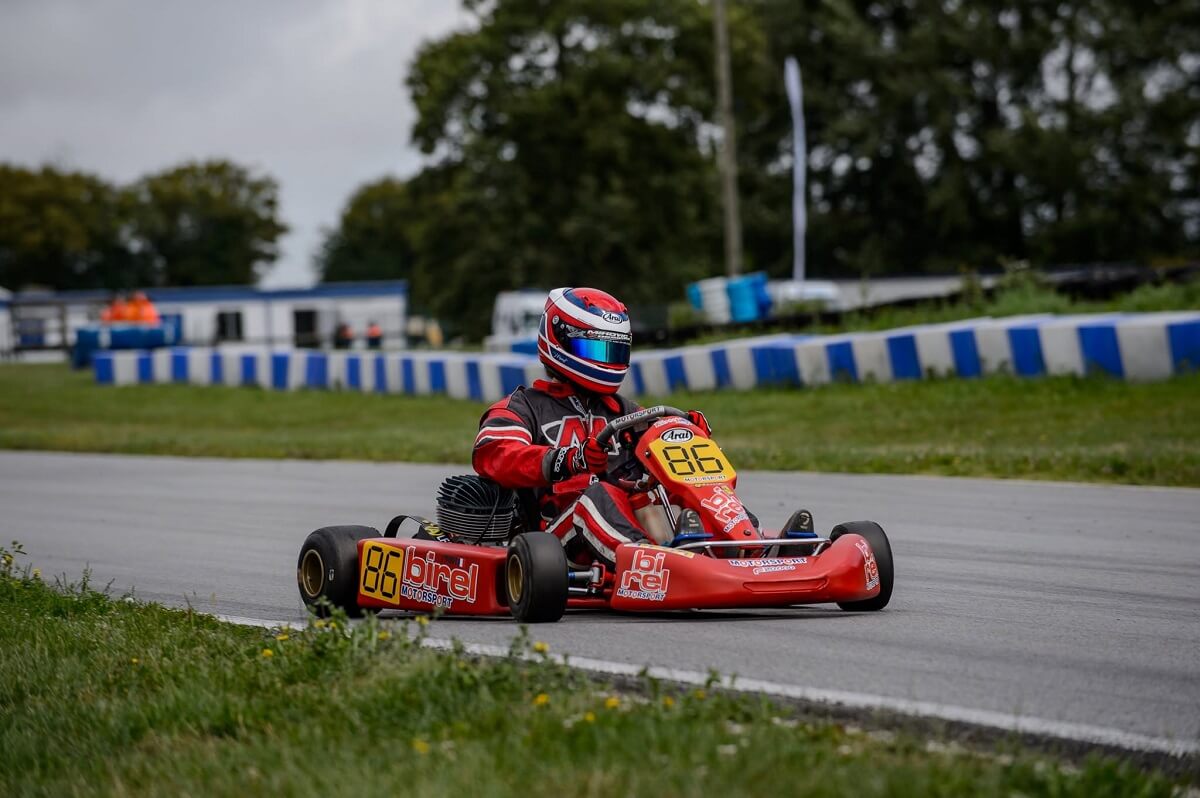
Historic Karting in Europe: GKC 100, Formula100cc and the Return of 100cc Racing
Formula 20,000 is far from an isolated case. In recent years, historic karting has also been making a comeback abroad, particularly around 100cc karts from the 1990s and early 2000s.
One of the best-known examples is GKC 100, short for Gentlemen Kart Challenge, organised in Germany.
The philosophy is very similar: bringing historic karts back onto the track, preserving iconic engines, maintaining a strong paddock atmosphere, and giving a second life to machines that many believed had disappeared forever 👍
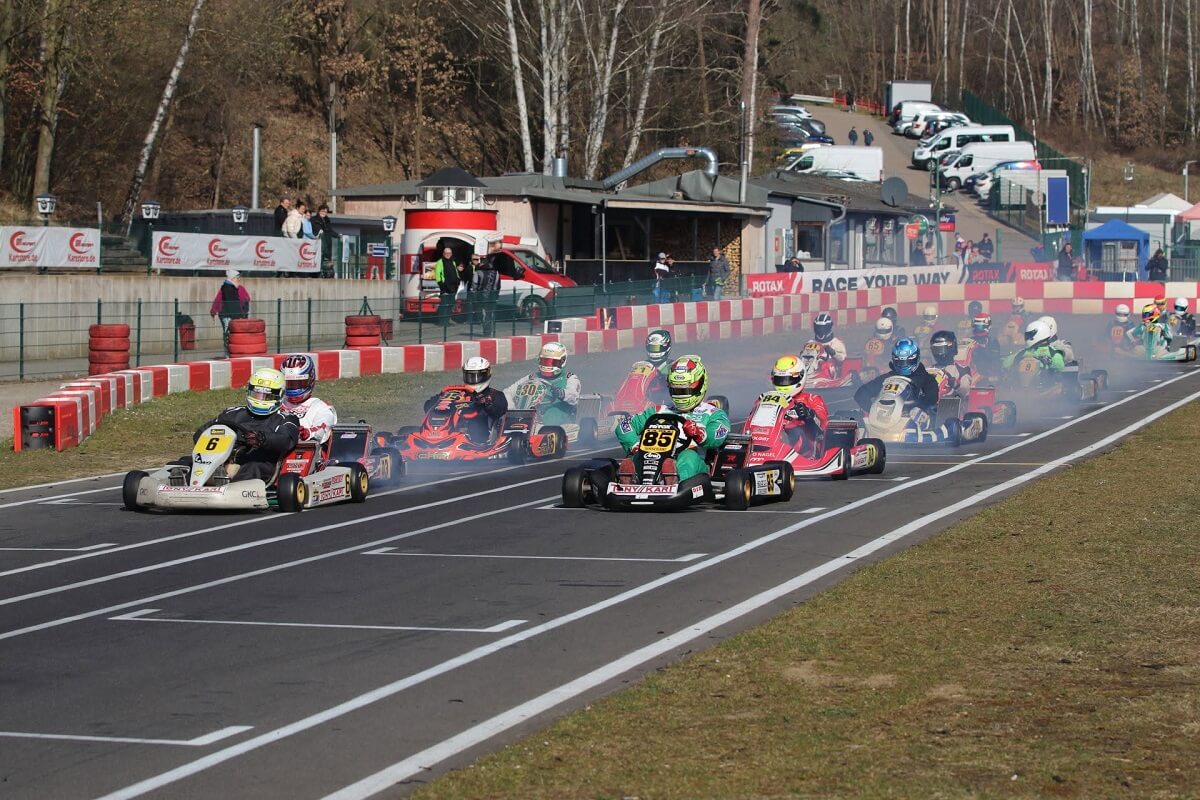
Italy has also seen the emergence of new projects centred on historic karting and 100cc racing, including the Formula100cc championship, proving that the revival of historic karting extends far beyond France.
This phenomenon mirrors what has long been observed in historic motorsport. Former Formula Ford, Group A, GT, and touring cars are no longer viewed simply as outdated machinery. They are becoming pieces of motorsport heritage that continue to be raced and enjoyed.
A Few Tips Before Getting Started
If you're interested in Formula 20,000, the most important advice is not to rush into buying the first kart you find for sale.
As is often the case with historic racing, chassis condition, compliance with the regulations, parts availability, engine history, and the overall consistency of the package are all crucial factors.
The best advice is simply to attend a race before making a purchase. Once you're at the circuit, it becomes much easier to understand the differences between the categories, the engines being used, the budget levels involved, and the overall atmosphere.
Before buying a historic kart, take the time to speak with several drivers in the paddock. A few conversations can often help you avoid expensive mistakes and identify the models best suited to your budget and objectives.
For beginners looking to discover historic karting with a simpler mechanical package, Formula Promo is often the most logical entry point.
It's also worth considering how you intend to use the kart outside competition. Apart from dedicated Formula 20,000 events or gatherings such as the major Karting Vintage meeting at the Circuit de l'Indre, running a kart in fully historic specification can sometimes be challenging.
Some circuits require a modern rear bumper, a cartridge silencer, or other modifications related to noise and safety regulations. This is something worth checking before buying if your goal is to enjoy regular recreational track time.
For restoration projects, recommissioning work, or sourcing parts, it can also be useful to contact specialists already involved in the category. Johan Renaux from the Renaux Racing Team is one of the people worth contacting for this type of project.
My Opinion on Formula 20,000
I genuinely find the concept very appealing, provided it is presented for what it really is.
Formula 20,000 is not necessarily a miracle solution for cheap karting, especially if you're looking for highly competitive or rare equipment.
What it does offer, however, is a category with genuine character. It keeps an important part of karting history alive and delivers a driving experience that feels very different from modern machinery.
Formula 20,000 will particularly appeal to enthusiasts of air-cooled 100cc engines, high-revving two-strokes, push-starting procedures, and machines full of personality.
For a first historic karting project, Formula Promo may be easier to approach.
Formula 20,000 FAQ
Is Formula 20,000 recognised by the FFSA?
Yes. Events are organised with FFSA approval through a specific exemption dedicated to historic karting.
However, it is not an official FFSA karting category in the same way as modern competitive karting classes.
Why is it called Formula 20,000?
The name refers to the extremely high engine speeds reached by the air-cooled 100cc engines of the era.
Depending on setup and tuning, some engines could exceed 20,000 rpm, an impressive figure even by today's standards.
Can you race without an annual FFSA licence?
Yes. It is possible to participate using a single-event participation permit.
In 2026, the TPNCCK competition title costs €48, while the TPNEJK training title costs €35.
Can a modern kart be used in Formula 20,000?
No. The equipment must remain consistent with the relevant historic period.
The goal is to preserve the spirit of the karts raced between 1986 and 2002, not to disguise a modern kart as a historic one.
What is the difference between Formula 20,000 and Formula Promo?
Formula 20,000 is primarily reserved for air-cooled 100cc karts that competed between 1986 and 2002.
Formula Promo follows the philosophy of the former French promotion classes, with less powerful engines, generally lower costs, and mechanical packages that are often easier to maintain and operate.
Is Formula 20,000 really a low-cost category?
Not necessarily. Entry fees remain reasonable, especially if you already own the equipment.
However, rare engines, regular rebuilds, and the pursuit of performance can quickly increase the overall budget.
Is a pusher mandatory in Formula 20,000?
Not strictly, but it is strongly recommended.
As the karts have neither a starter motor nor a clutch, they must be push-started. Many competitors now use a push kart to make starts easier.
Can you rent a kart in Formula 20,000?
The category is primarily built around passionate owners who maintain and race their own equipment.
Occasional loans or arrangements do exist, but structured rental programmes remain rare compared to modern karting categories.
How much does a Formula 20,000 kart cost?
A clean, race-ready package can often be found between €1,200 and €1,500.
In Formula Promo, some complete packages can be found between €500 and €1,000, although condition and compliance with the regulations remain essential considerations.
Can you regularly use a historic kart outside competition?
Not always.
Away from dedicated events and certain historic karting gatherings, noise, safety, and equipment regulations can sometimes restrict access to standard recreational track days.
Is Formula Promo easier than Formula 20,000?
Yes, generally speaking.
The engines are less powerful, parts are usually easier to find, and rebuild intervals are often longer. It is frequently considered the most logical entry point into historic karting.
What is the minimum age to participate?
The minimum age is 18 years old.
However, the FFSA may grant an exemption depending on the driver's experience and competitive background.


I'm Robin, 36, amateur driver and internet entrepreneur. I founded GoToTheGrid (GTTG) to create an intuitive platform dedicated to motorsport enthusia... See more