

 Login
Login
 Post an ad


Citroën C2 Super 1600: 225 hp, 1,000 kg and 9,000 rpm
By RobinB on 01 September 2026 Rally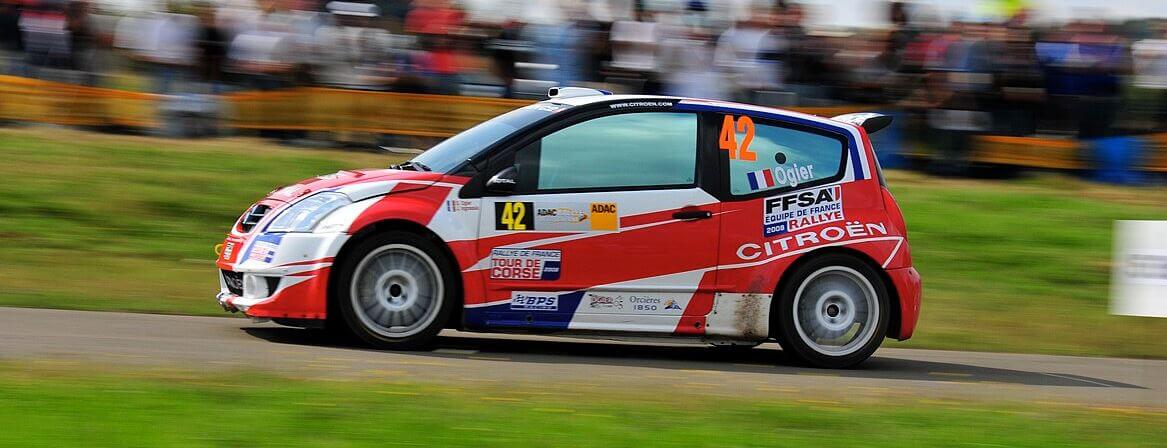
At first glance, the Citroën C2 isn't exactly one of the most spectacular cars in automotive history.
But with massive wheel arches, a naturally aspirated four-cylinder engine revving to 9,000 rpm, a six-speed sequential gearbox and a weight of just 1,000 kg, the C2 Super 1600 has very little in common with the small city car that filled European streets in the early 2000s 😎
Producing 225 hp from just a 1.6-litre engine, it belongs to a generation of rally cars that now seems to come from another era. Highly strung, incredibly loud, spectacular to watch, and capable of launching young drivers to the very highest level of the sport.
👉 And in the case of the C2, the formula certainly worked: Dani Sordo, Sébastien Ogier, Kris Meeke, Martin Prokop and Thierry Neuville all competed behind its wheel.
Replacing the Saxo Super 1600
To understand the origins of the C2 S1600, we need to go back to the early 2000s.
At the time, Citroën was already heavily involved in rallying. At the top level, the brand was beginning to win in the WRC with the Xsara and Sébastien Loeb. But Citroën also had a genuine development ladder designed to identify and nurture young talent 👍
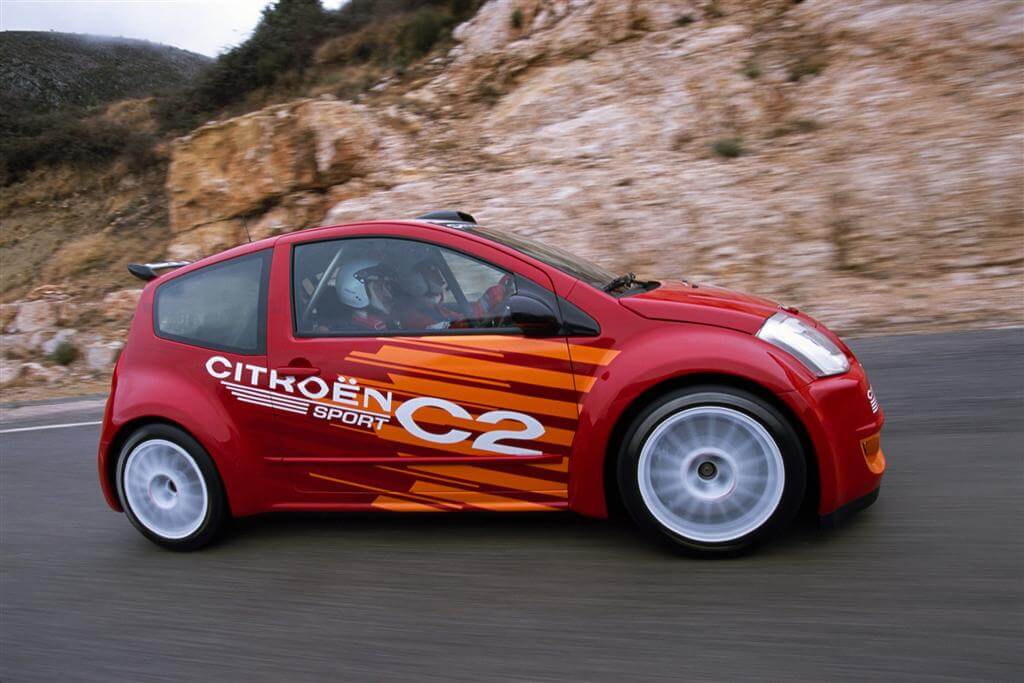
The idea was straightforward: spot promising drivers through one-make championships and junior series, help them progress to the Junior WRC, and eventually give them an opportunity in the World Rally Championship. Citroën clearly outlined this philosophy when it unveiled the C2 Citroën Sport Concept in 2003.
The Saxo Super 1600 had already fulfilled that role perfectly. Sébastien Loeb won the Junior World Rally Championship with it in 2001, before Dani Solà followed suit in 2002 🏆
However, the Saxo was beginning to show its age, and Citroën had just launched its replacement on the road car market.
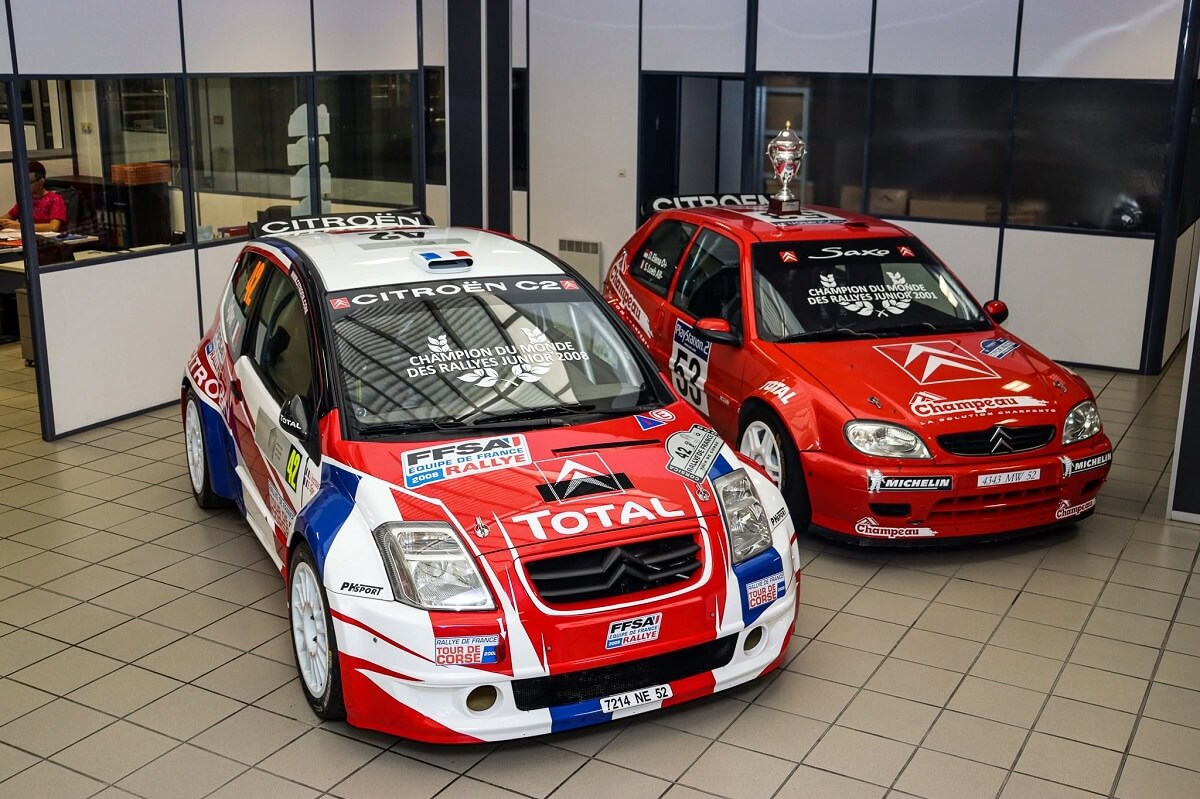
Also worth reading: "Buying a Saxo Kit Car : it's still a rally fan's dream !"
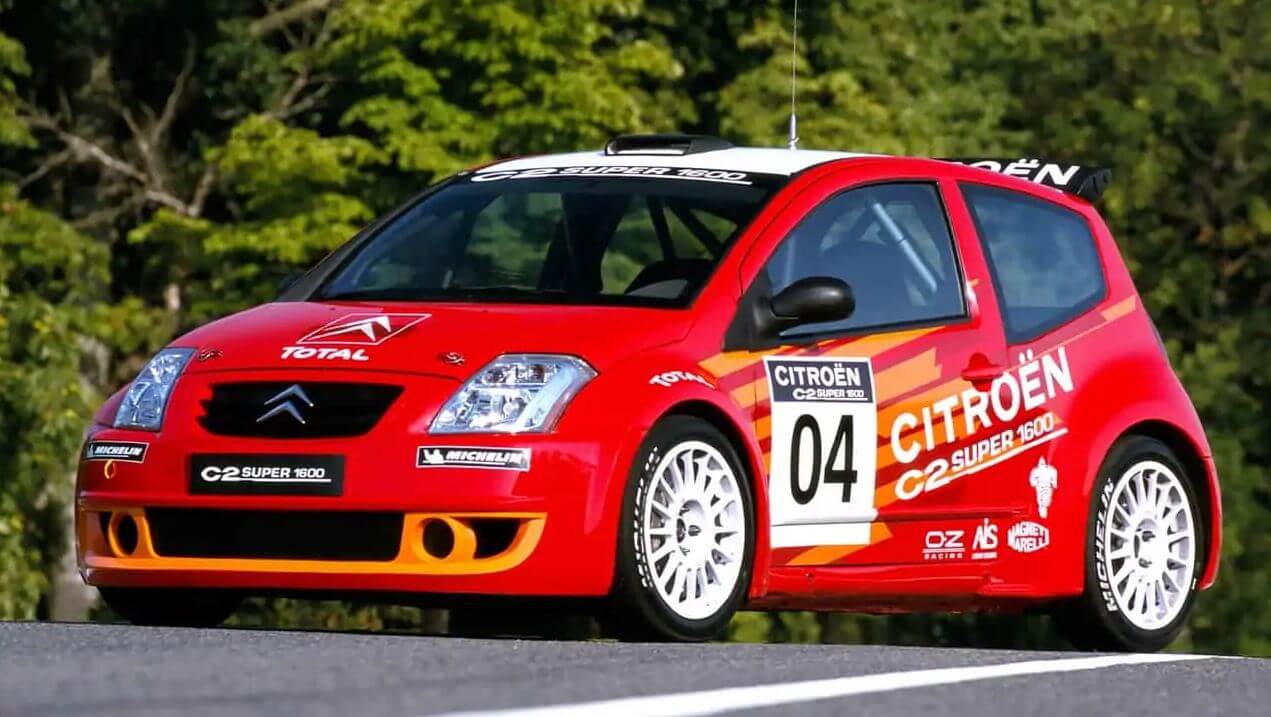
The 2003 Geneva Motor Show therefore saw the debut of the C2 Citroën Sport Concept, clearly signalling the brand's intentions. A few months later, a C2 Super 1600 appeared as the course-opening car at the 2003 Rallye du Var. It was officially homologated on March 1, 2004, before being offered for sale through Citroën Sport's Customer Racing department.
225 hp in a 1,000 kg C2
The Super 1600 regulations followed a rather unique philosophy: a lightweight front-wheel-drive car, a naturally aspirated engine of less than 1,600 cc, and a low minimum weight.
But behind that seemingly simple formula were genuine factory-built rally cars 😋
The C2 was powered by a four-cylinder engine derived from the production TU5JP4. Displacement remained exactly 1,587 cc, but virtually every component contributing to performance was redesigned.
The result was 225 hp at 8,500 rpm, around 201 Nm at 7,000 rpm, and a maximum engine speed of 9,000 rpm. That's more than 140 hp per litre from a naturally aspirated engine 🔥
The engine was paired with a six-speed dog-engagement sequential gearbox, a ZF limited-slip differential, and, of course, drove only the front wheels.
And while we're talking numbers, the little C2 also had quite an appetite: around 40 L/100 km on tarmac and 48 to 50 L/100 km on gravel. The significantly higher wheelspin on loose surfaces largely explains the increased fuel consumption.
The suspension was just as serious. Up front, the car featured a fully adjustable pseudo-MacPherson setup with remote-reservoir dampers. The rear suspension was also purpose-built. On tarmac, the front brakes could be fitted with 355 mm discs and four-piston calipers, while the car ran on 17-inch wheels.
Then there was the bodywork, which gave the C2 its unmistakably aggressive appearance.
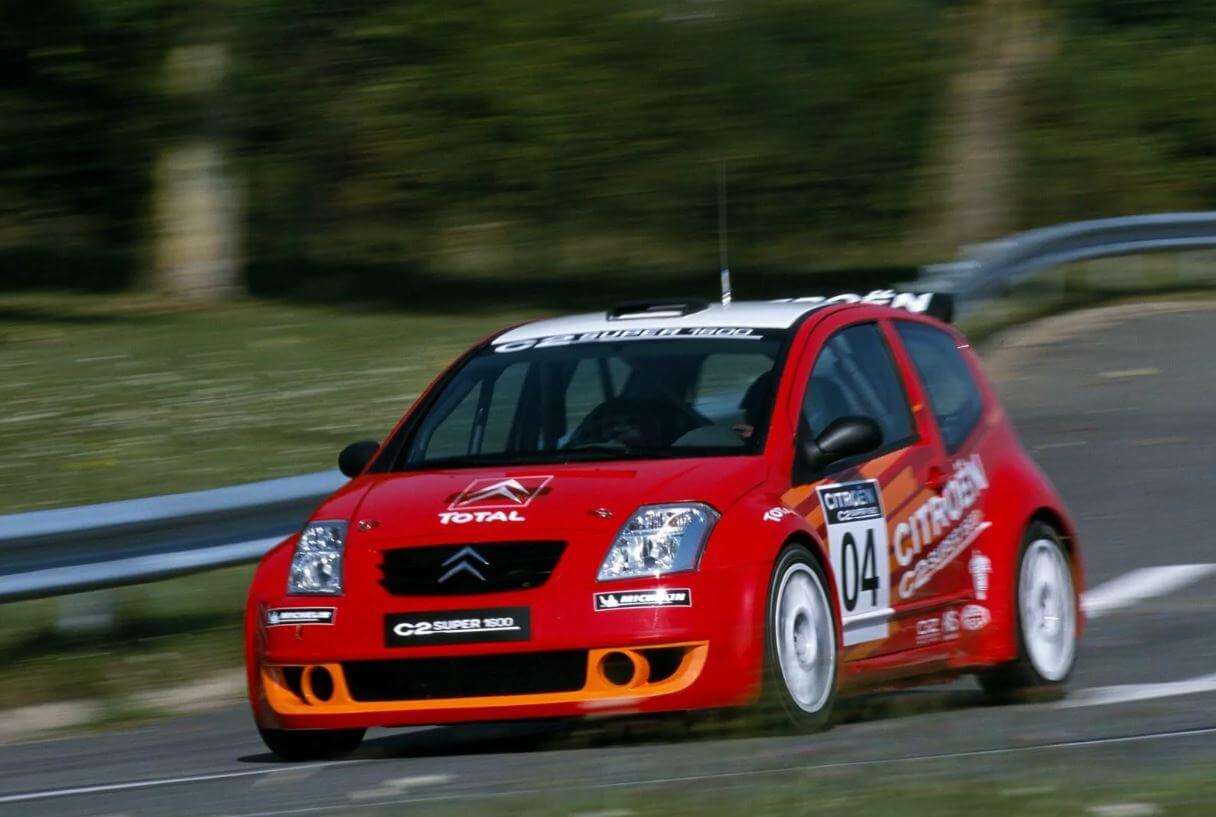
The C2 S1600 measured just 3.66 metres long, yet was almost 1.80 metres wide. Its massive track width and dramatically flared wheel arches gave it almost cartoon-like proportions.
👉 All of this for just 1,000 kg. In other words, beneath the silhouette of a small hatchback lay a true competition car developed with very few compromises.
An Exceptionally Agile Rally Car
The C2 wasn't necessarily the most powerful Super 1600. Later evolutions of rival cars reached similar—or even slightly higher—power figures.
However, its ultra-compact dimensions and outstanding chassis were among its greatest strengths.
When Sébastien Ogier first tested the car at the end of 2007 ahead of his World Championship campaign, he had just come from the Peugeot 206 Cup.
After his initial tests, he described the C2 as an extremely effective car but also one with a very lively rear end, while simultaneously adapting to its braking performance, sequential gearbox and suspension tuning possibilities. A few months later, Julien Ingrassia also recalled the leap from a relatively simple Peugeot 206 Cup car to the C2, describing it as a genuine race car 💪
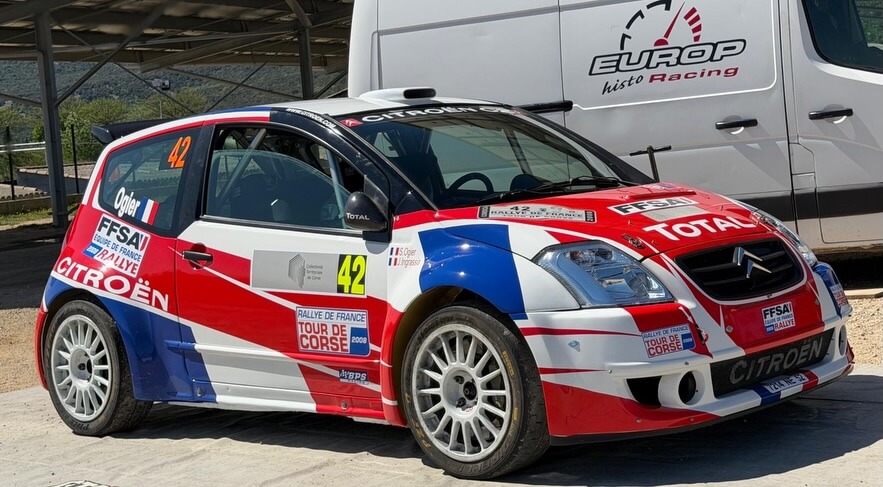
Nearly twenty years later, the C2 still leaves a lasting impression on those who have driven it. One driver who competed with the car for an entire season described it to us as "the best car" he had ever driven in terms of driving sensations, praising both its engine and chassis. One of his strongest memories remains that little naturally aspirated 1.6-litre engine screaming all the way to 9,000 rpm.
👉 A small, front-wheel-drive rally car that was nervous, agile and demanding, powered by an engine that truly came alive at very high revs 🚀
Three Junior World Championship Titles
The C2 S1600's record becomes even more impressive when you look at the drivers who competed behind its wheel.
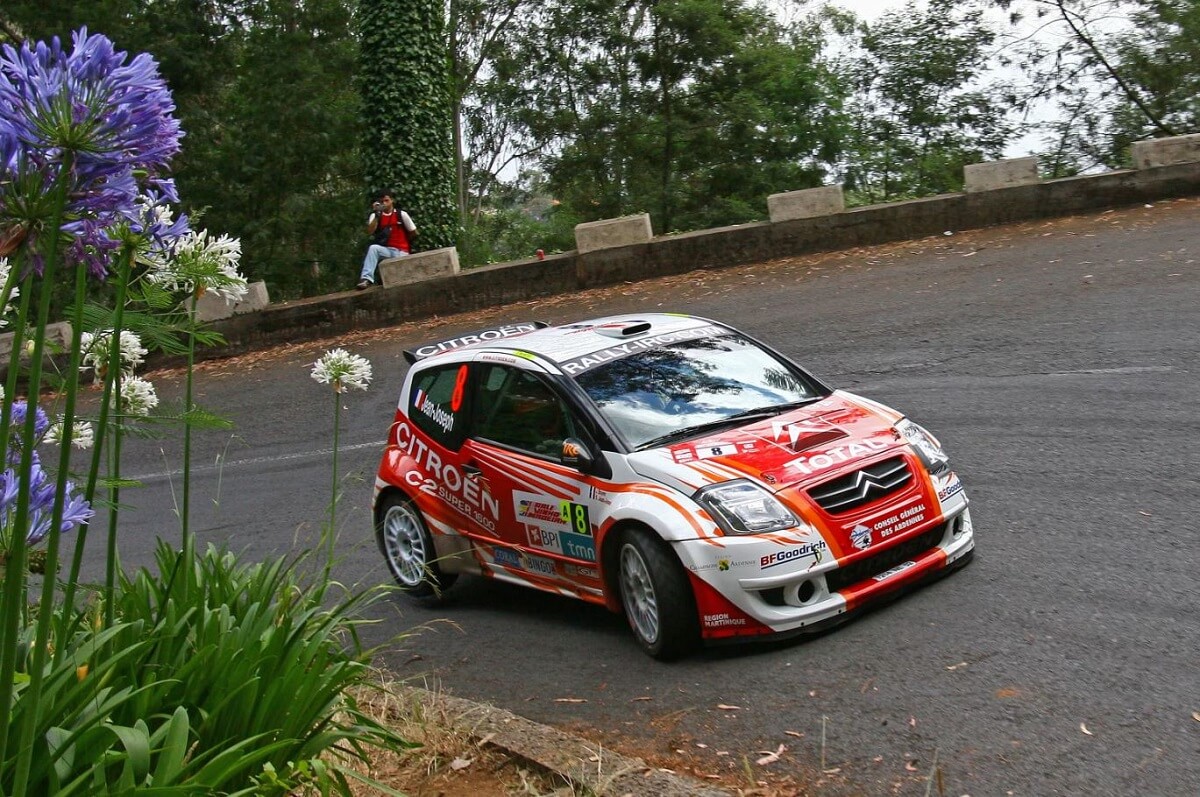
In 2005, Citroën entrusted cars to drivers including Dani Sordo and Kris Meeke.
Meeke began his season by winning the Monte Carlo Rally in the Junior category before finishing third in the championship. Sordo went one better, taking four victories and securing the 2005 Junior World Rally Championship title. The Spaniard stepped up to the Xsara WRC the following season.
The C2 continued to win even as newer cars entered the category.
In 2007, Simon Jean-Joseph claimed the European Rally Championship title with the C2. It was a remarkable achievement, as the more powerful Super 2000 cars were already beginning to dominate the ERC. Jean-Joseph managed to become champion without winning a single rally outright that season.
Then came Sébastien Ogier.
The Car That Launched Sébastien Ogier's World Championship Career
In 2007, Ogier won the Peugeot 206 Cup and joined the French FFSA Team.
For 2008, he was promoted straight into the Junior WRC alongside Julien Ingrassia in a Citroën C2 Super 1600. The car was run by PH Sport throughout the championship.
At the time, the C2's main rivals were the Renault Clio S1600 and the Suzuki Swift S1600.
The Rally Mexico marked their first international event and their first World Rally Championship appearance. They immediately won the JWRC class and even finished 8th overall, among the WRC cars, earning a World Championship point.
Ogier also claimed victories in Jordan and Germany, finished runner-up at the Tour de Corse, and secured the 2008 Junior World Rally Championship title in his very first season at world level 🤪
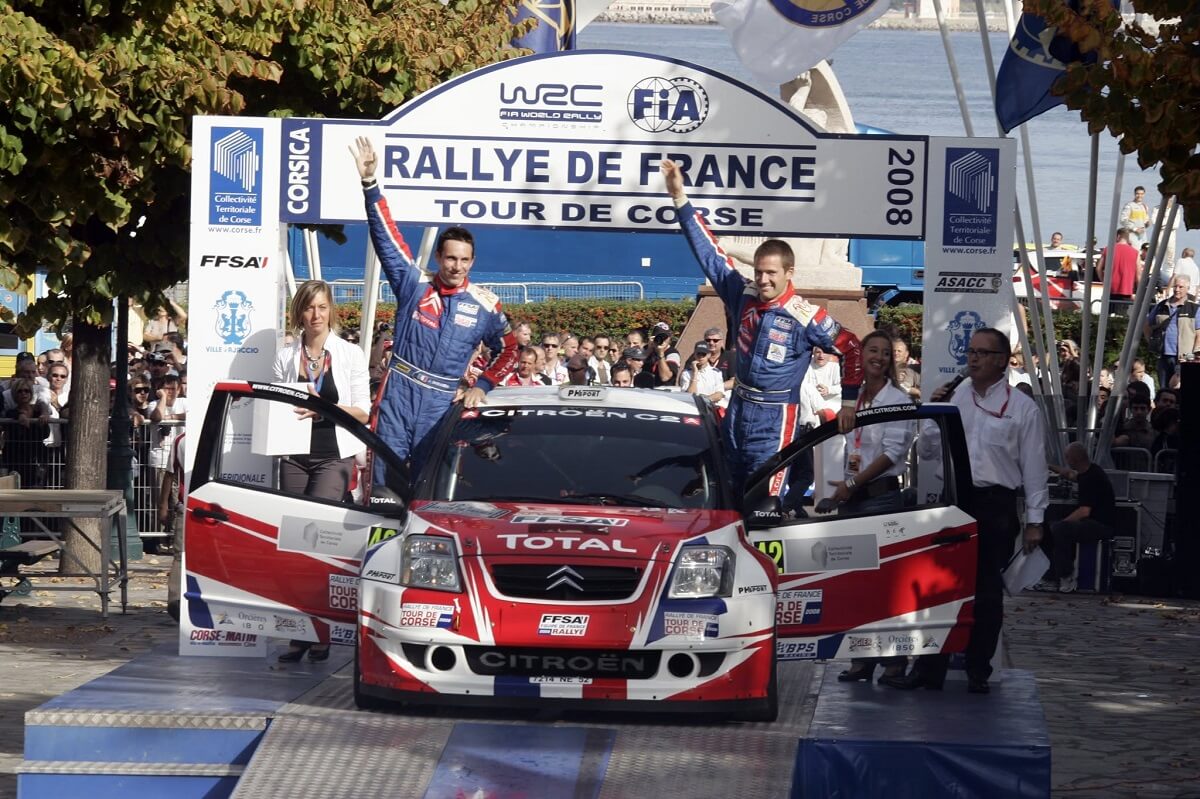
Just a few weeks later, Citroën handed him a C4 WRC.
👉 Knowing what followed in his career, this little red-and-white C2 occupies a special place in Ogier's story: it was the car that truly launched him onto the world stage.
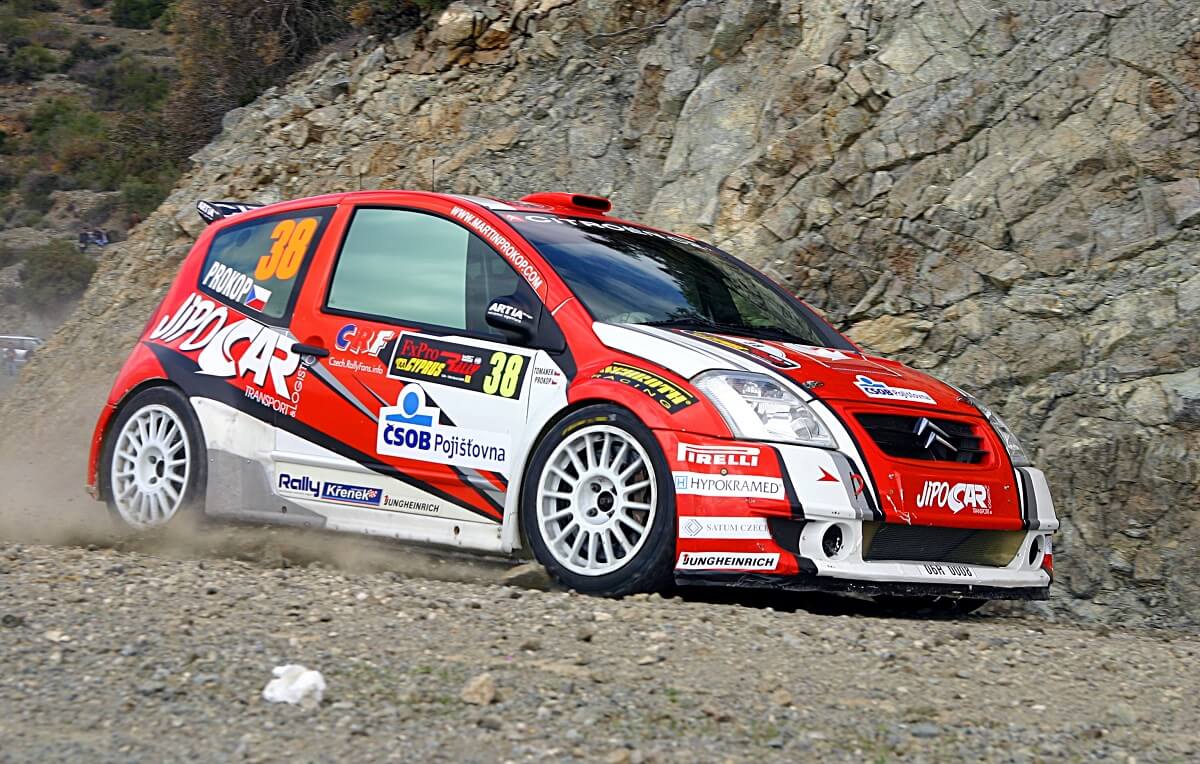
In 2009, Martin Prokop delivered the C2 its third Junior World Championship title, following those won by Sordo and Ogier.
Thierry Neuville Also Competed in the C2 S1600
The Belgian driver had already raced a C2 R2 before contesting part of the 2010 JWRC season in the C2 Super 1600, alongside co-driver Nicolas Klinger.
In Bulgaria, Neuville claimed his first Junior WRC victory ahead of another C2 S1600, driven by Hans Weijs. He also finished third in the category at Rally France later that year.
That makes for quite an impressive list: Sordo, Meeke, Ogier, Prokop, Neuville...
For a car originally designed as a training tool for young drivers, it's difficult to ask for much more.
In France, the C2 S1600 also passed through the hands of many well-known drivers, including Yann Bonato, Marc Amourette, Simon Jean-Joseph, Jean-Sébastien Vigion and Étienne Bouhot. And that's far from an exhaustive list. Bonato notably drove the car in the 2007 Junior WRC Tour de Corse, while Vigion and Amourette enjoyed considerable success with it in French rallying.
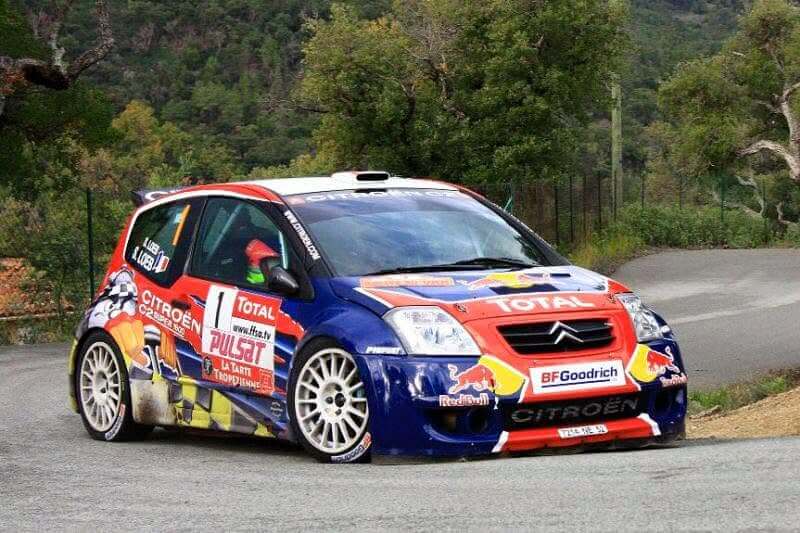
Even Sébastien Loeb made a one-off appearance behind its wheel: at the 2008 Rallye du Var, with his wife Séverine co-driving, the then five-time World Rally Champion finished third overall in the little C2.
So Why Was There Also a C2 R2?
A C2 R2 is not a C2 Super 1600.
The two cars shared the same basic platform and some mechanical components, but they were built to completely different regulations and followed very different philosophies.
The S1600 represented the pinnacle of front-wheel-drive rally cars at the time: a 225 hp engine revving close to 9,000 rpm, a six-speed sequential gearbox, dramatically widened bodywork, sophisticated suspension and extensive development.
And all of that came at a price—a very high one 💸
Citroën therefore launched the C2 R2 in 2006 as a much more affordable alternative. Its engine produced 185 hp at 7,200 rpm, the sequential gearbox had only five speeds, and the body remained much closer to that of the standard C2: 1.659 m wide versus 1.795 m for the S1600.
The budget difference was enormous. At launch, the C2 R2 tarmac kit cost around €22,000, to which buyers still had to add the donor car and assembly costs. The C2 Super 1600 played in a completely different league, with its kit priced at around €120,000, before even factoring in the donor car and the build itself.
👉 In other words, the R2 wasn't simply a slightly slower S1600: it was specifically designed to offer a genuine modern rally car at a fraction of the cost.
Then, in 2008, the C2 R2 Max arrived as a more advanced evolution of the R2. Power increased to 190 hp, while the car received upgraded suspension, larger brakes, hydraulic power steering and several other improvements, all while retaining the five-speed sequential gearbox and a minimum weight of 1,030 kg. Citroën explained at the time that it had identified a gap between the standard C2 R2 and the much more expensive S1600.
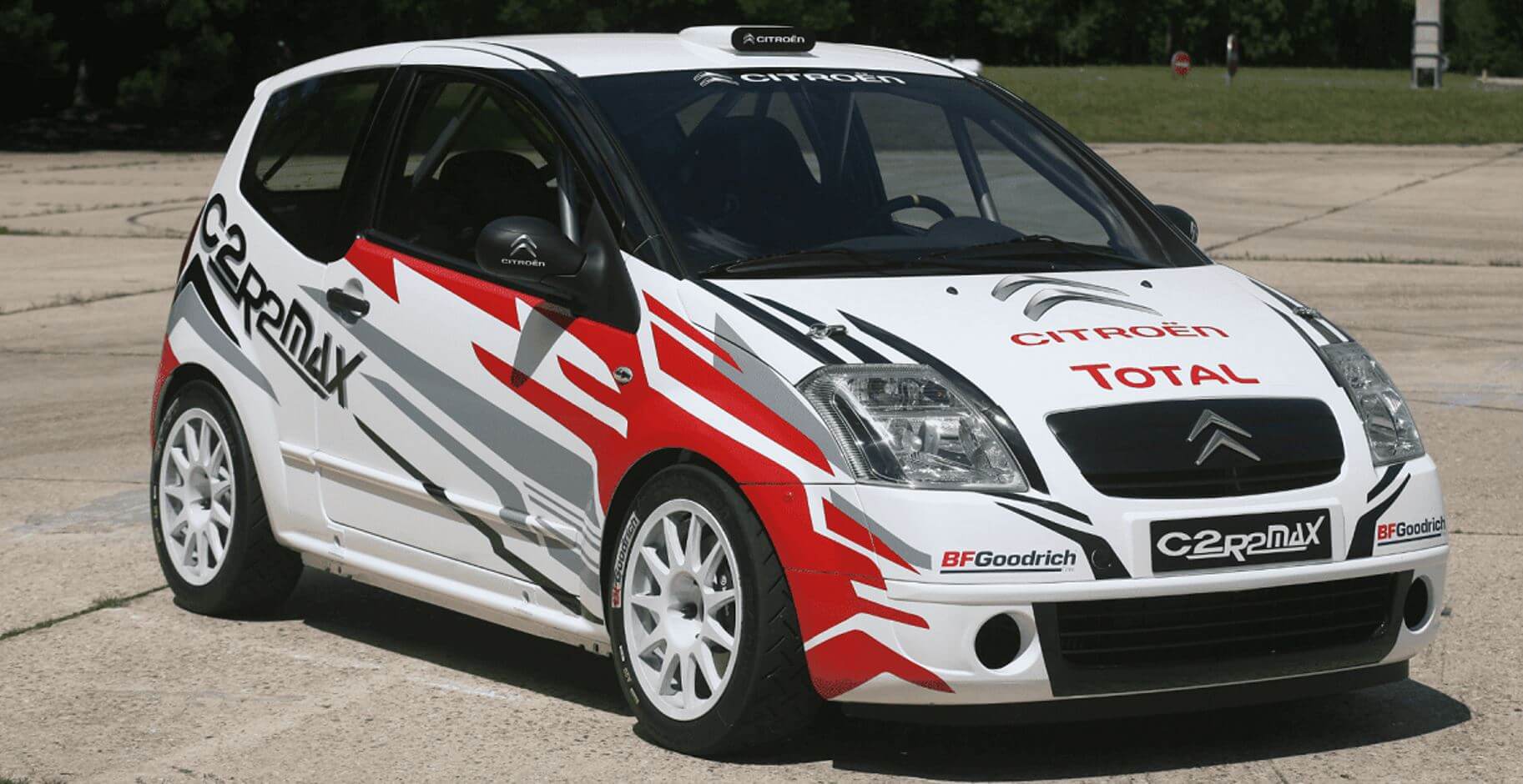
By the end of the 2000s, Citroën therefore offered three clearly defined levels: the relatively affordable C2 R2 for drivers starting out seriously in rallying, the more competitive R2 Max, and the S1600, which remained the brand's ultimate front-wheel-drive rally machine.
The C2 Arrived at the End of the Super 1600 Era
When the C2 S1600 was homologated in 2004, the Super 1600 category had already been around for several years. The Saxo, Fiat Punto, Ford Puma and Peugeot 206 had paved the way, followed by cars such as the Renault Clio, Opel Corsa, Suzuki Ignis, Volkswagen Polo and MG ZR.
The Clio S1600, one of the Citroën's biggest rivals, had already been introduced in 2002, two years before the C2.
And the C2 would not even be the final major addition to the category. In 2005, Suzuki replaced the Ignis with the Swift Super 1600, which made its Junior WRC debut at Rally Finland.
The C2 therefore belongs to the last generation of Super 1600 cars, just before the Group R era and the new rally categories gradually took over.
A Second Life in Rallycross
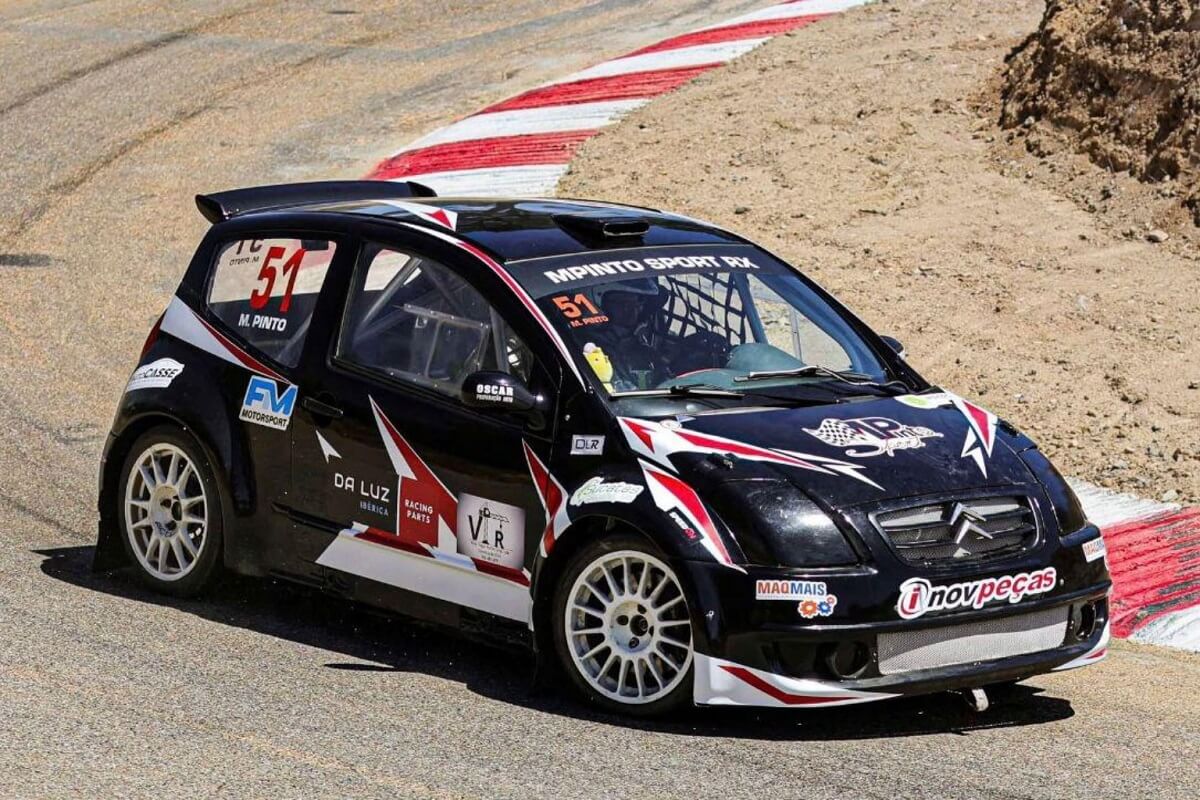
The story of the C2 S1600 did not end with the Junior WRC. Several cars continued competing in national rally championships and, above all, in rallycross, where this nimble front-wheel-drive machine still had plenty to offer.
In France, the C2 continued winning titles many years after its rally debut. Steven Bossard became French Division 1A Champion in 2010 at the wheel of a C2, while Jimmy Terpereau claimed the Super 1600 title in 2021, more than fifteen years after the car first entered competition 😲
In between, drivers such as Laurent Chartrain also kept the C2 at the front of the field. These rallycross C2s, however, often evolved significantly compared with the original rally-spec S1600s, particularly in terms of the engine and suspension.
The car also enjoyed success abroad. In the United Kingdom, Craig Lomax won the 2015 British Super1600 Championship with a C2.
This long second career also makes today's market a little more complicated. Some C2s remain close to their original rally specification, while others have been extensively modified after several seasons of rallycross competition.
How Many C2 S1600s Were Built?
Citroën does not appear to have published any easily verifiable official production figures for the exact number of C2 S1600s built.
The eWRC database currently lists 40 C2 S1600 chassis, most of them identified by Citroën Sport A6xx chassis numbers. However, this figure is unofficial and the database may not be complete.
It is therefore reasonable to estimate that around forty C2 S1600s were built, perhaps slightly more. Either way, production remained extremely limited.
How Much Did It Cost New?
The C2 Super 1600 was marketed by Citroën Sport as a competition kit from March 1, 2004. At the time, Citroën stated that its price would comply with the Super 1600 regulations then in force. Around the same period, the FIA had raised the reference price to €120,000.
See also: "Why Are Small Rally Car Prices Soaring?"
However, €120,000 did not buy a complete, race-ready car. In a feature on Simon Jean-Joseph and Citroën Sport published by Caradisiac in May 2007, the magazine quoted a price of €174,000 for a race-ready C2 S1600, including the kit, assembly, both gravel and tarmac specifications, and the data acquisition system. The same article still quoted €120,000 for the kit alone.
Quattroruote also provides an interesting benchmark in its retrospective on the C2. In Italy, a C2 VTS cost €13,950 in 2005, to which buyers had to add the €120,000 Super 1600 kit.
👉 In other words, behind this little 1.6-litre Citroën was already a race car costing well over €150,000 once fully assembled and equipped 🥵
And Today, What Is a Genuine C2 S1600 Worth?
More than twenty years after its debut, an authentic C2 S1600 remains a very expensive rally car.
The market is small and prices vary significantly depending on the car. A C2 R2, a converted C2, a former rallycross car, an F2000 using some S1600 components, or a genuine ex-works car with documented history obviously do not command the same values.
Based on recent advertisements and observed sales, a genuine C2 S1600 is now worth approximately €70,000 to €130,000.
The price depends heavily on the car's history, its chassis number, overall condition, originality, and above all the spares package included with the car.
👉 Browse rally cars for sale on GoToTheGrid
Cars with World Championship history, documented factory provenance, or an exceptionally original period specification naturally sit at the top end of the price range.
With cars like these, their identity and history are hugely important.
What About Renting One?
Buying a C2 S1600 is obviously not the only way to experience one. A handful of examples are still available for hire in France.
According to a driver who completed a full season in the car, a complete package costs around €6,000 for a regional rally and €9,000 to €10,000 for a national rally, excluding insurance.
See also: "Rally car rental: the pitfalls to know before signing"
These figures are, of course, only indicative and may vary depending on the team, the event or the planned mileage. Another challenge today is spare parts availability. Components have become increasingly scarce, and maintaining a genuine S1600 is expensive.
A Small Car That Became a Legend
Just a few seasons at the highest level of Junior rallying were enough for the C2 Super 1600 to leave a lasting legacy.
👉 Three Junior World Championship titles with Dani Sordo, Sébastien Ogier and Martin Prokop, a European title with Simon Jean-Joseph, a Junior WRC victory for Thierry Neuville, appearances by Kris Meeke, and an exceptionally long second career in rallycross.
With its massive wheel arches, featherweight chassis, sequential gearbox and, above all, its little naturally aspirated 1.6-litre engine screaming all the way to 9,000 rpm, the C2 S1600 perfectly represents a unique era of rallying.
An era when a category designed for "junior" drivers could produce a 225 hp rally car costing well over €150,000 once race-ready, sophisticated enough to teach the craft to several future World Rally winners.
A car that has become legendary for an entire generation of rally fans. Its aggressive looks, agility, high-revving engine and unforgettable soundtrack still make it one of the most spectacular rally cars to watch—and hear—in action today 🥰


I'm Robin, 36, amateur driver and internet entrepreneur. I founded GoToTheGrid (GTTG) to create an intuitive platform dedicated to motorsport enthusia... See more