

 Login
Login
 Post an ad
Professional

Historic Cars
13 classifieds

Send message
Report this ad


 See all 4 photos
Behind Lola is an Englishman: Eric Broadley. Born in Bromley in 1928, he quickly developed a passion for motor sport. Like other 'geniuses' of the time, such as Colin Chapman and the Costin brothers, he modified Austin Seven cars to make them race cars. In 1956, his Broadley Special stood out for its performance and became a commercial success. A competitor to the Lotus XI, the car was based on a tubular chassis and powered by a Coventry Climax.
Faced with performance levels that were far too high for his liking and growing demand, he decided to found his own brand, which he named Lola, in reference to the song Whatever Lola Wants. In 1958, the company was born and produced 35 examples of this Lola Mk1 in four years. The development also included single-seaters from Formula Junior... to Formula 1!
Lola was on a roll. Broadley embarked on a GT project, a closed car powered by a Ford V8, the Lola Mk6. If the car was not very well known, it was mainly because production did not reach a sufficient threshold for it to be entered in GT. However, it caught Ford's eye and eventually became the basis for the GT40!
Broadley threw himself wholeheartedly into the adventure, but the first version of the GT40 was disappointing, and when Ford entrusted Shelby with the complete development of the car in 1964, he decided to return to his first love with an open car.
The Lola T70!
The TY70 may not be best known as a spider, but that's how it was born!
Broadley saw an interesting commercial opportunity in the Group 7 cars. Somewhat overshadowed in continental Europe, this class of car was virtually unlimited and most of the cars entered in American and British races were cobbled together from American big blocks packed with horsepower. At the same time as Chapparal and McLaren, Lola built its own sports car for these races.
The Lola T70 was launched. Its monocoque structure was a slight evolution of that of the Mk6, using steel for strength and aluminium for lightness. The independent suspension uses superimposed wishbones and combined springs and shock absorbers. The only real originality is that the front brakes are fitted almost 'inboard' to provide more air. On top of this, he fitted a simple, slim aluminium body that met the only mandatory Group 7 criterion: an open body. Designed to be sold to a variety of customers, its engine bay was wide enough for them to fit American V8s, whether Ford, Chevrolet or Oldsmobile.
The car was ready at the very beginning of 1965 and presented at the Racing Car Show in January. Fifteen Lola T70s were built in 1965, and they quickly made their mark in racing.
The Lola T70 on the track
John Surtees, the car's development driver, was one of the first to drive it. With an Oldsmobile V8 in his back, he took part in the Senior Service at Silverstone in March 1965, competing against two other Lola T70s. He recorded the best result, second behind Jim Clark in a Lotus, but with the fastest lap of the race.
Mecom Racing acquired one and, a week after its launch, it took part in the 12 Hours of Sebring (only to retire).
Racing in Sports or Formula Libre, it accumulated entries in races that could be described as secondary, since they were not part of the world championship. However, these races, which take place at weekends when there is no F1 and no major endurance events, attract some famous drivers.
In 1965 alone, the Lola T70 saw Surtees, as well as Walt Hansgen, David Hobbs, Jackie Stewart, Richard Atwood, Bob Bondurant and Mario Andretti, enter teams such as Mecom, Surtees and Stirling Moss Racing to score successes and podiums across the USA and England. It may be a long way from the glitz and glamour of the world championship, but the new Lola is well and truly born, and it's a success.
The Lola T70 MkII
At the end of 1965, Team Surtees, which was virtually the factory team, introduced an evolution of the Lola T70, soberly called the MkII. It was still referred to as an open car that could be fitted with American V8s. In fact, the changes were minor, and concerned only the aluminium, which was used in greater quantities to reduce the weight of the cars by around 45 kilos. Surtees also switched to the Chevrolet engine, which gradually became the engine of choice for the Lola T70s.
In addition to the Lola T70s from the previous year, 33 new cars were entered, always by various teams and always in 'club' races. Victories and podiums followed one another throughout the season.
At the end of the year, a new series was created specifically for Group 7 cars, with no other category on the track. This was the birth of Can-Am, with 6 events scheduled in two months. The Lola T70s will of course be taking part, with several teams:
Penske, with Chevrolet engines and Donohue at the wheel
All American Racers, with a Ford engine for Dan Gurney
Mecom, with Ford and Chevrolet engines for George Follmer
Epstein with a Chevrolet engine for Paul Hawkins
Surtees with a Chevrolet engine for Surtees and Graham Hill
They were up against the Chaparral of Phil Hill and Jim Hall and the "kiwis" McLaren and Amon in their McLaren Mk1Bs, both powered by Chevrolet engines.
Surtees only saw the finish three times, but each time he was victorious, at Mont-Tremblant for the inaugural round and then at Riverside and Spring Valley for the last two rounds. With this result, he clinched the first Can-Am series title, which was also the first official title for a Lola T70, Dan Gurney having also won the Bridgehampton round and Donohue the Mosport round.
The Lola T70 MkIII arrives
1967 also brought new features for the Lola T70. But this time it moved up a gear with the MkIII. Broadley was faced with a dilemma. While Group 7 was successful in the United States with the Can-Am series, racing was banned in the UK, not least because of the growing popularity of this series, which could overshadow F1.
In order not to lose out, he created a Lola T70 MkIII that would play on several levels, with two distinct versions. The base was modified and the suspension and running gear were revised compared with the MkII to accommodate wider wheels and bigger brakes. Above all, a new closed body with roof and windscreen was introduced, interchangeable with the open body already seen on the two previous versions. The closed version, designed in collaboration with Tony Southgate and tested in the wind tunnel, considerably reduces drag and the high rear end guarantees excellent stability at high speeds.
Thus equipped, the Lola T70 MkIII can race in Group 6 and, when the 50 cars are finished, in Group 4. The World Endurance Championship and its flagship race, the 24 Hours of Le Mans, are the target!
Most of the cars were entered with Chevrolet 5.7-litre engines, but they were slow to make their mark in a World Endurance Championship where the queens were still the Ferraris and the Ford MkIVs... and in which the GT40s were also accepted in Group 4 because of their large production runs. The only result that counted towards the championship was a 4th place for Hawkins and Epstein at the 1000km of Spa.
The Lola T70 MKIII will also enable Lola to return to the Le Mans 24 Hours, with a factory programme! In fact, it's Aston Martin that wants to make a comeback and battle it out with Ford and Ferrari. The brand is developing a new V8 engine and will be relying on Team Surtees to bring the project to fruition. The problem was that the Lola T70 MkIII, with this engine, had to run in Group 6. Above all, the engine was still in development and the adventure was cut short by a double retirement at Le Mans, which sounded the death knell for the programme.
In their open version, the Lola T70 MkIIIs (and the MkIIs for that matter) continued to enliven the American grids, particularly in the USRRC, where they always shone.
The end of 1967 brought its share of regulatory changes. For 1968, Group 6 was limited to just 3 litres, while Group 4, the sports car category, required 50 cars and a 5-litre limit. Broadley negotiated well, however, and the Lola T70s would be allowed to race in Group 4 despite the fact that this version was not yet being produced in large enough numbers. Nevertheless, the announcement led to the cancellation of many orders.
Lola stopped developing the T70 in earnest, as its replacement, the T160, was launched and aimed at the Can-Am championship. In Sprint races, the Lola T70 always performed well. But when it came to the World Championship, the 5-litre Chevrolet engine was too unreliable and Lola only scored a single point.
The Lola T70 MkIIIB: "this is a revolution
Despite this rather gloomy transition year, the T70 came back with a vengeance with the MkIIIB presented at the Racing Car Show in December 1968. The tour de force was enormous.
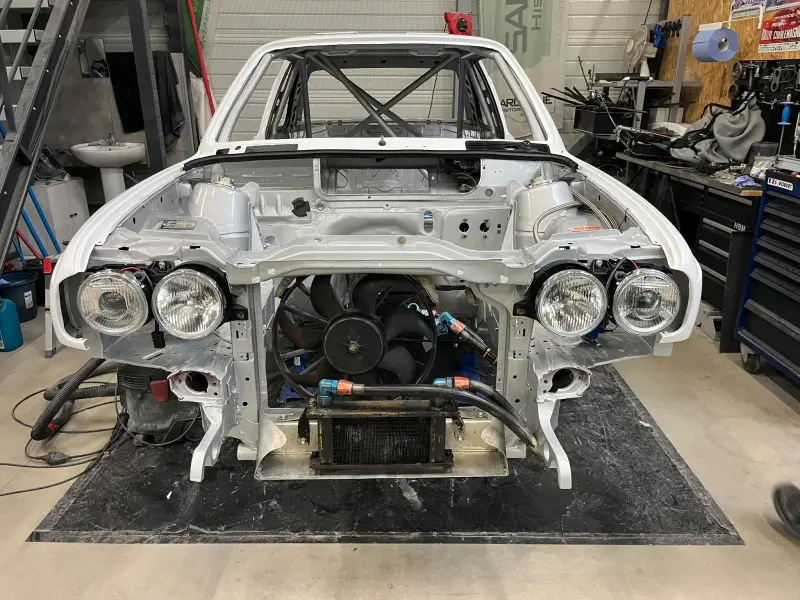
In fact, this new version was no longer an evolution. The MkIIIB was an all-aluminium monocoque, not derived from the MkIII but rather from the T160. The bodywork was also revised to preserve the high-speed stability that had made the previous version so popular, while generating more downforce. Entirely built in fibre, it is particularly noticeable for its very low front end, which features four Perspex headlamps instead of the previous two. The Chevrolet 5-litre V8 engine is still used, but with fuel injection and a new 5-speed Hewland gearbox.
In effect, it was a new car. But Eric Broadley managed to make a strong enough case for the Lola T70 MkIIIB to be seen by the sporting authorities as an evolution of the MkIII. In fact, enough cars were produced for the car to be included in the Sport category, the number of which was lowered from 50 to 25.
With Surtees having shifted his focus to Formula 5000, there wasn't really a semi-factory team left to enter the car, which was to make its debut with Penske-Sunoco and Sportscars Unlimited Switzerland at the Daytona 24 Hours. In fact, this first round of the championship will feature 'only' Porsche 908s (the 917s are not yet homologated) and no Ferraris. And it was the Sunoco Lola T70 MKIIIB of Donohue and Parsons that won ahead of the 'old' MkIII of Leslie and Motschenbacher.
This success was the perfect start to the season, and the orders were pouring in! Although the results weren't there at Sebring, the Lola T70 MkIIIBs had a strong presence in the British Sports Car Championship, where they performed very well. In the championship, at Brand Hatch, Monza, Spa and the Nürburgring, the new cars were content with places of honour, while the Porsche 908s were unbeatable... until the 917s found the right settings.
Prior to these races, Lola Cars entered a car for Paul Hawkins at the 24 Hours of Le Mans tests, where he took a fine 3rd place. A number of teams were preparing to take on the Le Mans classic, but the adventure was to prove short-lived. First of all, Paul Hawkins was killed at the Tourist Trophy. Then Penske, which was due to make the trip, had its equipment stolen. In the end, only the Scuderia Filipinetti car, entered for Bonnier and Gregory, took the start (from a disappointing 11th place) before retiring at 3.15am after an engine failure.
The same car made up for it by scoring the best result of the year in the championship, during the final round in Austria, when Bonnier and Müller took 2nd place, enabling Lola to overtake Ferrari and Matra and secure 3rd place in the constructors' standings.
The Lola T70 MkIIIB was not accepted into Can-Am but shone at the end of the year during the tour of South Africa with 3 victories (including a double) and two other podiums.
Lola T70 MkIIIBs were again entered in the world championship in 1970, and the last cars were built in January. That year, however, the Porsche 917s and Ferrari 512s were finally in the running and Lola stopped development, contenting itself with supplying parts.
At the 24 Hours of Le Mans, Racing Team V.D.S entered a car for Pilette and Gosselin, which only started 28th and retired at the 10th hour.
There were a few victories and podiums in minor races at the end of the year, but also in 1971. The Belgians tried their luck again in the 24 Hours of Le Mans that year, but still failed to reach the finish.
The career of the Lola T70 MkIIIB was then limited to a few national races, notably in France, but they would not be seen at the top again... for a few years!
Today, Lola T70s are living a very active second life in historic racing.
They are a fixture on sportscar grids such as Classic Endurance Racing and Masters races. Its lines remain an unmistakeable signature, and its performance is second to none. It's a very popular choice for the fastest drivers.
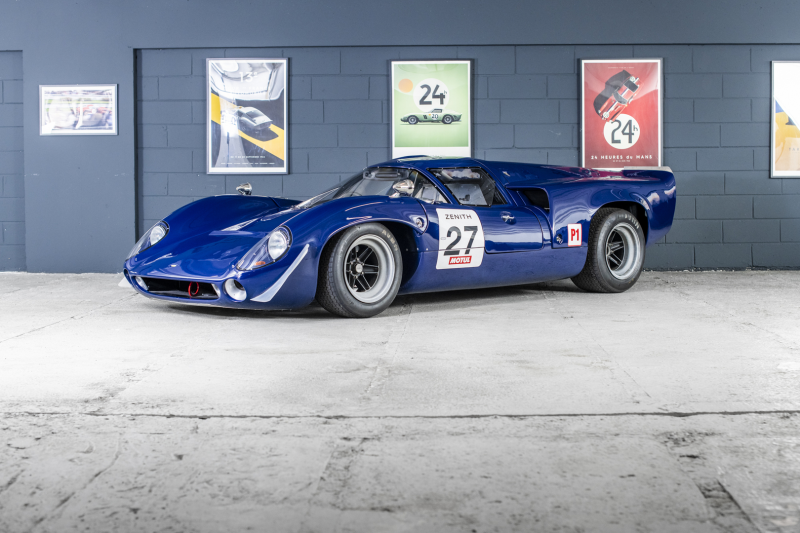
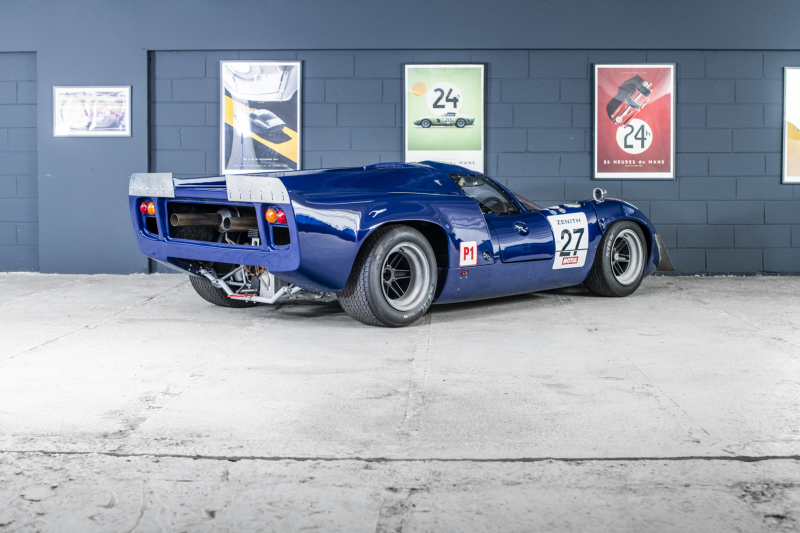
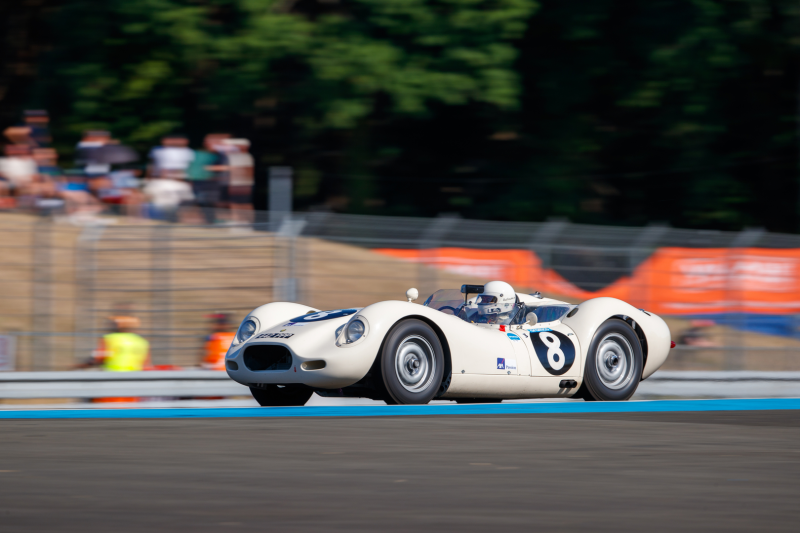
Our car: delivered new to Phil Scragg in March 1966 as a T70 Spider MkII, powered by a 289 cid (4.7-litre) Ford V8 engine. Competing in hill-climbing races in the British RAC championship, it immediately enjoyed great success, winning at Craigantlet in Northern Ireland and at Prescott, Phil winning his category twelve times out of thirteen entries that year!
In 1967 it underwent a major transformation by Williams and Pritchard, receiving a unique ultra-light spider body with streamlined wings, as well as chassis and suspension modifications by Felday Engineering. In this new configuration, Scragg again dominated his class from 1967 to 1969, amassing 36 wins from 40 races, with notable successes at Prescott (1967) and Scarborough (1968). In 1970, the car passed into the hands of Tony Harrison, who in turn took several victories, notably at the Perton and Blackpool RAC events.
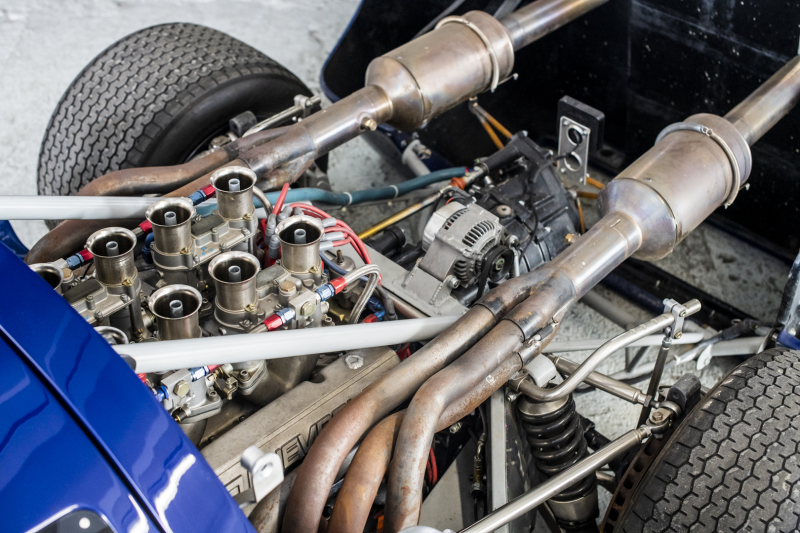
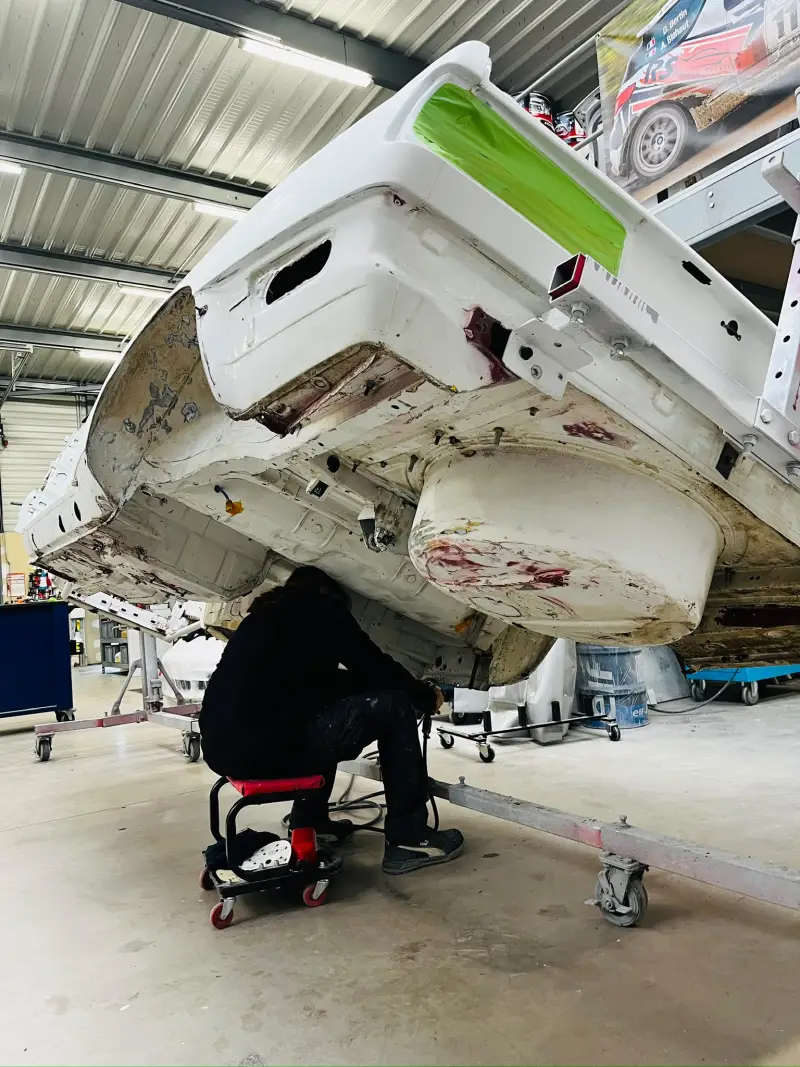
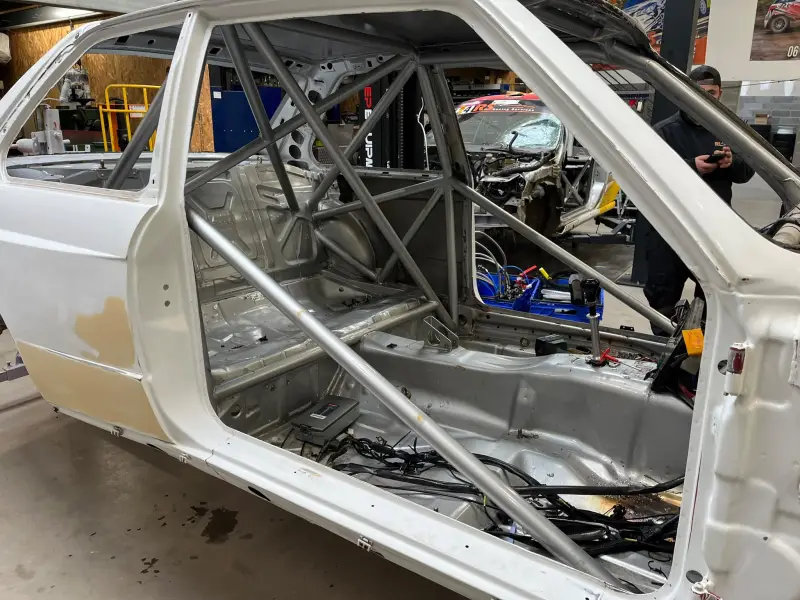
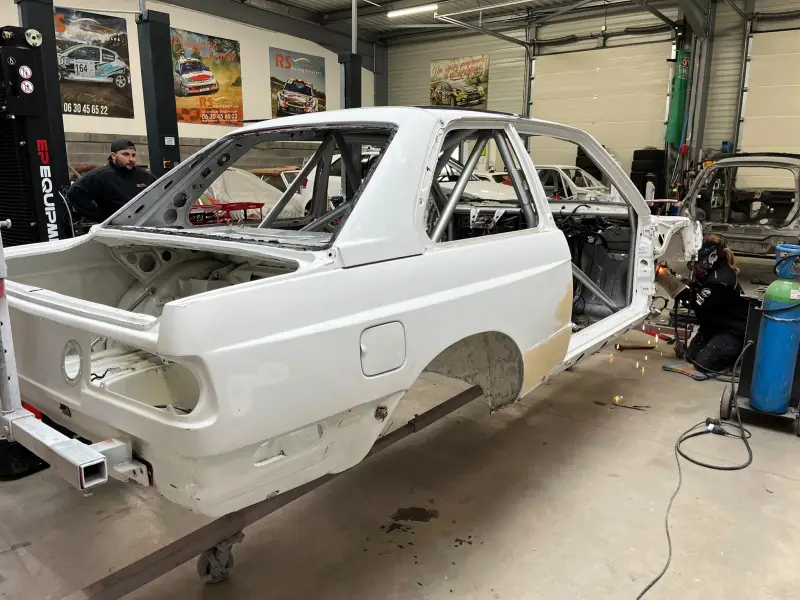
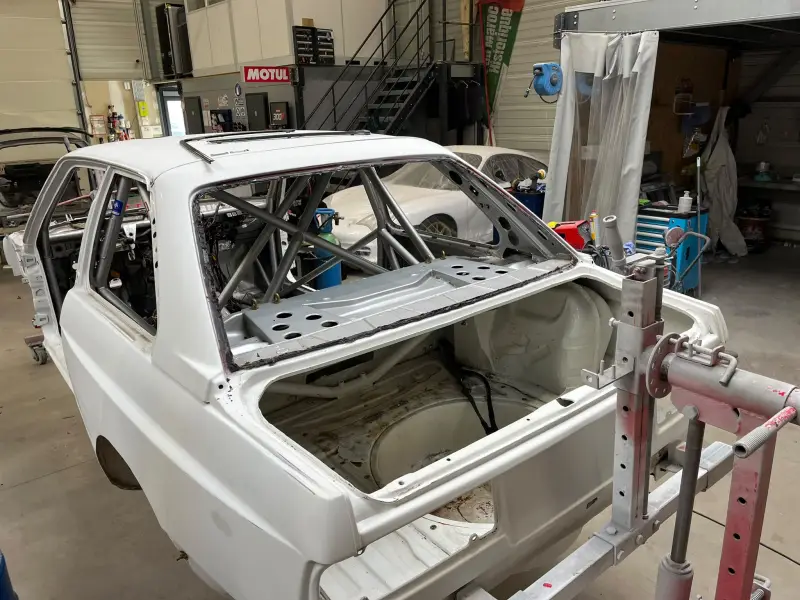
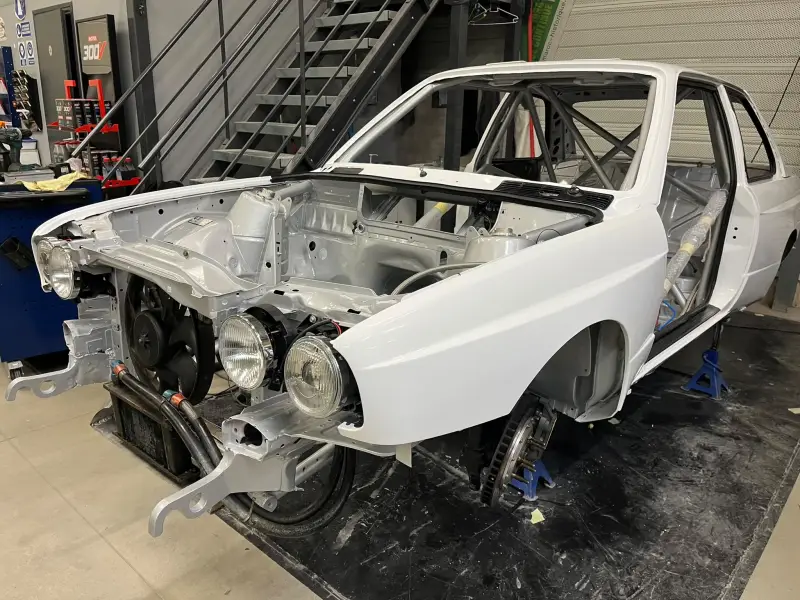
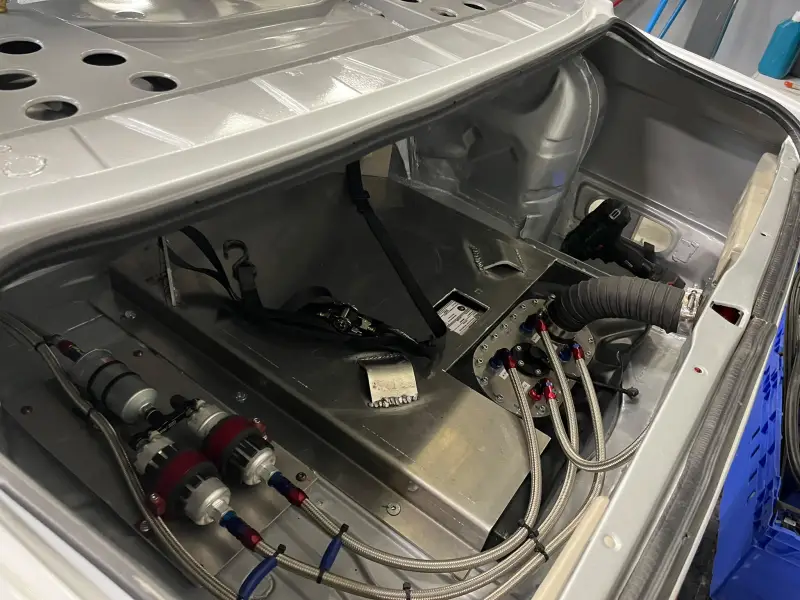
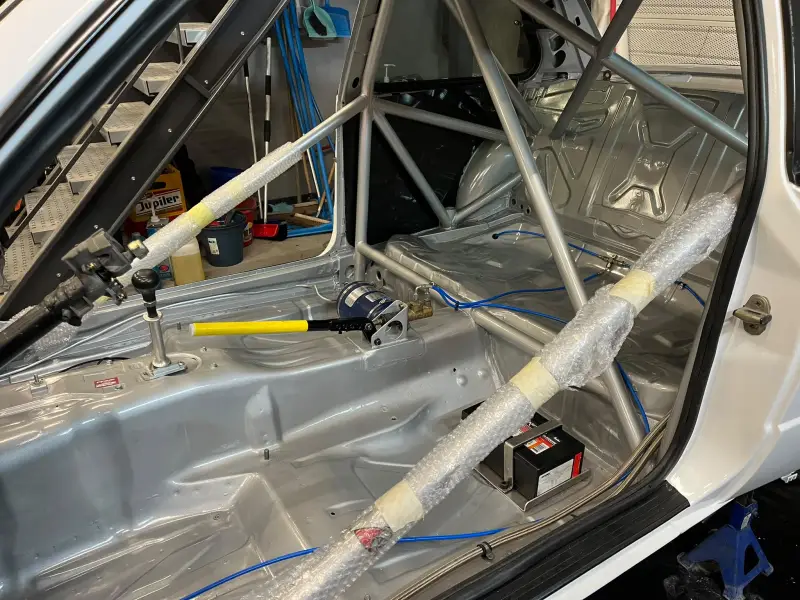
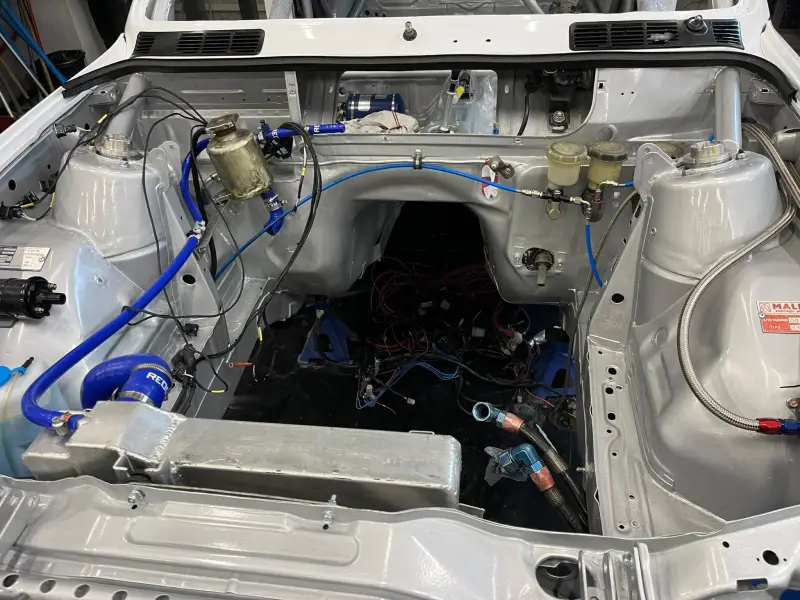
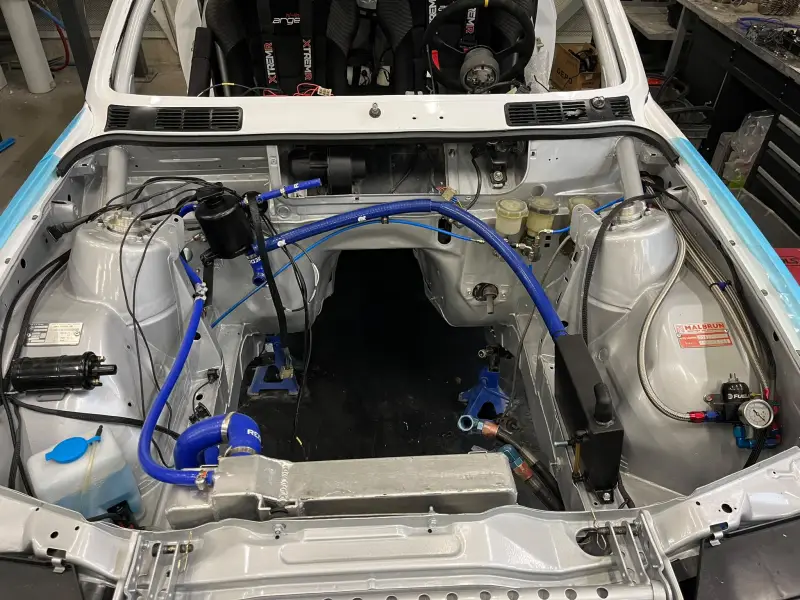
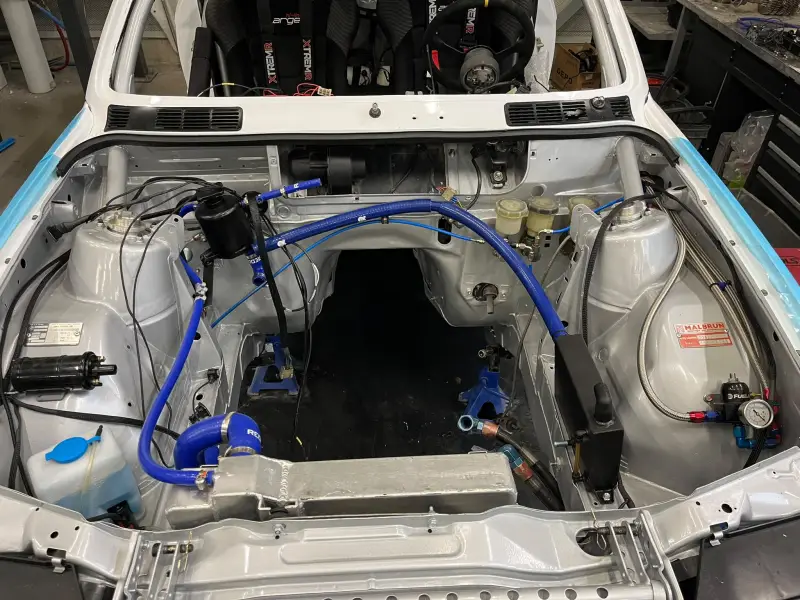
Thereafter, the car had several owners, including David Preece and Terry Smith, the latter fitting it with a 5-litre Chevrolet V8 engine and MkIII B coupé bodywork in 1986. After being in the possession of French collector Yvan Mahé, it was acquired in 1998 by Dennis Galland, who will continue to enter the car in European historic races. It is changing hands again in France, and will be fully restored to its current Lola T70 MkIII configuration on a new chassis, the original one being delivered alongside.
 Category :
Race cars
Category :
Race cars
 Brand : Lola
 Sport :
Historic Race Car
Sport :
Historic Race Car
 Status : For sale
 Location : France - Paris




 France


 Promoted