

 Login
Login
 Post an ad
Professional

Historic Cars
13 classifieds

Send message
Report this ad


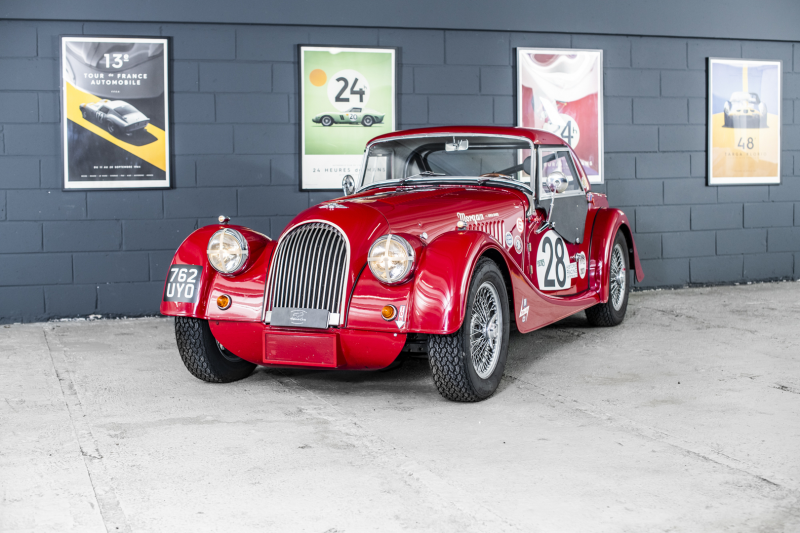
 See all 4 photos
The archetypal British roadster, the Morgan sums up the philosophy of these cars in a nutshell: elegant, sporty lines, an independent chassis, simple, reliable and economical technical solutions for a weight of between 800 and 900 kg, depending on the engine, a driving position that is very close to the ground and very basic comfort.
These driving sensations, now forgotten, are intense and bring you closer to the road. This magic recipe, tried and tested a thousand times over, was constantly revised and improved in small increments, enabling the Morgan to be the only British roadster from the 1950s still in production.
"TOK 258": an evocative name for all Morgan enthusiasts. This is the Morgan that won its class at the 1962 24 Hours of Le Mans, but who was Christopher Lawrence?
The late Christopher Lawrence built a strong reputation on many local circuits in 1956 with his Morgan TOK 258. His plan was to replace the bodywork of the Plus 4 with that of a lower-slung 4/4, in order to gain top speed in the Hunaudières. Peter Morgan refused to sell him the body parts, claiming that Lawrence was not allowed to mix his models. Ignoring the ban and buying the necessary parts under a false name, Lawrence finished building his car. When Peter Morgan finally decided to support the car, he found that it had been extensively modified despite his disapproval. Disgruntled but fair-minded, he suggested that Lawrence launch a small series of Plus 4 Super Sports (low-line), based on Christopher's modifications. Christopher would be responsible for supplying the engines he had prepared. As a result, in addition to the hundred or so cars produced by the factory in this configuration up to May 1968, LAWRENCE TUNE built more than 300 engines to Super Sport specifications for Morgan customers.
In 1961, he decided to enter his car in European races. On hearing this news, his disgruntled family succeeded in legally preventing him from taking part in the event with TOK 258 and Richard Shepherd Barron, his future team-mate. Chris then took another TOK 'clone' car, XRX1, to scrutineering. The car had already received its ACO stamp on the bodywork, when the officials asked that its entry be refused on the grounds that it did not meet the spirit of competition. The accusation was that it was in fact a 1939 car that had been vaguely transformed by the addition of disc brakes and spoked wheels, making it illegal.
The real reason seems to have been pressure from Standard-Triumph who, having seen their TR3Ss, albeit fitted with the new 'Sabrina' twin-shaft engine, crushed by the Lawrence-Tune team on every track in Britain, didn't want to risk the same thing happening at Le Mans.
In the run-up to the 1962 Le Mans 24 Hours, Christopher met Peter Morgan and persuaded him to enter TOK 258 at Le Mans in the official Morgan livery to avoid another ousting.
The car was painted British Racing Green and fitted with a white hard top.
During the race, which kept pit stops to a strict minimum (just 28 minutes), the Lawrence/Shepherd Barron crew finished 13th and won their class (1604-2000 cm3) after covering 3629 km at an average speed of just over 151 km/h.
This success is legendary, as the car, registered as "TOK 258", gave Morgan a 2-litre GT class victory. A result unmatched by Morgan at Le Mans. Lawrence returned to Le Mans in 1963, 1964, 1968 and 1996, before returning to Morgan where he was involved in the launch of the MORGAN Aéro 8.
Morgan's famous anachronistic sports cars represent the quintessence of British motoring experience. Considered outdated even in the 1960s, these cars were in fact continually developed, with modifications made over the years to keep them up to date with contemporary developments, even though other areas, most famously the ash-framed bodywork, remained as traditional as ever. With this in mind, although the Plus 4 looks similar to the 4/4 of the inter-war period, improvements such as the latest Triumph TR4A engine (with 105bhp instead of 38bhp in the 4/4 or 68bhp in the original Plus 4) and front disc brakes have ensured that the Plus 4 remains as sporty as ever, thirty years after the heyday of the 4/4.
Learning from this victory, Peter Morgan decided to produce a series of a hundred cars with the same modifications, and asked Lawrence to supply the engines he had prepared. The car was based on the aerodynamic 4/4 aluminium bodywork, while the Triumph TR4 engines were tuned up to 120 bhp.
Despite their old-fashioned appearance, the Plus 4s were very dynamic performers, and the cars competed successfully in SCCA events and GT races, including a 13th place overall finish at Le Mans in 1962. The sportiest variant was the Super Sport, introduced in 1961. It featured a tuned engine, aluminium bodywork and sportier seats. Very few examples were built, around 95 Super Sport roadsters in all.
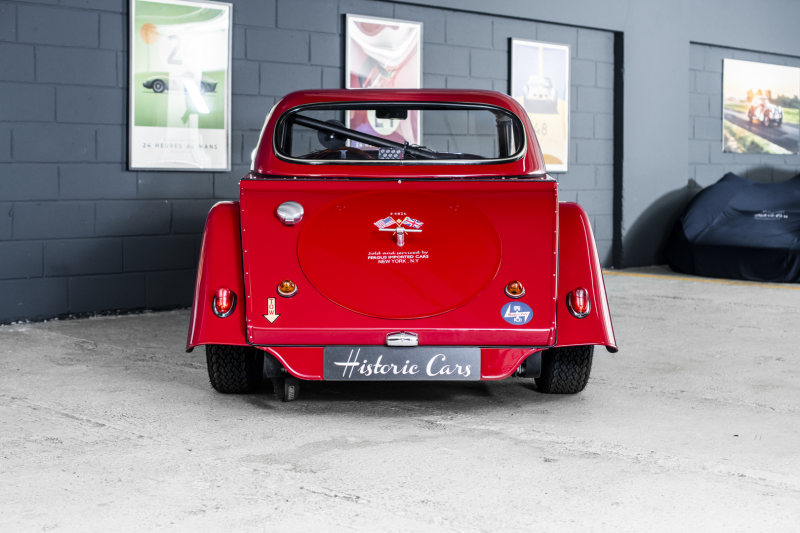
Morgan Super Sports no. 4826 is an exceptional model: the second to be produced and the first left-hand-drive version. It left the factory on 21 June 1961 and went to the importer Fergus Motor in New York, accompanied by No. 4837. Their departure was marked by a striking anecdote: the bonnet numbers were reversed, a situation greeted with humour by the factory - "that's Morgan".
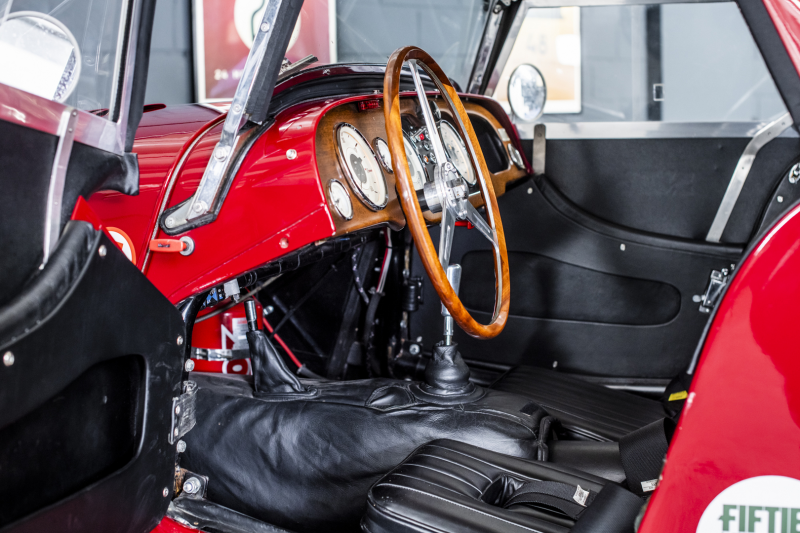
A matching-number example, it was one of the rare cars to be fitted with cream-coloured dials, a feature that Morgan used for a very limited period. Remaining in the United States until 1992, it was forgotten in a barn and only reappeared in 2013 when it was sold following the death of its owner.
An enthusiast, aided by British specialist Richard Thorne, set out to find an authentic Super Sports. The expertise of Martyn Webb, Morgan's archivist, officially confirmed the authenticity of 4826, thanks in particular to a handwritten entry in the original Record Book. A complete restoration was undertaken over a two-year period, with the aim of preserving as many original parts as possible - a high-budget job that included rebuilding the car from a new chassis refurbished to number 4826.
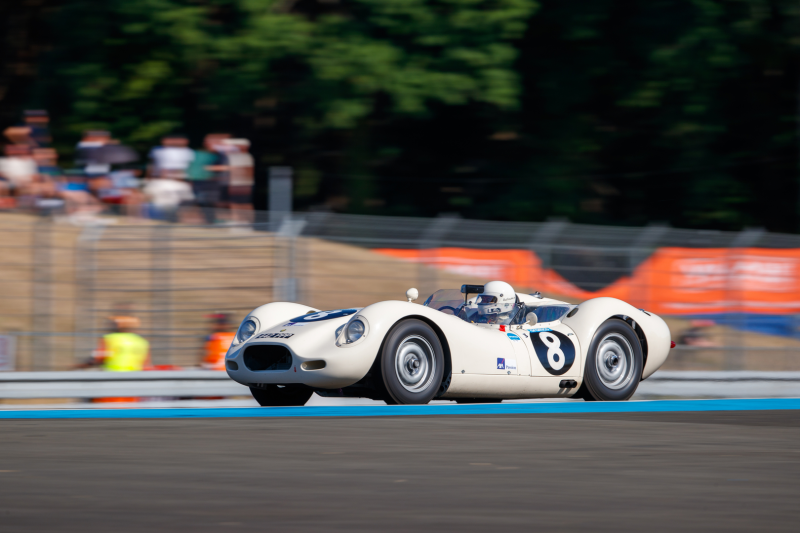
The aim was twofold: to preserve the car's authenticity and ensure it was FIA-compliant for circuit racing. The PTH was obtained, valid until 2026, with French collector's registration. The car features a 'matching colour' inspired by the legendary TOK 258 from the 1962 Le Mans tests. The car's return to the Morgan factory in Malvern, which was covered by a four-page feature in MOG magazine, was an emotional occasion.
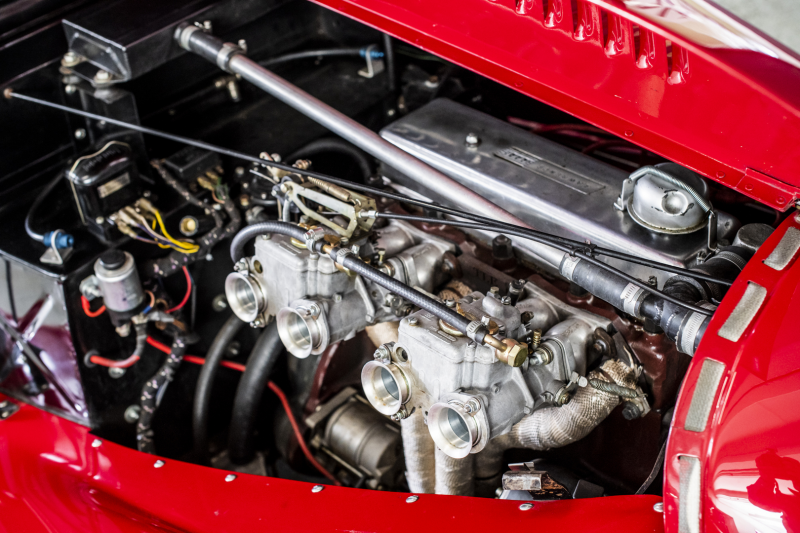
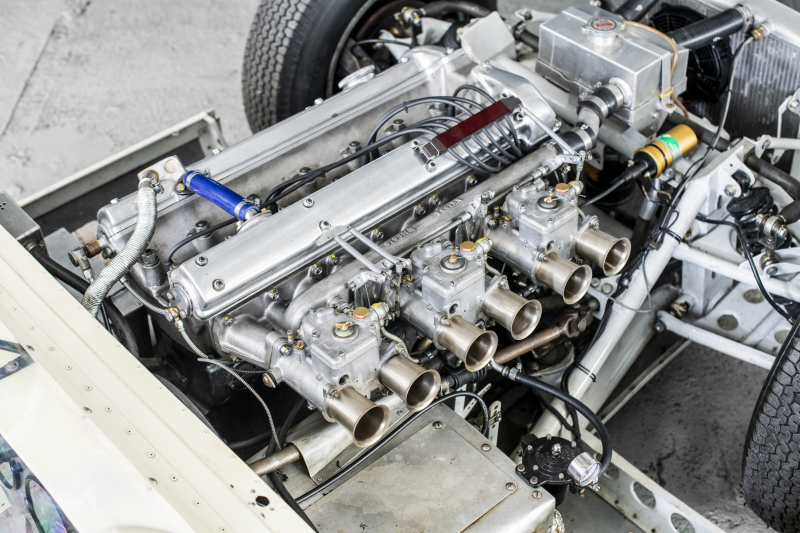
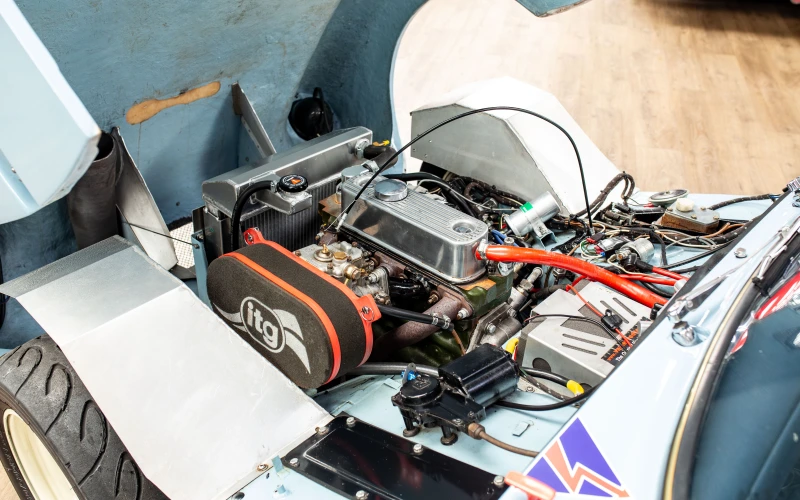
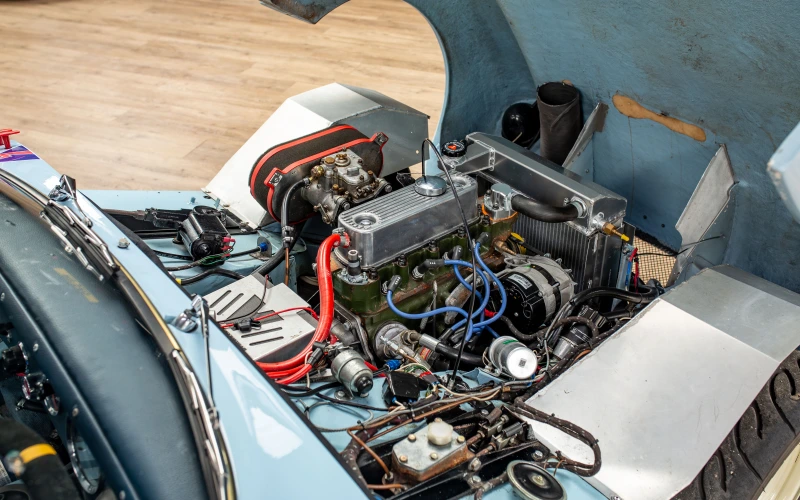
Since 2016, 4826 has been evolving on track with targeted improvements: Moss gearbox and Salisbury axle from JB Engineering, 42mm Webber carburettors. At just 870kg, with excellent balance and resilient braking, it now offers a ride that's as accessible as it is high-performance - true to the spirit of true Morgan Super Sports.
Having owned and driven one ourselves at the Tour Auto, Le Mans Classic, Goodwood, and in 2H races in both the Sixties and Fifties on many European circuits, we can assure you that the Morgan +4 is a pleasure to drive, very efficient, with incredible handling, extremely reliable and very affordable to maintain.
This is an exceptional opportunity to acquire a very rare, authentic and historic Super Sport.
 Category :
Race cars
Category :
Race cars
 Brand : Morgan Motor Company
 Sport :
Historic Race Car
Sport :
Historic Race Car
 Status : For sale
 Location : France - Paris




 France


 Promoted