

 Login
Login
 Post an ad


Performer by Elkmann: The 290 kg Hyperkart Taking Racetracks by Storm
By RobinB on 22 June 2026 Circuit / Race Karting Circuit / Trackday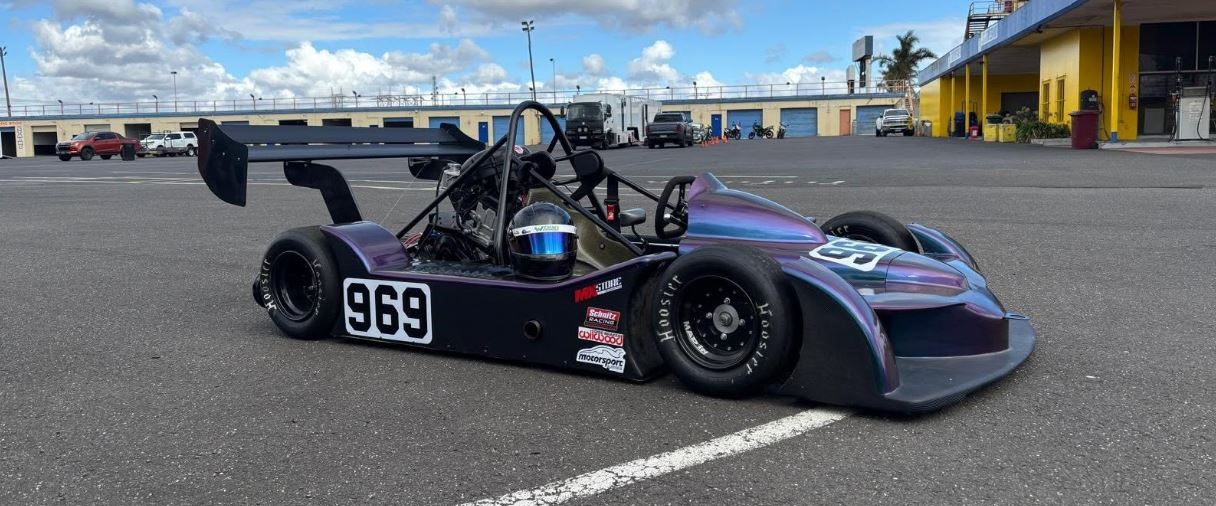
When we talk about extreme machines capable of delivering sensations close to a prototype or a single-seater, we often think of Radical, Ariel Atom or even KTM X-Bow. And yet, for several years now, an even more extreme German machine has been getting a lot of attention in paddocks and online: the Performer by Elkmann 😎
ℹ️ Do you prefer watching a video? This article is also available in video format on YouTube, click here! 🎥
And this success did not come out of nowhere. Videos of Peter Elkmann, the creator of the Performer and multiple European Superkart Champion, regularly reach hundreds of thousands of views. Seeing a machine weighing only 290 kg, powered by a motorcycle engine producing nearly 190 horsepower, overtaking GT cars worth sometimes more than €200,000 on track feels almost unreal. The video below gives a good idea of the phenomenon.
At first glance, some people call it a big kart. Others see it as a minimalist single-seater. Some even describe it as a small prototype without bodywork. In reality, the Performer is a bit of all those things at once. An ultra-light machine, powered by a 1000 cc motorcycle engine, developed with one obsession: delivering maximum performance and sensations for a relatively “accessible” budget compared with the rest of modern motorsport 👌
On paper, what really stands out is the relationship between these performance figures and the advertised price. The new price starts at around €30,000 incl. VAT, although options can quickly push the final bill higher.
In short, we had to talk about it! 🤪
Hyperkart: a concept directly inspired by Superkart
The Performer was not created by chance. Its creator, Peter Elkmann, is far from unknown in the world of top-level karting. But the project is also closely linked to his father, Hans-Peter Elkmann, who came up with the original Performer concept. Together, they developed a machine designed from the start to deliver supercar-level performance… with running costs much closer to those of a sport motorcycle 😋
The German driver is also a major name in international Superkart, with several FIA European Superkart Championship titles won in 2008, 2017, 2018 and 2019 🏆
See also: "Superkart: The world's fastest kart!"
When you know the already incredible performance of 250 Superkarts, it becomes easier to understand where the Performer philosophy comes from. The idea is ultimately quite simple: keep what makes ultra-high-performance karting so special, namely the featherweight construction, the direct sensations and the agility, while going even further in terms of aerodynamics, stability and ease of use.
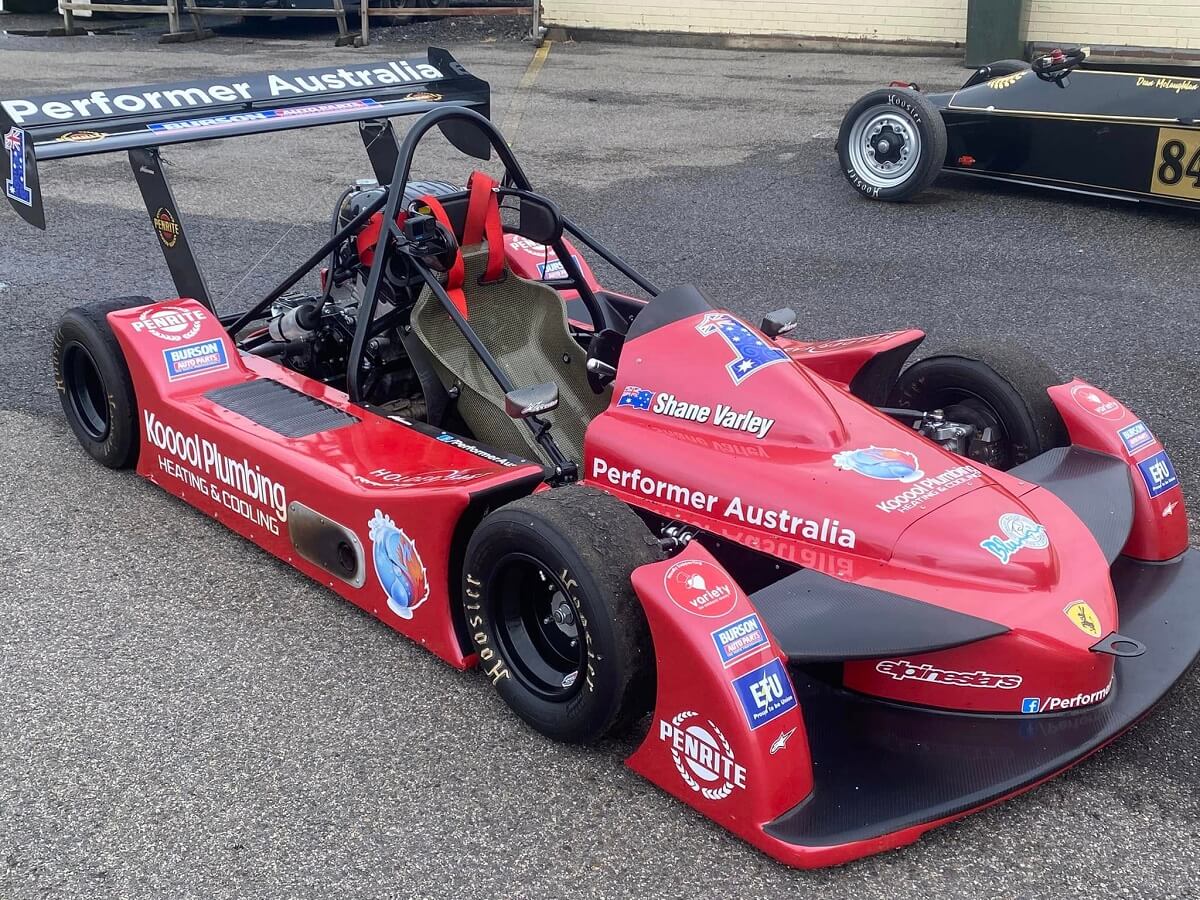
The result is a very unusual machine. The chassis remains tubular, there is no differential, no traditional suspension like on a conventional single-seater, and the driver remains very exposed, very close to the ground, with that raw feeling typical of karting 💪
And that is precisely why we can still call it a kart, even if the machine sometimes looks like a small prototype. An Hyperkart has no dampers, no differential, and keeps a very simple architecture with a rear axle and a single rear brake disc. So we are still very far from a conventional single-seater or prototype, even if the aerodynamics, bodywork and level of performance can give that impression.
But alongside that, the Performer adds wings, a flat floor, refined aerodynamics and a modern superbike engine capable of taking the whole package to insane speeds 🚀
The Performer keeps a base that remains very close to the spirit of karting: no conventional suspension, no differential, very low weight and a very exposed driving position. But it adds advanced aerodynamics and a superbike engine, which places it in a category of its own.
This mix is probably what makes the vehicle so difficult to classify. Too extreme to be compared with a simple track day car, but also very different from a true traditional single-seater.
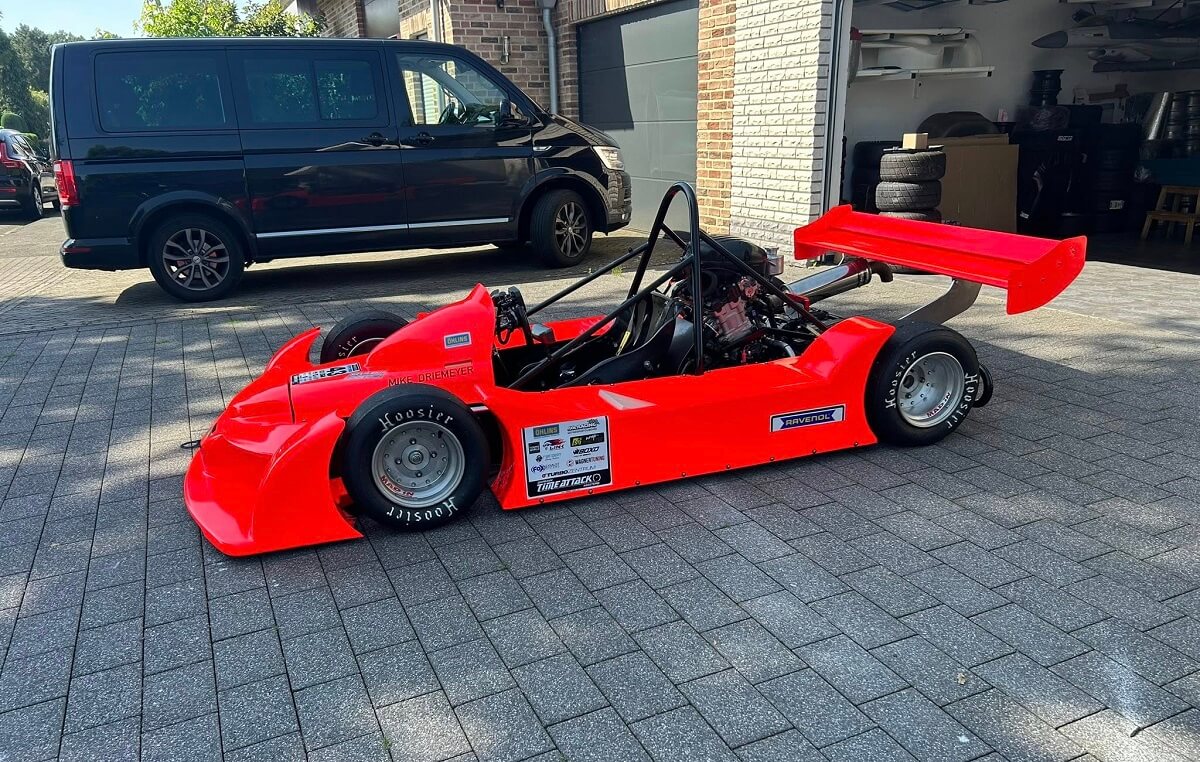
The Performer concept is not entirely new either. It belongs to a family of machines that, for several years, have tried to create a bridge between karting and racing cars.
In the eyes of its supporters, the Hyperkart is not meant to replace the Superkart, but to offer a different alternative: similar performance, still very raw driving sensations, but with a more reliable 4-stroke engine, less expensive to maintain and less demanding than a very high-level 250 cc two-stroke engine 🤑
One link can notably be made with Formula Pacific, a concept born in the United States in the early 2000s around Willow Springs Raceway in California. The idea was led by Bill Huth, the circuit owner, with the technical design entrusted to Rick Goodwin, who was already closely connected to the world of Superkart.
The principle was already close to what we now see in Hyperkart: a very light chassis, a Yamaha motorcycle engine, initially a 600 cc unit with the R6, then a 1000 cc unit with the R1, and impressive performance. Some sources mention up to 3 G of lateral acceleration, with Eddie Lawson involved in the development work.
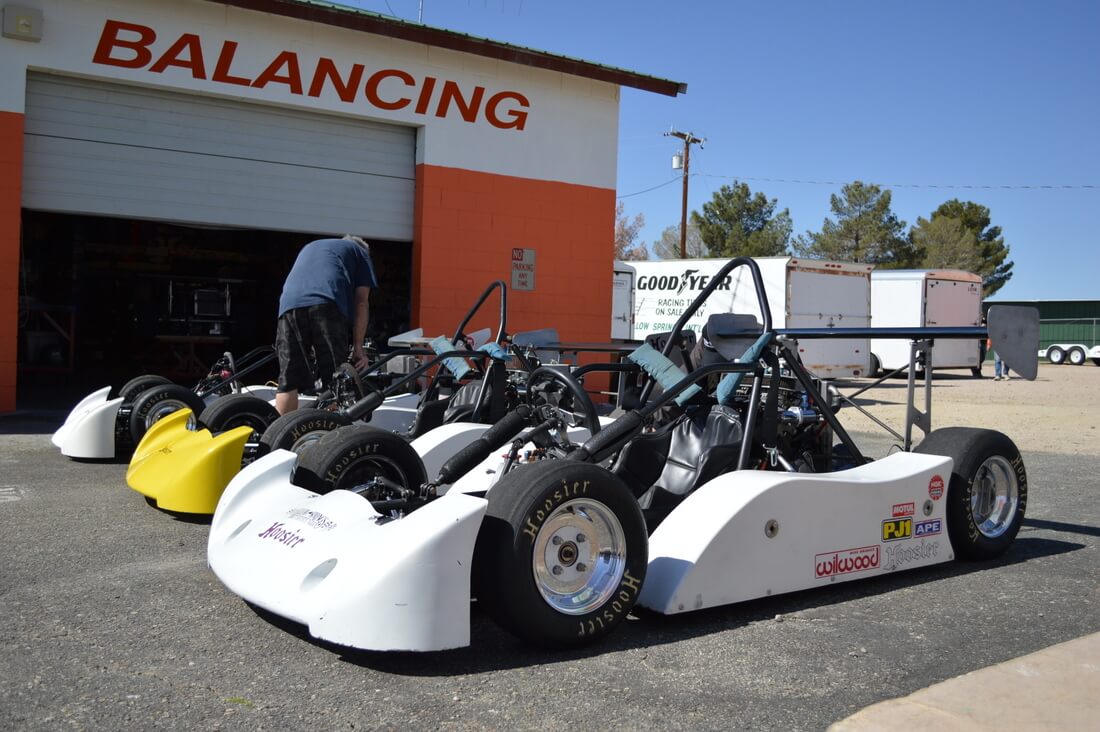
The first races appeared around 2011, but the project gradually faded after the death of Bill Huth in 2015. The idea remained interesting, however: using a mass-produced, powerful and reliable engine to create a lightweight machine that is less expensive and easier to run than a very high-level 250 Superkart.
This is the same logic that later appeared with the Performer by Elkmann, and today with projects grouped under the term Hyperkart.
Performer by Elkmann: technical specifications and performance
When you look at the figures, you quickly understand why the Performer generates so much reaction on social media and in paddocks 😁
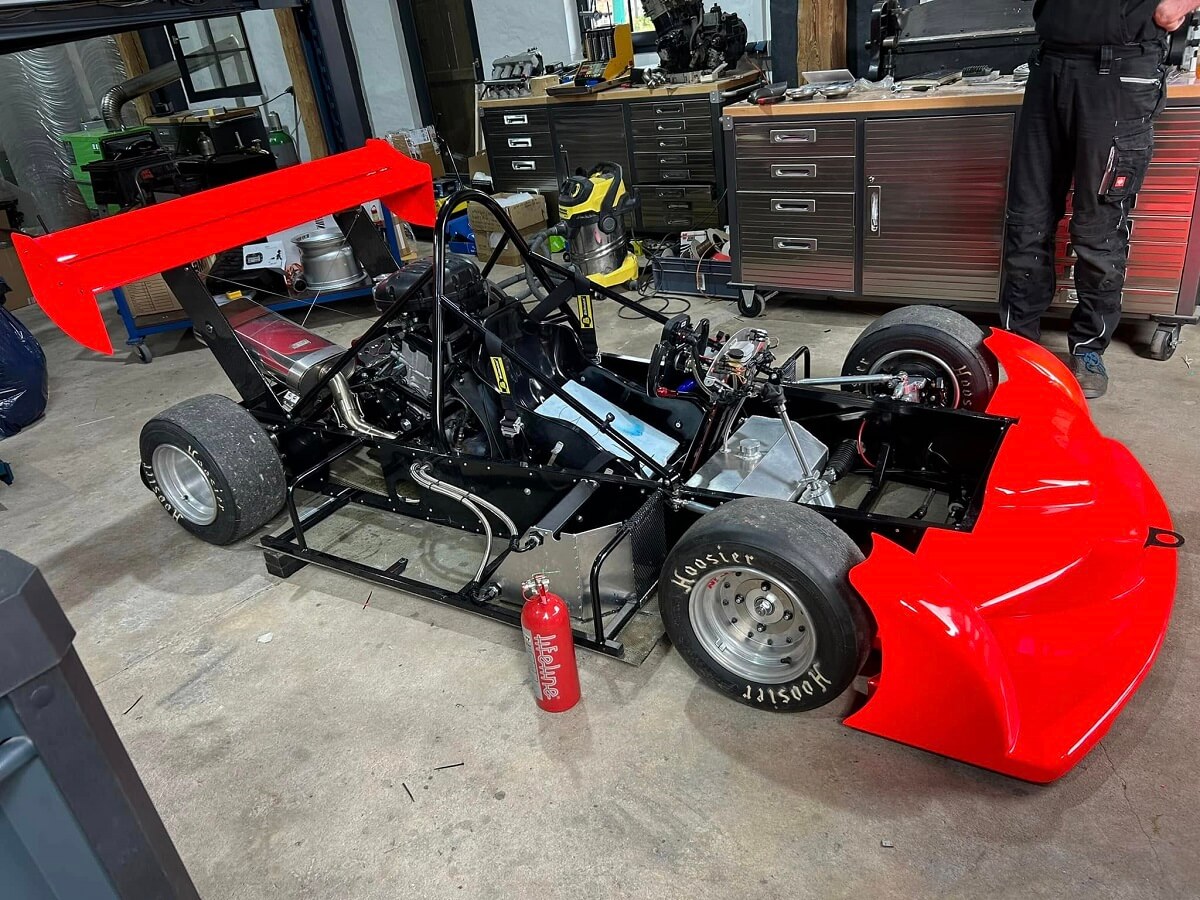
The Performer 1000 uses a Suzuki GSX-R 1000 K5/K7 engine, a unit that is very well known in the world of lightweight prototypes and bike-engine swaps. This engine produces around 180 to 190 horsepower depending on the configuration, with torque announced at around 118 Nm.
In a car weighing 800 or 900 kg, that would already be quite respectable. But here, the Performer has a weight of only around 290 kg, depending on the chosen equipment.
The power-to-weight ratio then becomes completely insane. We are talking about around 1.5 kg per horsepower, which is a level comparable to some modern hypercars… except that here, there is almost no filter between the driver and the machine 😲
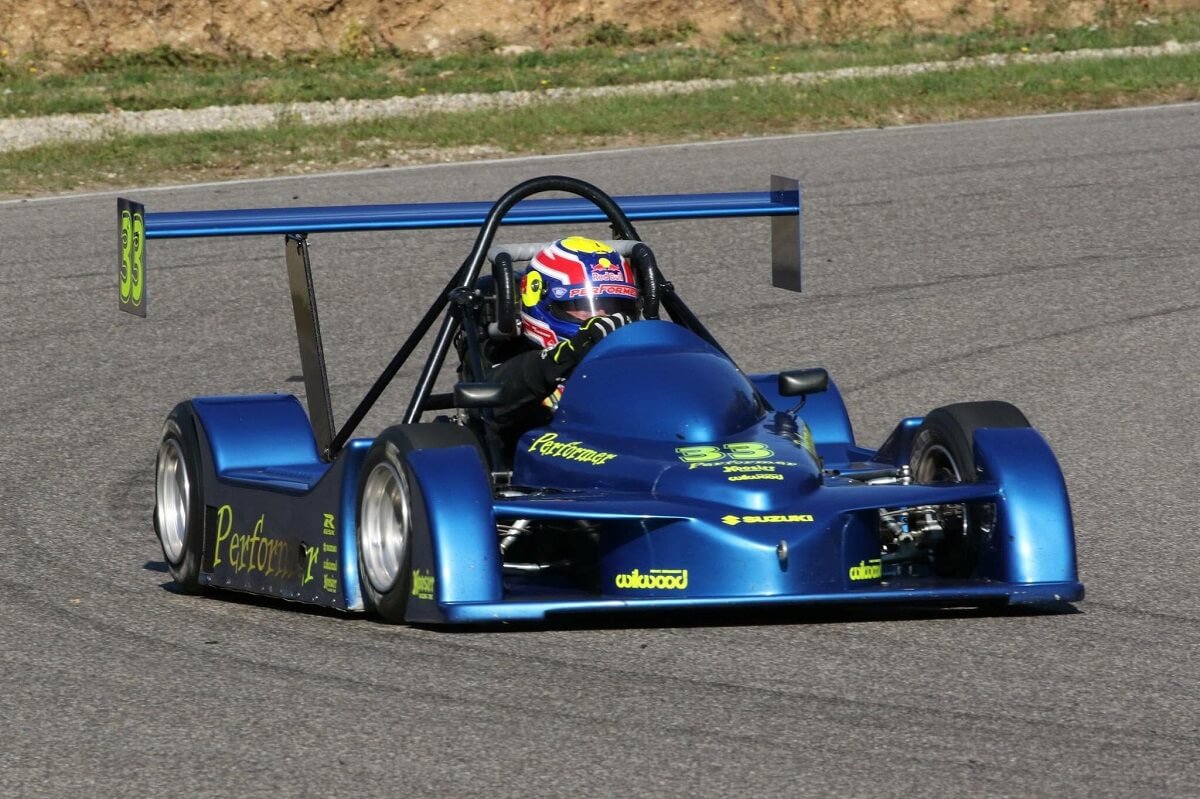
The manufacturer announces:
- a 0 to 200 km/h time in under 12 seconds
- around 240 to 250 km/h top speed depending on the circuit
- more than 2.5 G of lateral acceleration
- a 6-speed sequential gearbox
- 10-inch wheels with Hoosier tyres
- an engine speed rising to around 12,000 rpm
And unlike some ultra-exotic projects that become impossible to maintain, the Performer still relies on a relatively well-known and reputedly reliable mechanical package 👌
PaceDivision, the German company that acquired the Performer concept, also explains that the GSX-R engine, after modification of the lubrication system for track use, can offer excellent durability even under intensive use.
This is a very important point, because one of the arguments often made about the Performer is that this type of machine could cost far less to run than a top-level 250 Superkart.
It is indeed well known that a 250 cc European Championship engine often requires extremely heavy and expensive maintenance, whereas a modern superbike engine can handle several seasons with much more reasonable servicing 👍
Performer by Elkmann price: an almost reasonable formula?
The price is probably the most surprising aspect of the Performer.
Today, many modern race cars are becoming completely out of reach 💸
The Performer, however, officially starts at around €30,490 incl. VAT in a complete version with a rebuilt engine, wheels, Hoosier slicks, flat floor, seat, sequential gearbox and several pieces of equipment already included.
There is even a base version announced from around €17,800 without engine.
For a price close to that of a small used track car, the Performer offers a power-to-weight ratio and a level of performance usually found on much more expensive machines.
Of course, you can then add plenty of options: AIM dashboard, paddle shifters, quickshifter, blipper, carbon parts, double rear wing, specific exhaust, wet tyres, extra wheels, etc. But even with a few options, the overall price still seems almost “affordable” when compared with the performance on offer.
Because for the price of a fairly conventional small used track car, you end up with a machine capable of delivering performance close to far more prestigious and expensive racing cars 😈
An Hyperkart designed above all for the track
As you can imagine, the Performer has absolutely no road-going purpose. Everything in its design is focused on pure driving.
No comfort. No assistance. No soundproofing. No complex electronics. No compromises.
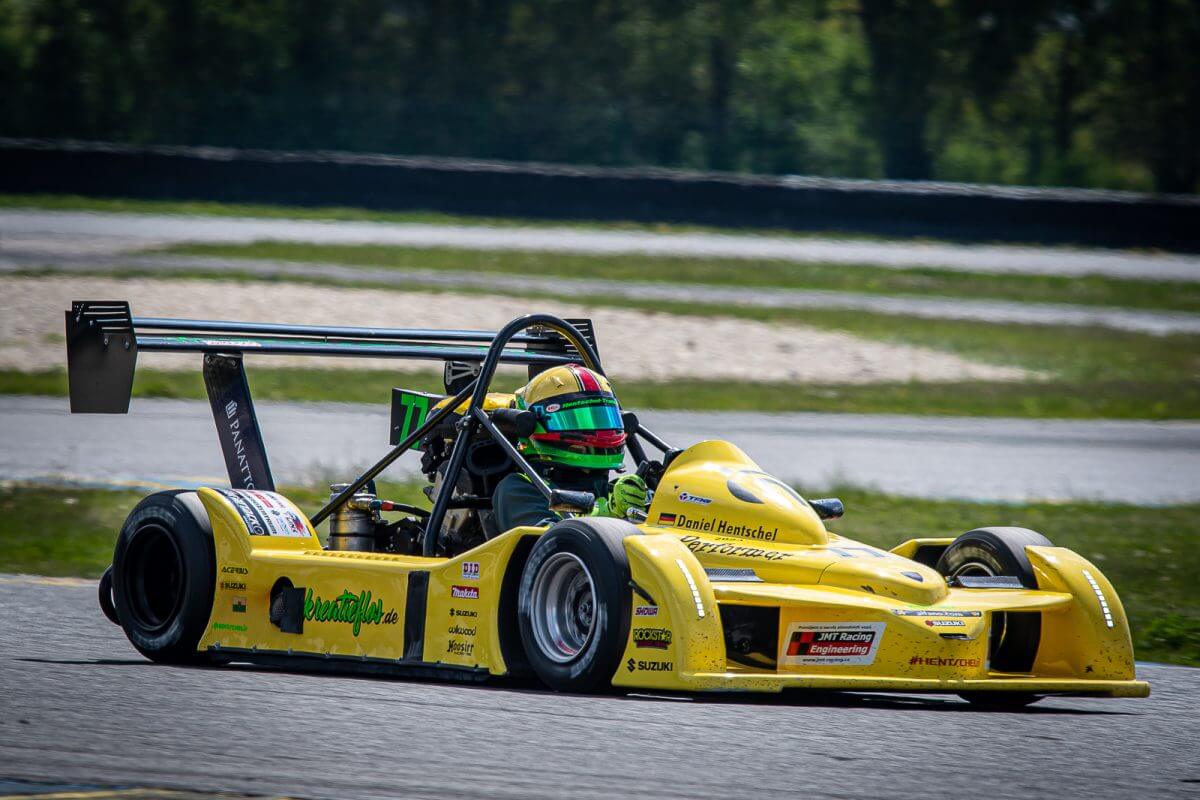
The driver sits very low in the chassis, strapped into a bucket seat with a 6-point harness, almost at ground level. The engine screams at over 12,000 rpm just behind him. The sequential gearbox allows extremely quick gear changes. And above all, the ultra-low weight delivers sensations that seem much closer to karting or a lightweight prototype than to a traditional car.
Several people who have driven or seen the Performer in action describe it as a “physical” machine, very intense, but also incredibly efficient through corners.
That makes sense. With so little weight, slick tyres, 10-inch wheels and an extremely low centre of gravity, the Performer can carry a huge amount of speed through corners.
On some technical circuits, this allows it to compete with much more powerful cars. Some lap times mentioned around the Performer even put it close to high-level single-seaters, sometimes comparable to a Formula 3 depending on the circuit.
Can the Performer really compete with GT3 cars?
Every time a video of the Performer appears on social media, the same debates immediately come back.
Some people explain that a Porsche 911 GT3 RS or a GT3 Cup remains clearly superior. Others claim that a Performer or a Superkart can literally run rings around certain GT cars on track.
As often, the truth depends massively on the track, the driver and the conditions.
On very fast circuits with long straights, a modern GT3 obviously keeps huge advantages in terms of top speed, aerodynamic stability and traction.
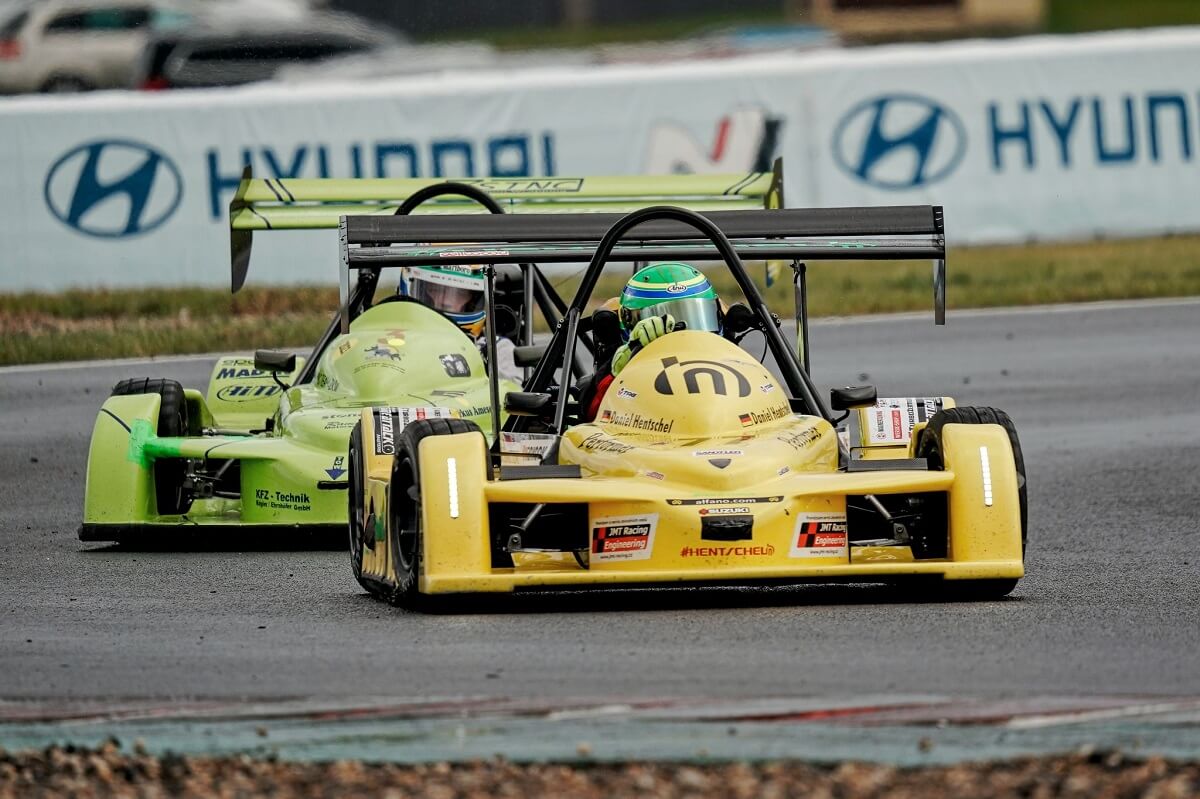
But as soon as the circuit becomes more technical, with lots of sequences, braking zones and changes of direction, the Performer's low weight makes it a formidable weapon.
And above all, the figures start to become very serious ⏱️
In some videos and lap times mentioned around the Performer, we see times of around 2 min 22 s at Spa-Francorchamps. To put that into perspective, we are talking about performance capable of competing with very serious track cars… for a completely different budget.
A Performer weighing only 290 kg is capable of setting lap times close to vehicles that are far more powerful and much more expensive. That is probably what fuels so many debates around the concept.
At this level, the most impressive thing is not even comparing the Performer to a modern GT3 anymore.
What is especially striking is that a 290 kg machine can lap around 10 seconds faster than a GT4 on some tracks, while also being faster than a modern Formula 4 on a circuit like Spa.
And that is probably where the Performer becomes fascinating. Not necessarily because it “beats” GT cars worth several hundred thousand euros, but because such a minimalist, lightweight and relatively accessible vehicle can simply find itself in that discussion.
Where can you drive a Performer or a Hyperkart?
And this is probably THE most important topic around the Performer today, especially in France.
Because on paper, the concept is incredible. But in reality, one very simple question comes up: where can you actually use this type of vehicle?
In Germany, the Performer regularly runs on circuits such as Hockenheim, Bilster Berg and Oschersleben.
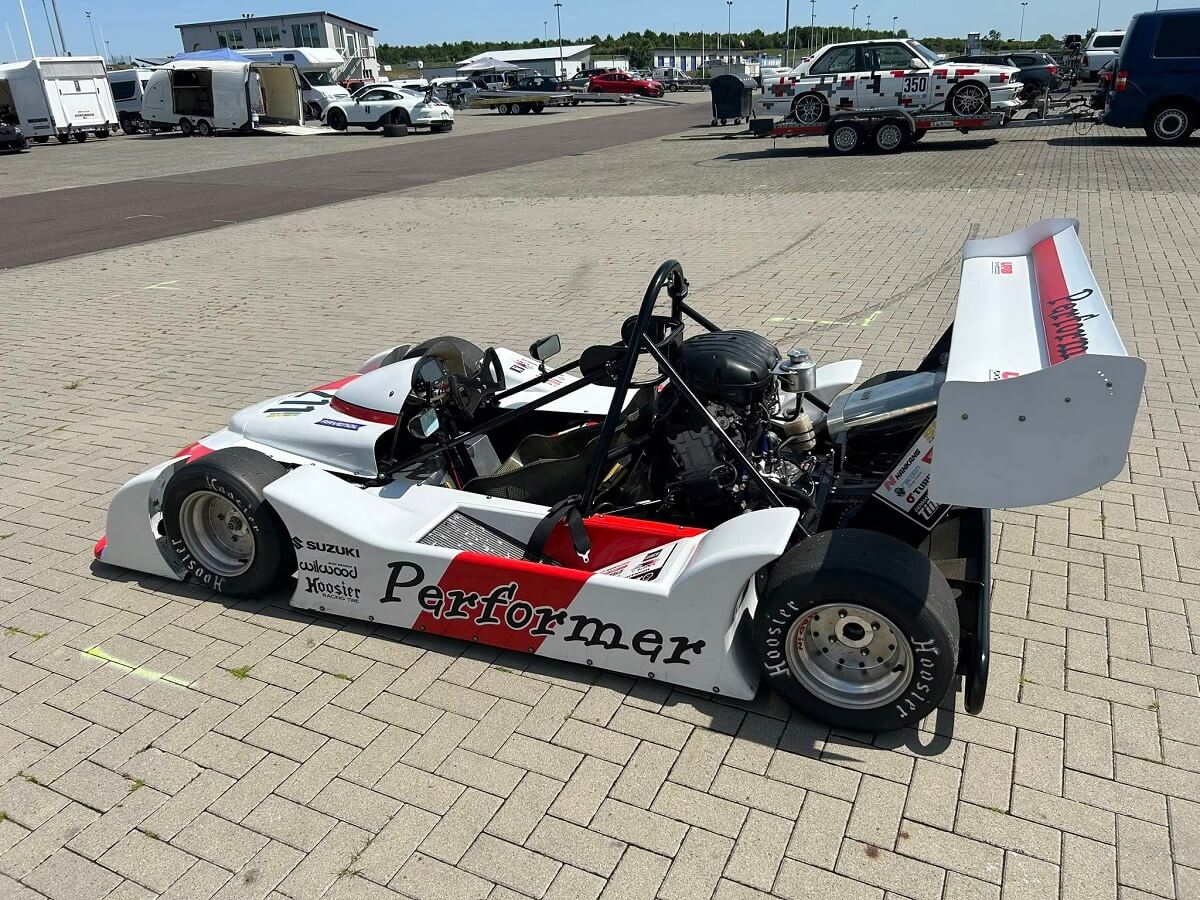
It can also be found in Time Attack events or in certain series such as the Carbonia Cup, where Performers race alongside prototypes.
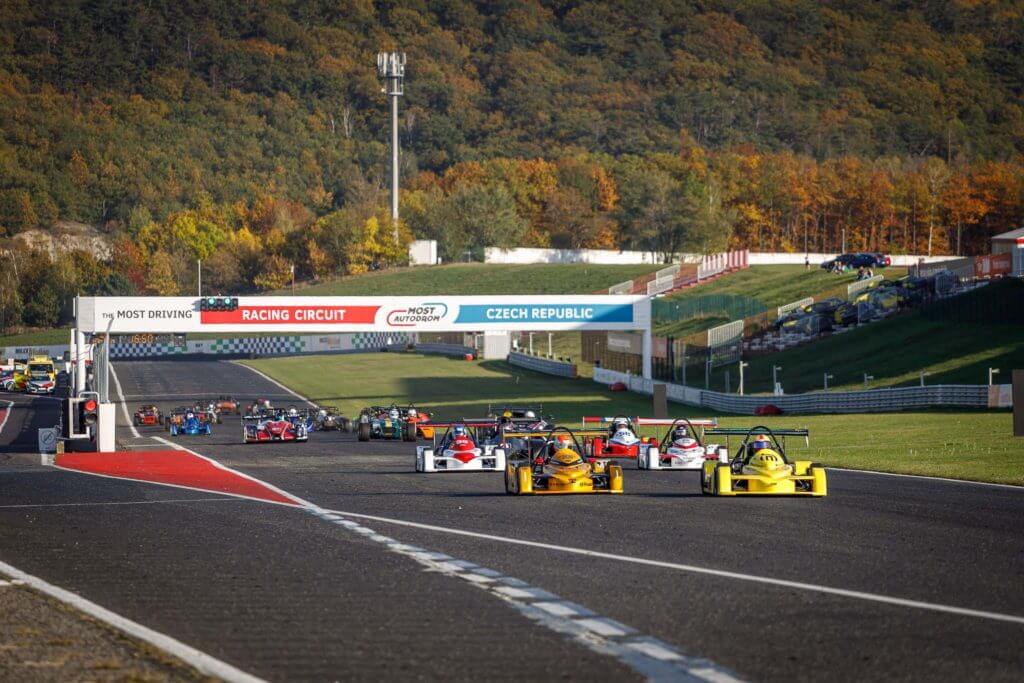
In Australia, these machines also take part in the Australian Formula Open, a category where they race directly alongside single-seaters and other very high-performance vehicles.
In France, the situation seems much less clear.
The Performer sits in a fairly complicated regulatory grey area. It is not really a kart. Not really a conventional homologated single-seater either. And not a closed race car.
As a result, some track days may refuse this type of machine, particularly for safety reasons or because of the mix with conventional cars.
And even when they are accepted, these vehicles sometimes raise debates.
With such low weight, no traditional suspension and performance capable of competing with prototypes or some very fast GT cars, mixing them with much heavier cars can become tricky in the event of contact 🤕
Several drivers also mention that this type of concept works particularly well on smooth circuits, but can become much more physical and difficult to exploit on bumpy tracks.
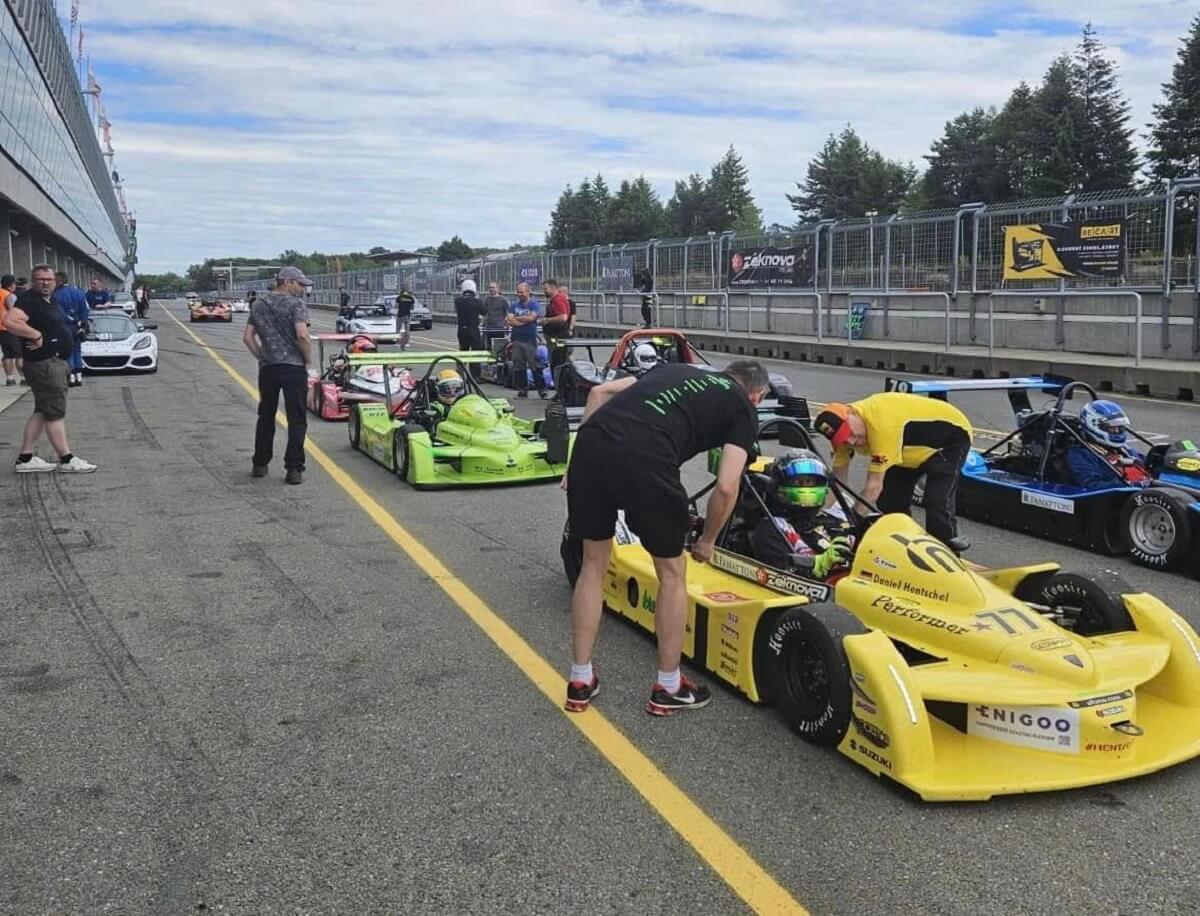
Some also mention the potential difficulties in hill climb racing or in FFSA competition.
And that is precisely where the subject becomes interesting: in France, Hyperkart is no longer just an idea launched online. Several prototypes already exist, with genuine work being done around a dedicated category.
The main obstacle remains regulatory.
As long as there is no clear approval, stable regulations and defined sporting framework, these machines remain in a grey area. That is obviously a problem when it comes to convincing drivers to invest, even if the interest around the concept seems real.
A real Hyperkart category in preparation in France?
The Performer is not just an isolated German curiosity.
For several years now, several French players have also been working on the idea of a real Hyperkart category.
Daniel Michaux, behind the RAFALE by EMA, explains that he has been thinking about this type of formula for around fifteen years.
He notably discovered Formula Pacific in Australia, even though the concept actually originated in the United States around Willow Springs Raceway.
The idea was already the same: to create a very light, very high-performance machine, powered by a mass-produced motorcycle engine, but simpler and less expensive to run than a very high-level 250 Superkart.
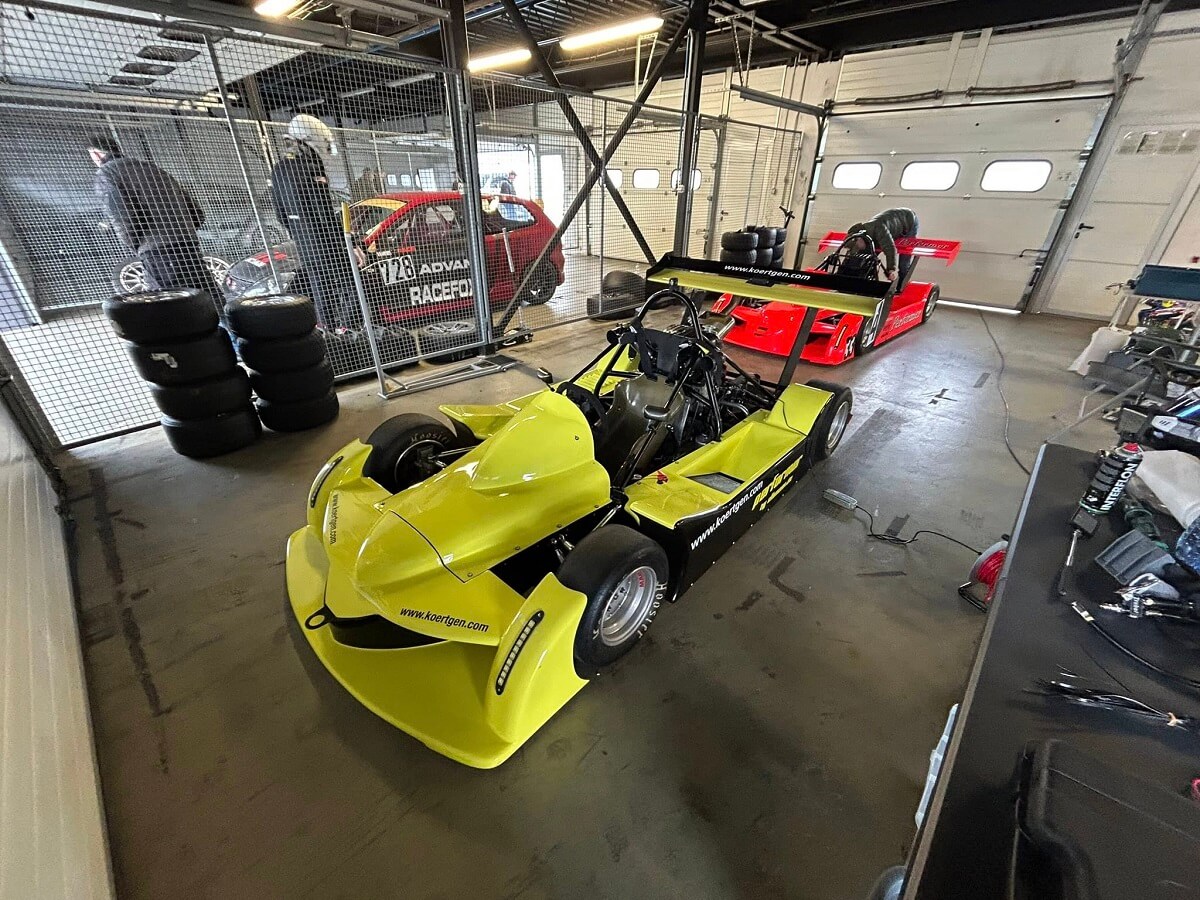
Today, according to information gathered from Daniel Michaux, three manufacturers are reportedly working on this type of machine in France:
- RAFALE by EMA, led by Daniel Michaux 👇
- STORM, built by Marc Albin 👇
- CHALLENGER, developed by Christian Rosa / Sensations Racing 👇
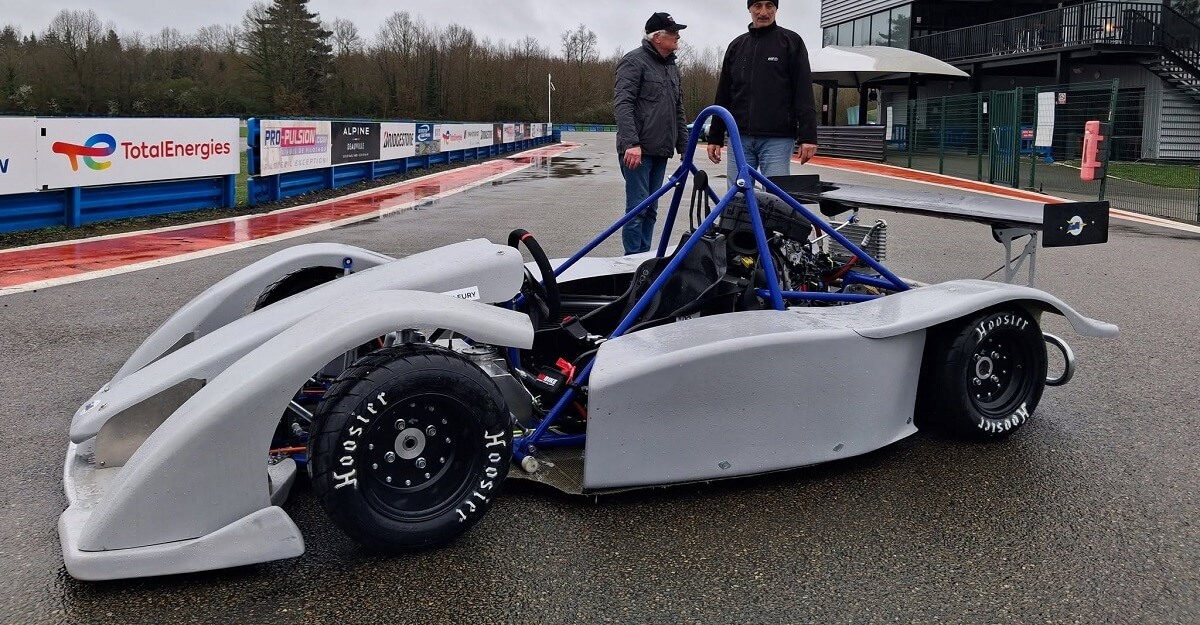
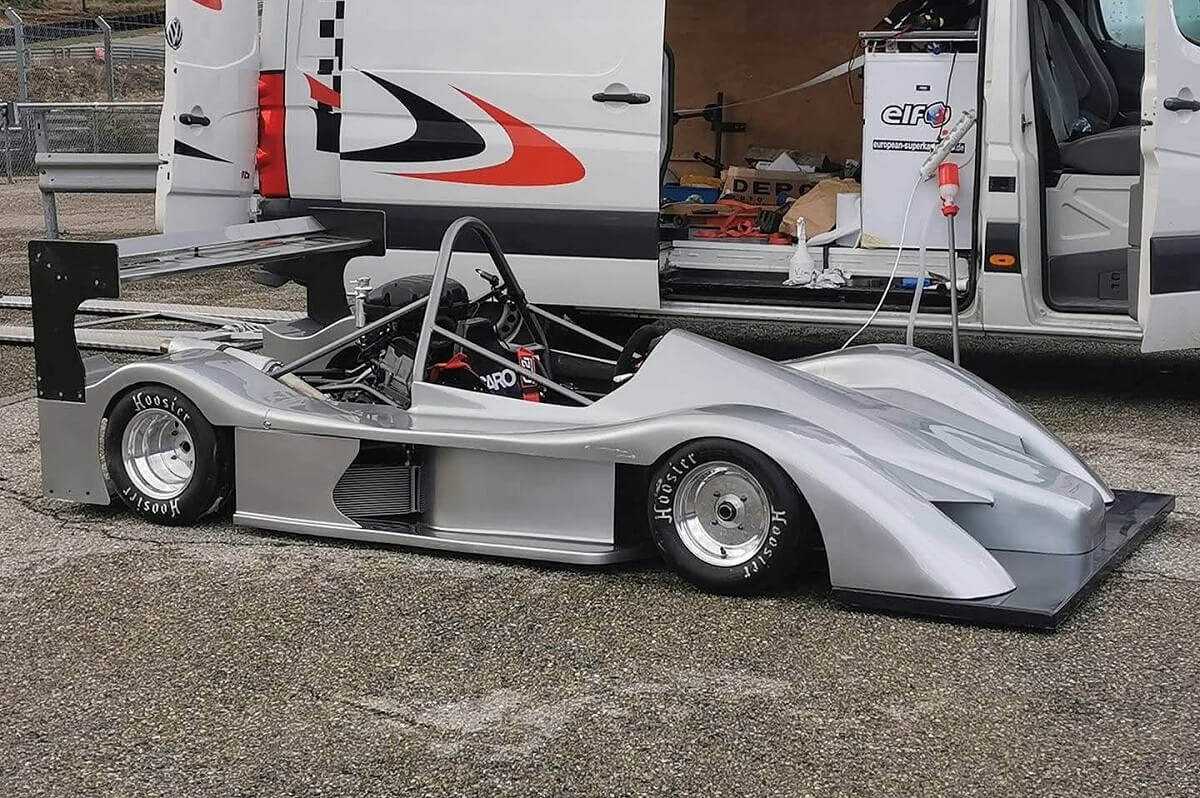
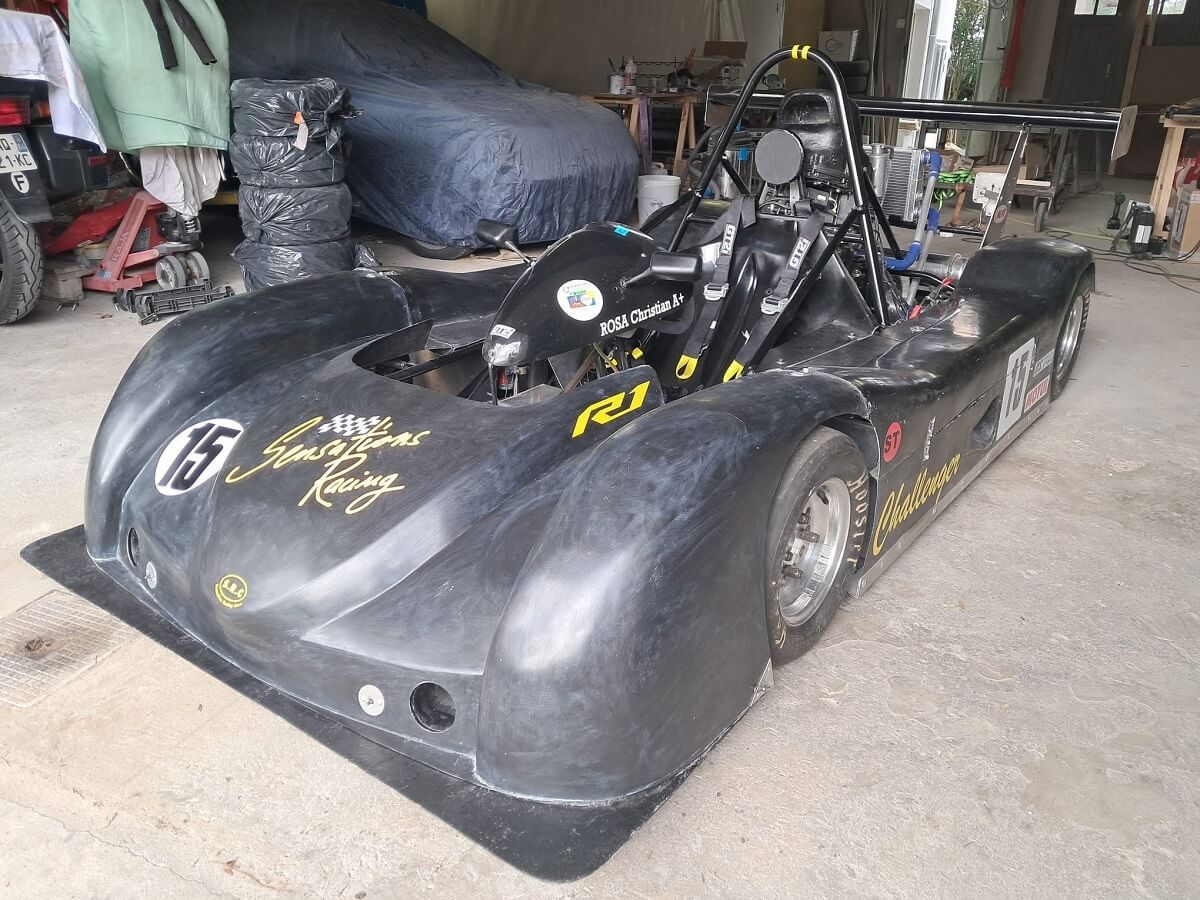
In Germany, two projects are also mentioned in this universe:
- Performer by Elkmann
- Pacemaker 👇
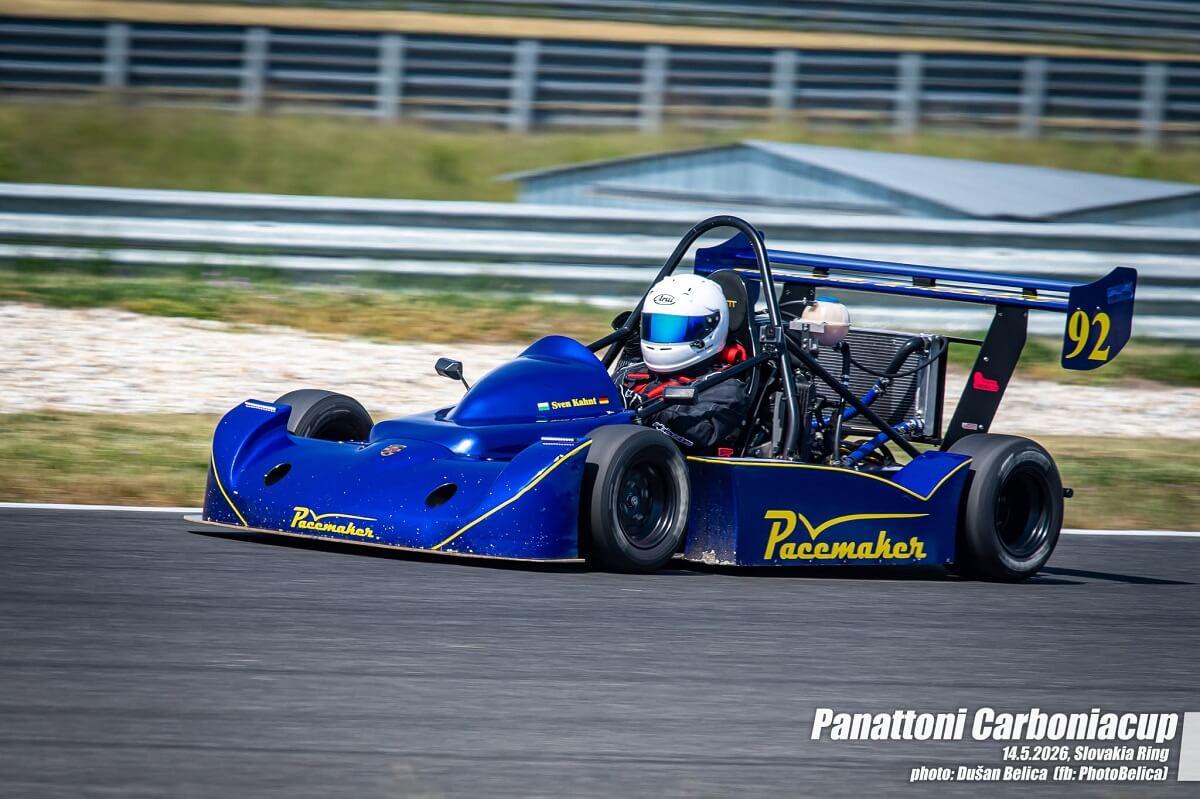
It is no coincidence that many former Superkart people are involved in or close to these projects 🙄
Hyperkart takes up part of that DNA: a low, lightweight, direct machine, with no dampers and no differential, but with a mass-produced 4-stroke engine, generally taken from a motorcycle.
The goal is therefore not necessarily to replace the 250 Superkart, but to offer an alternative that is easier to run, more mechanically reliable and potentially less expensive over a season.
Two French examples: the Challenger and the RAFALE by EMA
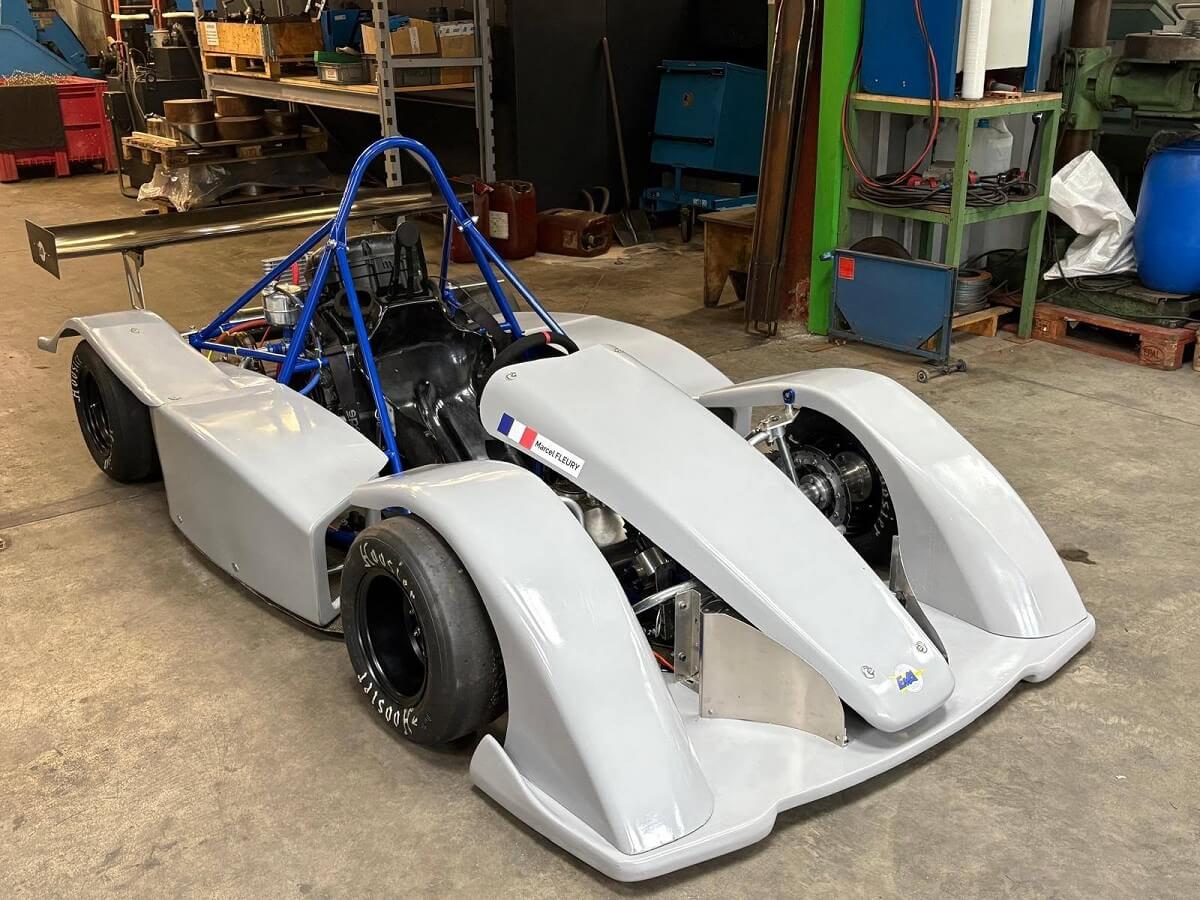
Among the most concrete French projects, we notably find the Challenger and the RAFALE by EMA. Both machines follow a fairly similar philosophy: keeping a very lightweight, mechanically simple base, with a powerful motorcycle engine, while also integrating real thinking around safety and track use.
The Challenger, developed by Christian Rosa / Sensations Racing, is based for example on bodywork made up of five parts. Two side panels are attached directly to the chassis, which should make handling easier for just one person.
On the technical side, it features an aluminium honeycomb crash box, a chassis and roll hoop made from 25CD4S, a 20-litre aluminium fuel tank, 10-inch Douglas wheels, as well as an engine currently based on a standard 2008 Yamaha R1, producing around 185 horsepower.
The RAFALE by EMA, led by Daniel Michaux, follows the same logic. The machine uses nine-piece bodywork, an aluminium honeycomb crash box, a chassis and roll hoops made from 25CD4S steel, a 20-litre aluminium fuel tank, custom-made Tramont wheels and Brembo brakes.
The engine remains the driver’s choice, although the Suzuki GSX-R 1000 is recommended. Here again, the objective is clear: to offer a high-performance, lightweight machine that is easier to run than a very high-level 250 Superkart.
In both cases, the design and manufacturing are announced as French.
Daniel Michaux mentions a price of around €35,000 for the French machines. This is fairly close to a properly equipped Performer, as options and a genuinely usable configuration can quickly push the final bill higher.
The French Hyperkart project is moving forward with the FFSA
The French project has also made concrete progress in recent years. Daniel Michaux explains that he restarted discussions with the FFSA with the help of Éric Sévère.
At the request of the technical department, a prototype was presented at the Croix-en-Ternois circuit, notably in the presence of FFSA representatives and Jacques Berger, former FIA technical manager, who was asked to observe the safety-related aspects.
According to Daniel Michaux, this presentation went well, with a favourable technical reception.
Five chassis have reportedly already been built to date, and a second machine is said to be in the final stages of completion.
Still according to him, the project has received favourable opinions within the relevant commissions.
The National Circuit Safety Commission also reportedly issued a favourable opinion in October 2025 to allow the category to run on French circuits.
Despite this favourable technical reception, the project remains sensitive, particularly because of liability and safety issues.
As is often the case with such an unusual new category, the main obstacle is not only technical, but also regulatory and political.
For now, however, official approval and the creation of a real sporting framework are still pending.
Daniel Michaux says he wants to relaunch the project with the newly elected FFSA representatives, with the long-term ambition of creating a French Hyperkart Championship.
That is the whole challenge: the machines exist, the manufacturers are there, and the performance seems serious. What remains is to create a clear framework, with regulations, circuits ready to welcome them and, why not, a real calendar.
A machine that strongly divides opinion
The Performer and other hyperkarts clearly leave no one indifferent.
Fans of pure sensations love the concept. They see it as a form of return to simpler motorsport, more raw, less dependent on electronics and astronomical budgets. For some former karting or lightweight prototype drivers, this type of machine is even among the best driving experiences possible for the money.
On the other hand, others remain more sceptical. Buying a machine without a real championship can seem difficult to justify. Some will always prefer to turn to proven options such as Formula Ford, Formula Renault, Caterham or small GT cars already integrated into recognised series.
See also: "Formula Ford : single-seaters accessible to all"
There is also the question of safety. With a vehicle this low, this light and this exposed, the consequences of a major off-track excursion can obviously be serious 😕
Zero risk does not exist in motorsport. The real question is therefore mainly whether Hyperkart can be properly managed, with suitable regulations, coherent safety equipment and circuits capable of hosting it in good conditions.
However, this point needs to be put back into the context of motorsport. Zero risk does not exist, whether on circuit, in hill climb racing or in rallying. The real issue is therefore less about banning this type of machine than defining a suitable framework to allow them to run in good conditions.
But that is also what makes the Performer so fascinating. It does not try to be practical, versatile or comfortable. It is a machine built only around driving pleasure and lap times.
My opinion on the Performer by Elkmann
Honestly, I find the concept absolutely brilliant.
At a time when so many cars are becoming heavy, heavily filtered, very electronic and sometimes almost sanitised, seeing such a radical project still exist is genuinely refreshing 🥰
The Performer ultimately brings together what many enthusiasts dream of: minimum weight, maximum sensations, relatively simple mechanics and a completely crazy performance-to-price ratio.
And what is interesting is that the Performer may be part of a wider movement. With French projects such as the RAFALE by EMA, the STORM or the CHALLENGER, there is a real desire to bring about a structured Hyperkart category.
But everything will depend on what happens next with the project. Without clear homologation, without a championship or without meetings able to welcome these machines, the concept will remain limited. With proper regulations and a few well-organised races, however, it could become a genuinely interesting formula in France.
So I completely understand the criticism.
Buying such a specific machine without knowing exactly where to drive it can become frustrating, especially in France. A Caterham, a Formula Ford or even some more conventional small race cars will often offer far more opportunities to drive regularly or take part in recognised competitions.
The Performer is therefore probably a machine for a true hardcore enthusiast. Someone who knows exactly what they are looking for, who already understands the constraints of motorsport, and who accepts the slightly “UFO” nature of the project.
But one thing is certain: every time you see this machine in action, it is hard to remain indifferent.
If the Hyperkart category really does manage to find its place in France, with machines such as the RAFALE, the STORM or the CHALLENGER, we could witness the birth of a fairly unique formula: a true bridge between extreme karting and racing cars.
[VIDEO] What is this beast? A kart FASTER than a SUPERCAR? (Performer by Elkmann)


I'm Robin, 36, amateur driver and internet entrepreneur. I founded GoToTheGrid (GTTG) to create an intuitive platform dedicated to motorsport enthusia... See more